Analysis of the Driving Factors and Investment Value of the Collective Rebound in Bank Stocks
Unlock More Features
Login to access AI-powered analysis, deep research reports and more advanced features
About us: Ginlix AI is the AI Investment Copilot powered by real data, bridging advanced AI with professional financial databases to provide verifiable, truth-based answers. Please use the chat box below to ask any financial question.
Related Stocks
Based on the data I collected, let me provide you with a comprehensive analysis of the driving factors and investment value of the collective rebound in bank stocks.
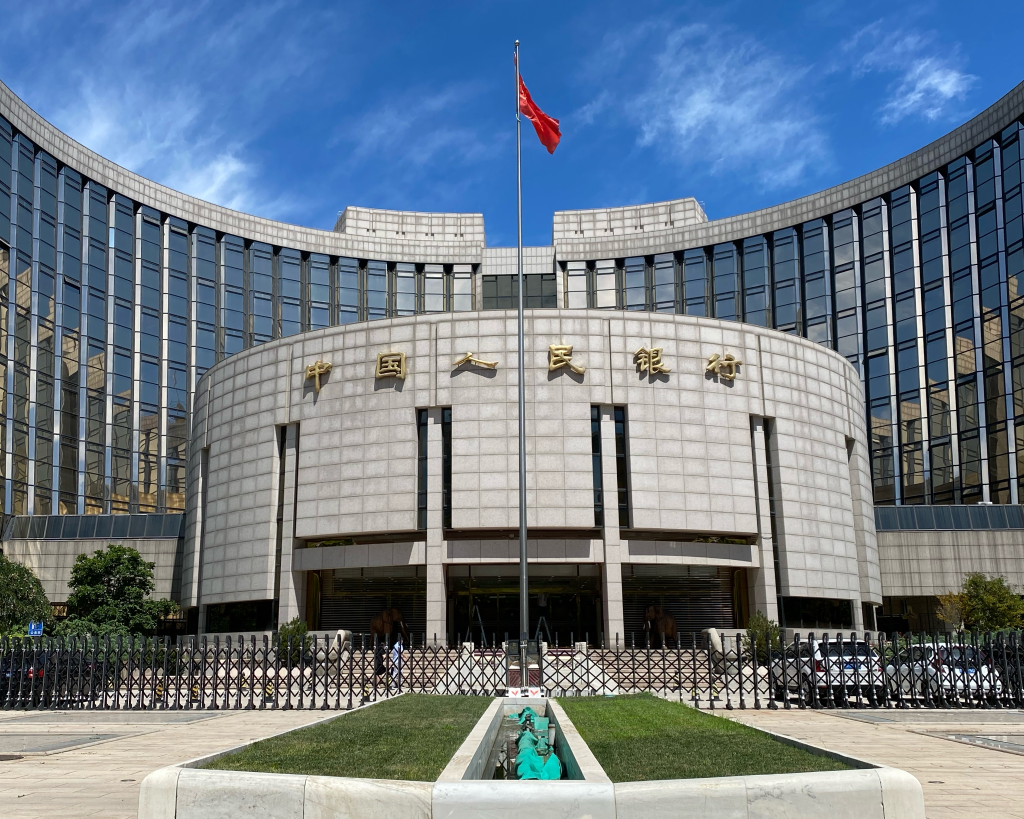
- Pan Gongsheng, Governor of the People’s Bank of China, released important signals, emphasizing the need to “flexibly use RRR cuts and interest rate cuts” [1]
- On December 15, the central bank rarely conducted a 600 billion yuan reverse repo operation to ensure loose liquidity [1]
- The market expects that ultra-long-term special treasury bonds will be issued in 2026, using the “double discount” policy to stimulate credit [1]
- The Ministry of Commerce and the central bank jointly issued a document requiring “strengthening business-finance coordination to boost consumption” [1]
- Multiple departments have taken intensive actions to maintain stability, creating a favorable policy environment for the banking industry
- Shanghai Bank’s P/B ratio is only 0.55x, and Ping An Bank’s P/B ratio is only 0.48x [0]
- Their P/E ratios are 6.00x and 5.24x respectively, significantly lower than the market average [0]
- The banking sector has been under long-term valuation pressure, leading to technical rebound needs
- Shanghai Bank’s ROE reached 9.28% with a net profit margin of 26.00%, showing good operational quality [0]
- Ping An Bank’s ROE was 8.72% with a net profit margin of 19.21%, maintaining stable fundamentals [0]
- However, stock price performance seriously deviates from profitability, leaving huge room for recovery
- Large-scale reverse repo operations by the central bank have improved market liquidity
- Rising expectations of Fed rate cuts have provided more space for China’s monetary policy
- Relatively loose liquidity at the end of the year is conducive to the performance of heavyweight sectors
- Compared with other major asset classes, China’s stock market has a high risk-return ratio [1]
- As high-dividend品种, bank stocks have become more attractive in a low-interest rate environment

- A single-day increase of 3.57% and a 5-day increase of 4.21%, significantly outperforming peers [0]
- A year-to-date increase of 13.01% and a 1-year increase of 14.80%, showing excellent performance [0]
- Trading volume of 71.55M, higher than the average of 63.12M, indicating high capital attention [0]
- Net profit margin of 26.00%, far exceeding Ping An Bank’s 19.21% [0]
- Operating profit margin of 29.99%, highlighting outstanding profitability [0]
- P/B ratio of 0.55x, with clear room for valuation recovery [0]
- As a local bank in Shanghai, it benefits from the economic development of the Yangtze River Delta
- Relatively good asset quality and strong risk management capabilities
- Continuous Policy Dividends: Loose monetary policy is conducive to improving bank interest margins
- Valuation Recovery Logic: Current valuations still have room for improvement
- Stable Fundamentals: Profitability and asset quality support stock prices
- Uncertainty in Economic Recovery: The strength of real economic recovery affects banking performance
- Pressure from Narrowing Interest Margins: Net interest margins are under pressure against the background of interest rate liberalization
- Real Estate Risks: Adjustments in the real estate market affect the asset quality of banks
- Bank stocks generally maintain high dividend rates, with prominent allocation value in a low-interest rate environment
- High-quality banks like Shanghai Bank have considerable dividend yields, making them the first choice for stable investors
- As heavyweight sectors, bank stocks have relative stability amid market fluctuations
- Low valuations provide a safety margin with limited downside space
- The leading performance of Shanghai Bank shows that regional banks have unique advantages
- Focus on bank stocks in economically developed regions with excellent governance structures
- Net profit margin, ROE, and asset quality are key considerations
- Avoid purely pursuing low valuations while ignoring fundamental risks
- The period of policy利好 release is an important window for allocating bank stocks
- The end and beginning of the year are often periods when bank stocks perform well
- As the economy gradually recovers, the fundamentals of the banking industry are expected to improve
- Valuation recovery trends may continue, with mid- to long-term investment value
- Active Allocation: The current position has allocation value; it is recommended to build positions gradually
- Select High-Quality Stocks: Focus on allocating bank stocks with excellent fundamentals and reasonable valuations
- Control Position Size: Reasonably control the allocation ratio of bank stocks according to risk tolerance
- Pay Attention to Policies: Closely monitor monetary policy dynamics and grasp the policy dividend period
As an important part of A-shares, the banking sector has both allocation value and room for valuation recovery in the current market environment, making it an investment sector worthy of key attention and allocation.
[0] Gilin API Data - Real-time quotes, historical data, and financial indicators of Shanghai Bank (601229.SS) and Ping An Bank (000001.SZ)
[1] Reuters Financial Morning Report - “December 15 Reuters Financial Morning Report: Global Central Bank Policies Diverge, China’s Economic Recovery Still Under Pressure” (https://hk.finance.yahoo.com/news/12月15日路透財經早報-全球央行政策現分歧-中國經濟復甦仍承壓-015112592.html)
Insights are generated using AI models and historical data for informational purposes only. They do not constitute investment advice or recommendations. Past performance is not indicative of future results.
About us: Ginlix AI is the AI Investment Copilot powered by real data, bridging advanced AI with professional financial databases to provide verifiable, truth-based answers. Please use the chat box below to ask any financial question.