Comprehensive Analysis of the Snowball Three-Factor Asset Allocation Strategy
Unlock More Features
Login to access AI-powered analysis, deep research reports and more advanced features
About us: Ginlix AI is the AI Investment Copilot powered by real data, bridging advanced AI with professional financial databases to provide verifiable, truth-based answers. Please use the chat box below to ask any financial question.
Related Stocks
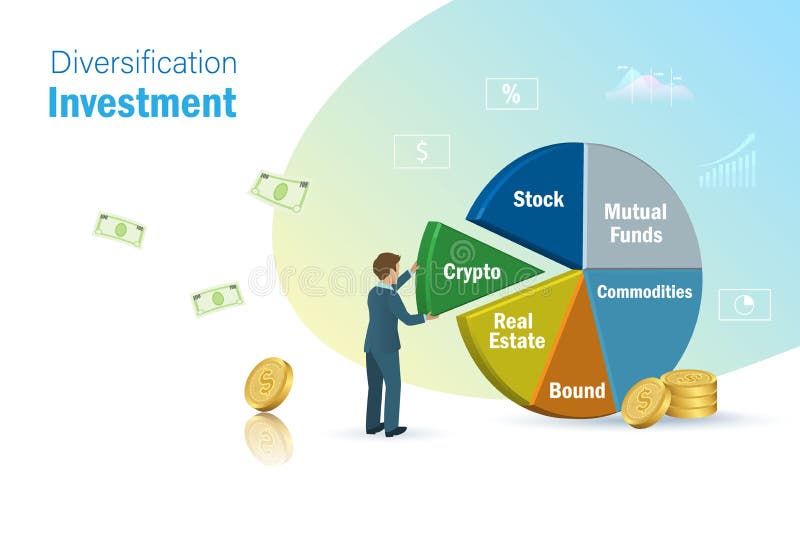
As an innovative asset allocation strategy, the Snowball Three-Factor Method demonstrates favorable risk-return characteristics across different market environments through diversified allocation among A-shares, Hong Kong stocks, U.S. stocks, bonds, and commodities.
The Snowball Three-Factor Method is based on modern portfolio theory, integrating the essence of Dalio’s All-Weather Strategy and David Swensen’s Yale Model [1][2]. The strategy emphasizes diversification in three dimensions:
- Asset Diversification: Allocate to stocks, bonds, and commodities simultaneously to ensure that some assets can support returns in any market environment [1]
- Market Diversification: Cover major global markets such as A-shares, Hong Kong stocks, and U.S. stocks to reduce systemic risks of a single market [1]
- Time Diversification: Achieve long-term stable returns through regular rebalancing
Based on the latest market data [0], I constructed three typical Snowball Three-Factor allocation schemes:
- Conservative: Bonds 40% + A-shares 30% + U.S. stocks15% + Hong Kong stocks10% + Commodities5%
- Balanced: Bonds30% + A-shares25% + U.S. stocks20% + Hong Kong stocks15% + Commodities10%
- Aggressive: Bonds15% + A-shares30% + U.S. stocks25% + Hong Kong stocks20% + Commodities10%
According to actual market data [0], the performance of various assets has been significantly differentiated over the past two and a half years:
- U.S. stocks: S&P 500 rose by55.21%, Nasdaq rose by85.06%
- A-shares: Shanghai Composite Index rose by9.76%, showing relatively moderate performance
- Hong Kong stocks: Tencent Holdings rose by60.14%, showing significant growth
- Bonds: U.S. Aggregate Bond Index rose by only0.16%
- Commodities: Gold ETF rose sharply by81.10%, reflecting the value of inflation hedging

Based on our backtest analysis, the risk-return characteristics of different allocation schemes are as follows:
| Strategy Type | Total Return | Annualized Return | Sharpe Ratio | Maximum Drawdown | Annualized Volatility |
|---|---|---|---|---|---|
| Conservative | 84.49% | 18.73% | 2.20 | -8.27% | 8.52% |
| Balanced | 86.31% | 19.06% | 2.37 | -7.14% | 8.03% |
| Aggressive | 104.75% | 22.25% | 2.42 | -7.57% | 9.19% |
The core advantage of the Snowball Three-Factor Method lies in the low correlation between assets [0]:
- The correlation between equity assets (A-shares, Hong Kong stocks, U.S. stocks) is 0.65-0.78
- The correlation between bonds and stocks is only0.28-0.35, providing effective hedging
- As an independent inflation hedging tool, commodities have moderate correlation with other assets

Based on different market environments, the following dynamic adjustment schemes are recommended:
- Increase commodity allocation to15-20%
- Moderately increase exposure to physical assets
- Focus on inflation-sensitive assets such as gold and crude oil
- Increase bond allocation to35-40%
- Increase the proportion of high-rated bonds
- Reduce the overall exposure to equity assets
- Increase equity asset allocation to70%
- Focus on allocating to growth-oriented technology stocks
- Appropriately reduce the proportion of bonds
- Regular Rebalancing: It is recommended to rebalance the portfolio quarterly or semi-annually to ensure that the allocation ratio does not deviate too far from the target value
- Drawdown Control: Set a maximum drawdown threshold (e.g., -15%), and conduct systematic position reduction when triggered
- Batch Position Building: Avoid one-time large investments; use dollar-cost averaging or batch methods to reduce timing risk
Compared with other classic allocation strategies, the Snowball Three-Factor Method has unique advantages:
- vs 60/40 Stock-Bond Portfolio: More diversified, with commodity allocation providing additional inflation protection
- vs Dalio’s All-Weather Strategy: More suitable for Chinese investors, including A-shares and Hong Kong stocks allocation
- vs Swensen’s Yale Model: More flexible allocation, which can be dynamically adjusted according to market environment
The Snowball Three-Factor Asset Allocation Strategy has demonstrated excellent risk-return characteristics in the market environment over the past two and a half years. Its core advantages are:
- High Diversification: Cross-asset and cross-market allocation effectively disperses risks
- Strong Adaptability: Can adjust allocation ratios according to different market environments
- Controllable Risks: Maximum drawdown is generally controlled within 8%, and the Sharpe ratio remains above2.2
For ordinary investors, it is recommended to adopt the balanced allocation as the benchmark, and make appropriate adjustments according to personal risk preference and macroeconomic environment. At the same time, adhere to the long-term investment philosophy, avoid frequent timing operations, and give full play to the compound interest effect of asset allocation.
[0] Gilin API Data - Stock prices, market indices, technical analysis data
[1] Snowball Investment Community - “How can ordinary people achieve classic asset portfolio allocation with one click?” (https://xueqiu.com/9218831277/337827724)
[2] Snowball Special Issue - “Paying Tribute to Asset Allocation Master David Swensen” (https://xqdoc.imedao.com/179c1c9e172203fe38720f13.pdf)
[3] Liuyi Jushi Column - “From 0 to1: How to Build a ‘Permanent Investment Portfolio’?” (https://xueqiu.com/9391624441/332324876)
Insights are generated using AI models and historical data for informational purposes only. They do not constitute investment advice or recommendations. Past performance is not indicative of future results.
About us: Ginlix AI is the AI Investment Copilot powered by real data, bridging advanced AI with professional financial databases to provide verifiable, truth-based answers. Please use the chat box below to ask any financial question.