Factorial Energy's SPAC Listing and Solid-State Battery Commercialization Plans Analysis
Unlock More Features
Login to access AI-powered analysis, deep research reports and more advanced features
About us: Ginlix AI is the AI Investment Copilot powered by real data, bridging advanced AI with professional financial databases to provide verifiable, truth-based answers. Please use the chat box below to ask any financial question.
Related Stocks
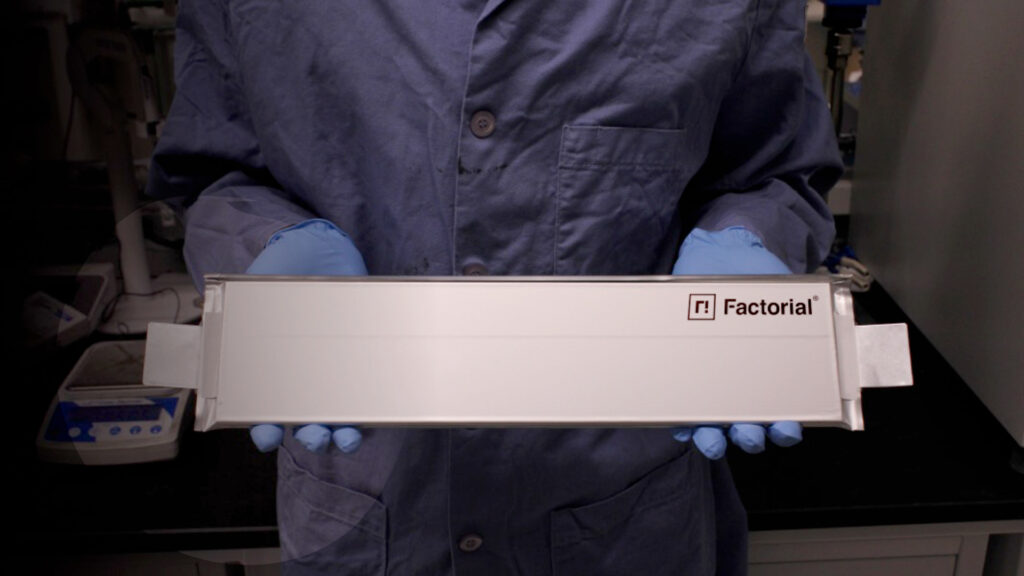
This analysis is based on the New York Times report [1] announcing Factorial Energy’s SPAC merger to list on Nasdaq (ticker: FAC) in mid-2026, targeting 2027 SSB commercialization. Factorial’s core innovation, the “FEST” semi-solid-state battery platform, achieved 1,200 km (745 miles) driving range in a Mercedes-Benz EQS test vehicle, with Stellantis verifying its energy density, charging speeds, and temperature performance [2]. The company also develops the “Solstice” full-solid-state battery and plans to expand into defense, aerospace, and robotics [2].
For market strategy, Factorial will initially target luxury/performance EVs (e.g., Dodge Charger Daytona) before entering the mass market [1]. The SPAC deal values Factorial at $1.1 billion pre-money, with $100 million in institutional investor capital and Cartesian III holding ~$276 million in trust (subject to redemptions) [2]. A non-binding MoU with POSCO Future M aims to establish a global supply chain, supporting facilities in Massachusetts and South Korea [3].
In the competitive landscape, Factorial’s US rivals QuantumScape and Solid Power went public via SPACs but face mass production challenges [1]. Factorial differentiates itself through early production vehicle testing and partnerships with four major OEMs and POSCO Future M [2][3]. Global competition includes CATL, which also targets 2027 SSB production [4].
- Partnership Synergies: Collaborations with leading OEMs and POSCO Future M address validation and supply chain scalability—critical hurdles for SSB commercialization [2][3]. This positions Factorial to potentially navigate production challenges better than competitors.
- Market Diversification: Expanding into defense, aerospace, and robotics reduces overreliance on the volatile US EV market, aligning with national security priorities for additional growth avenues [2].
- Timing Alignment: The 2027 commercialization target matches major OEMs’ SSB roadmaps, increasing initial adoption likelihood. Focusing on luxury EVs first generates premium revenue for mass-market scaling [1][5].
- EV Industry Enhancement: Factorial’s SSB could reduce range anxiety and EV weight, boosting EV appeal amid the US market slowdown [1].
- High-Margin Sector Expansion: Defense, aerospace, and robotics applications offer new revenue streams beyond passenger EVs [2].
- Global Scaling Support: The POSCO Future M partnership accelerates supply chain development [3].
- Mass Production Challenges: Precedents with QuantumScape and Solid Power highlight SSB scaling difficulties [1].
- EV Market Dynamics: Slow US EV sales and automaker shifts to hybrids/gasoline models may reduce near-term demand [1].
- Regulatory Scrutiny: SPAC mergers face oversight, and SSB technology may encounter safety/environmental regulations delaying launch [1].
- Global Competition: CATL’s production scale and experience could outpace Factorial [4].
Factorial Energy will list on Nasdaq as FAC in mid-2026 via a SPAC merger, valued at $1.1 billion pre-money [1][2]. It targets 2027 commercialization of its 745-mile range FEST SSB, with plans for the Solstice full-solid-state battery and expansion into defense, aerospace, and robotics [2]. Key partnerships include Mercedes-Benz, Stellantis, Hyundai/Kia, and POSCO Future M [2][3]. Competitors include QuantumScape, Solid Power, and CATL, with mass production hurdles and EV market slowdowns as primary risks [1][4].
卫宁健康(300253)强势表现分析
Insights are generated using AI models and historical data for informational purposes only. They do not constitute investment advice or recommendations. Past performance is not indicative of future results.
About us: Ginlix AI is the AI Investment Copilot powered by real data, bridging advanced AI with professional financial databases to provide verifiable, truth-based answers. Please use the chat box below to ask any financial question.