
Analysis of Price Fluctuations and Moat Stability in High-End Baijiu
Unlock More Features
Login to access AI-powered analysis, deep research reports and more advanced features
About us: Ginlix AI is the AI Investment Copilot powered by real data, bridging advanced AI with professional financial databases to provide verifiable, truth-based answers. Please use the chat box below to ask any financial question.
Related Stocks
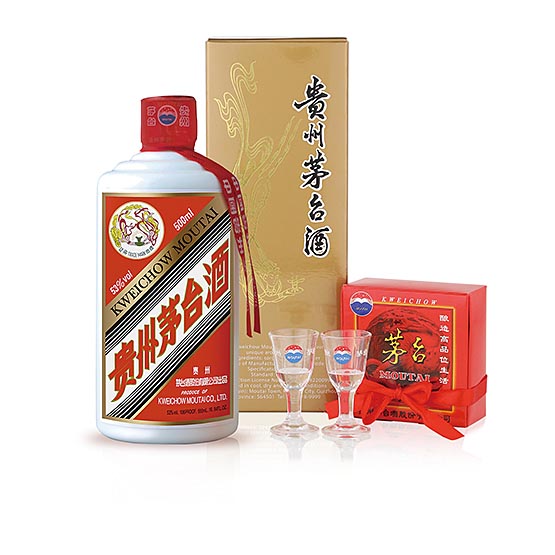
The price declines of high-end baijiu in 2014-2015 and the current period are both results of the superposition of economic cyclical fluctuations and inventory cycle amplification effects. The 2014-2015 period was mainly affected by three factors: the three public consumption restriction policies, slowing economic growth, and high channel inventory. The current fluctuations are due to slowing economic growth, weak consumption, and the industry entering a deep adjustment period of “stock competition”, with problems such as high channel inventory and product price inversion [0][1]. As an industry leader, Kweichow Moutai (600519) has an ROE of 36.48% and a net profit margin of 51.51%, with strong financial indicators and low asset-liability ratio, showing extremely high profitability and financial stability [0].
The distinction between short-term inventory cycles and long-term competitive barriers can be made through the following dimensions: In the short term, look at inventory levels, price fluctuations, macroeconomic environment, and changes in consumption scenarios; in the long term, look at the company’s core financial indicators (such as ROE, net profit margin), brand premium, channel system, and industrial heritage. Kweichow Moutai’s management clearly stated that the company’s brand and channel system are more solid, with deep industrial heritage, and the core competitiveness has not changed fundamentally, so the moat remains stable [1][0].
The short-term price fluctuations of high-end baijiu are caused by the superposition of economic cycles and inventory cycles, and the long-term competitive barriers have not narrowed. Investors need to pay attention to long-term competitiveness indicators such as core financial indicators, brand influence, and channel systems to distinguish between the two, while combining short-term cycle factors such as inventory levels and economic environment for comprehensive judgment.
Insights are generated using AI models and historical data for informational purposes only. They do not constitute investment advice or recommendations. Past performance is not indicative of future results.
About us: Ginlix AI is the AI Investment Copilot powered by real data, bridging advanced AI with professional financial databases to provide verifiable, truth-based answers. Please use the chat box below to ask any financial question.