Analysis of Profit Path and 2026 Overseas Expansion Potential of Robotaxi Under 0.81 CNY/km Cost
Unlock More Features
Login to access AI-powered analysis, deep research reports and more advanced features
About us: Ginlix AI is the AI Investment Copilot powered by real data, bridging advanced AI with professional financial databases to provide verifiable, truth-based answers. Please use the chat box below to ask any financial question.
Related Stocks
This analysis is based on social media discussions and industry reports [1][2][3][4][5], focusing on core issues in Robotaxi commercialization for operators such as WeRide and Pony.ai.
-
Cost Advantages and Supporting Factors:
After completely removing safety personnel, the per-kilometer operating cost of Robotaxi is reportedly reduced to 0.81 CNY, which is about 58% and 43% lower than traditional fuel ride-hailing (1.93 CNY) and pure electric ride-hailing (1.43 CNY) respectively. This specific figure has not been directly verified, but the industry trend of cost reduction is supported: Waymo’s model shows that eliminating driver costs (accounting for 40% of traditional ride-hailing revenue) can significantly reduce operating costs, and vehicle hardware has dropped from millions of yuan to hundreds of thousands due to technological maturity [1]. Cost reduction mainly comes from three dimensions: vehicle cost from 1 million to 205,000 yuan (the trend is consistent but the figure is to be verified [1]), cloud-based remote driving human-vehicle ratio from 1:5 to 1:50 (efficiency improvement trend is recognized by the industry [1]), and 24-hour operation and fast charging technology to optimize operational efficiency. -
Profit Conversion and Investment Value:
Current operators are in the loss phase; for example, Pony.ai’s net loss in Q3 2025 was 61.6 million USD (up 46% year-on-year), but its revenue was 25.44 million USD (up 72% year-on-year), of which Robotaxi service revenue was 6.7 million USD [0]. The profit path depends on scale expansion to release cost advantages: Waymo plans to achieve 1 million weekly services by the end of 2026, with an expected profit margin of 50% [1][4]. At the investment level, Pony.ai has received a unanimous buy rating from analysts, with a target price having an upside potential of 83.7% from the current level [0], and the industry as a whole is regarded as a long-term growth track. -
2026 Overseas Expansion Potential:
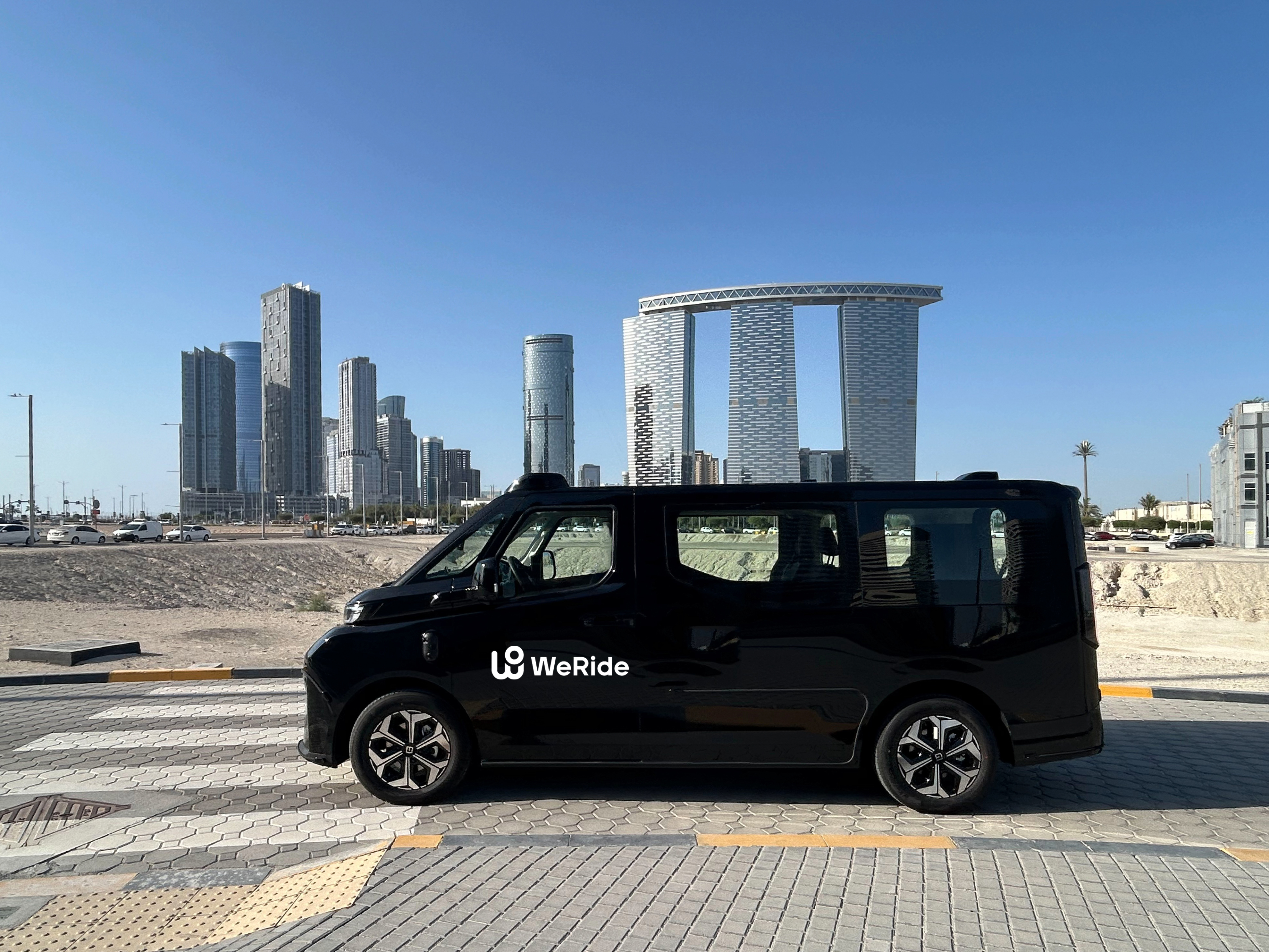
WeRide has launched fully driverless Robotaxi services in Abu Dhabi and plans to expand to 15 cities in the Middle East and Europe [2]; Pony.ai plans to triple its global Robotaxi fleet size by the end of 2026 and enter 8 countries including Qatar and Singapore [3]. Due to high labor costs in the Middle East, the cost advantage of Robotaxi is more significant, which is the main arbitrage space [1]; Uber also plans to launch Robotaxi services in 10 countries in 2026, accelerating the industry expansion pace [5].
- The core of cost advantage lies in driverless costs and scale effects; fleet expansion and service coverage in 2026 will be the profit turning point.
- Regions with high labor costs like the Middle East are priority choices for overseas expansion, and their cost arbitrage space is far larger than the domestic market.
- The current losses of operators are mainly due to technology iteration and fleet expansion investment; long-term profits depend on continuous optimization of operational efficiency and scale expansion.
- Risks: Specific cost figures such as 0.81 CNY/km have not been officially verified [1]; current losses are still expanding, and there is uncertainty about the profit time point [0]; overseas markets face regulatory barriers and localization challenges.
- Opportunities: Robotaxi has significant cost advantages, and the industry enters the 2026 first year of performance [2][3][4][5]; overseas expansion has broad space, with prominent potential in the Middle East [1][2][3]; improved technological maturity (such as Waymo’s 10 million miles of safe driving record [1]) enhances market confidence.
- Robotaxi has significant cost advantages in fully driverless state, the trend is supported by the industry, but specific figures need further verification.
- Operators like WeRide and Pony.ai rely on scale expansion and overseas layout in 2026 for profit; currently in the investment phase but with obvious growth momentum.
- 2026 is a key node for Robotaxi commercialization, and overseas expansion especially in the Middle East will be an important source of increments.
- Investment value needs to focus on operational scale, cost control and overseas landing progress; the industry is generally optimistic but short-term risks need to be carefully evaluated.
Insights are generated using AI models and historical data for informational purposes only. They do not constitute investment advice or recommendations. Past performance is not indicative of future results.
About us: Ginlix AI is the AI Investment Copilot powered by real data, bridging advanced AI with professional financial databases to provide verifiable, truth-based answers. Please use the chat box below to ask any financial question.