
Analysis of Structural Investment Opportunities in the Semiconductor Packaging Industry Amid the AI Wave
Unlock More Features
Login to access AI-powered analysis, deep research reports and more advanced features
About us: Ginlix AI is the AI Investment Copilot powered by real data, bridging advanced AI with professional financial databases to provide verifiable, truth-based answers. Please use the chat box below to ask any financial question.
Related Stocks
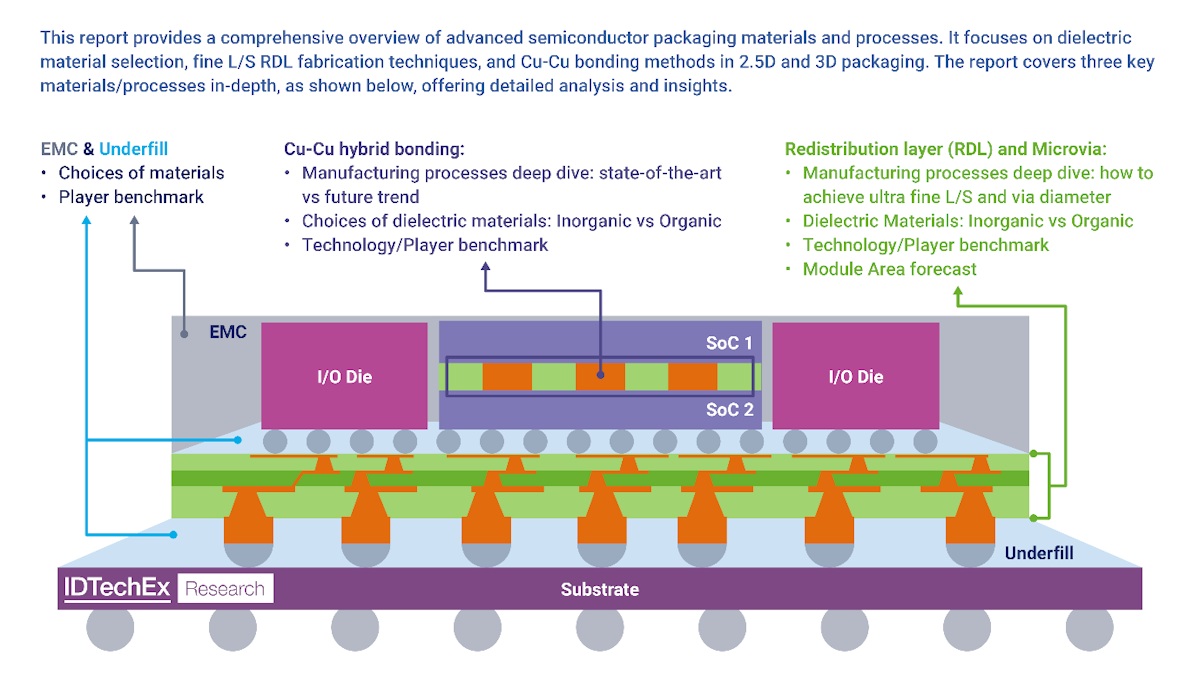
The semiconductor packaging industry is in a phase of structural transformation driven by the AI chip wave. From 2022 to 2023, the industry entered a trough due to inventory backlogs, with capacity utilization rates of packaging and testing manufacturers declining (e.g., only 70%-75% at some facilities of Hua Tian Technology)[1]; in 2024, along with the recovery of the semiconductor industry, orders and capacity utilization rates rebounded, and SEMI predicts full-year sales growth of 13%-16%[1]. Unlike traditional packaging, which has low barriers to entry, high competition, and strong cyclicality, the 2.5D/3D advanced packaging required for AI chips has high technical barriers, with its value share continuing to rise (expected to reach 58% by 2028), and gross profit margins significantly higher than traditional packaging[2][3].
Domestic players have relative advantages in the traditional packaging field, but AI advanced packaging is still in its infancy, with gaps in high-end capacity (such as CoWoS) compared to international giants (TSMC, Samsung), and insufficient capacity[4]. To address cyclical challenges and seize AI opportunities, domestic traditional packaging manufacturers (Changdian Technology, Tongfu Microelectronics, Hua Tian Technology, etc.) have increased investment in advanced packaging, with capital expenditure accounting for up to 35% of revenue in 2024, focusing on 2.5D/3D technology layout[4][8].
- AI computing power demand is the core driver of advanced packaging growth: With the popularization of AI applications such as large models, requirements for chip integration and transmission speed have increased. 2.5D/3D packaging has become essential due to its ability to achieve high bandwidth and small-volume integration, with a compound annual growth rate of 30.5% from 2023 to 2029[2].
- Opportunities and challenges coexist for domestic players in catching up: Domestic players’ manufacturing experience and cost advantages in traditional packaging provide a foundation for advanced packaging layout, and policy and market demand are driving accelerated catch-up; however, insufficient technical accumulation and gaps in high-end capacity remain key challenges.
- Technology route iteration spawns long-term investment opportunities: Glass-based packaging is regarded as the next-generation packaging substrate due to its advantages of large size and low warpage, with Intel predicting mass production by 2030[5]; panel-level packaging can improve area utilization, and panel manufacturers have begun to layout it, but both need to break through technical bottlenecks such as yield and cost[6].
- Opportunities: The advanced packaging market size will have a compound annual growth rate of 10% from 2024 to 2030, exceeding 91.1 billion USD by 2030[7]; domestic players can break through the low-margin dilemma of traditional packaging through advanced packaging — in 2024, Tongfu Microelectronics and Hua Tian Technology saw their net profits grow by 299.90% and 172.29% respectively due to their advanced packaging businesses[8].
- Risks: Cyclical risks of traditional packaging still exist, and there is great pressure to increase industry concentration; advanced packaging has high technical barriers, and the industrialization progress of new technologies such as glass-based and panel-level packaging is uncertain; domestic high-end advanced packaging capacity is insufficient, relying on international manufacturers in the short term.
The semiconductor packaging industry presents dual characteristics of “cyclical fluctuations in traditional packaging + structural growth in advanced packaging”. Demand for AI chips drives up the value and growth rate of advanced packaging, making it the main growth point of the industry. Domestic players need to seize the opportunity to layout advanced packaging while addressing challenges such as technology and capacity. Future technical routes will focus on glass-based and panel-level packaging as main directions, but their industrialization process needs continuous attention. The industry will continue its growth trend in 2025, and public data does not support the judgment of “industry stagnation”[1].
Insights are generated using AI models and historical data for informational purposes only. They do not constitute investment advice or recommendations. Past performance is not indicative of future results.
About us: Ginlix AI is the AI Investment Copilot powered by real data, bridging advanced AI with professional financial databases to provide verifiable, truth-based answers. Please use the chat box below to ask any financial question.