
Analysis of Brown-Forman's Strategy and Business Model for Navigating Multiple Crises
Unlock More Features
Login to access AI-powered analysis, deep research reports and more advanced features
About us: Ginlix AI is the AI Investment Copilot powered by real data, bridging advanced AI with professional financial databases to provide verifiable, truth-based answers. Please use the chat box below to ask any financial question.
Related Stocks
This analysis was triggered by a query on December 19, 2025 (UTC+8), focusing on Brown-Forman’s strategies and business model across multiple crises.
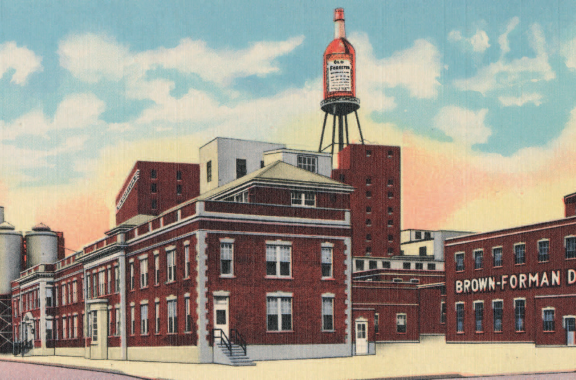
Brown-Forman successfully navigated major crises such as Prohibition, the Great Depression, World Wars, and the pandemic through its business model of ‘core brands + pricing power + balance between defense and offense’. [0] During Prohibition, the company obtained federal government approval to sell Old Forester as a medical-use whiskey by prescription, becoming the only bourbon brand that continued production before, during, and after Prohibition, maintaining brand continuity. [1][2] During the pandemic, the company offset sales declines through product price hikes, acquisitions of high-end Scottish single malt whiskey brands, and the launch of innovative RTD products, achieving net sales of $4.178 billion in fiscal year 2024 with a 31% year-over-year increase in net profit. [3] The company’s brand moat stems from century-old heritage (e.g., Jack Daniel’s, Old Forester), high-end positioning, continuous innovation, and the long-term strategic vision of family ownership. [1][3][4] High-end market positioning gives it strong pricing power, allowing it to respond to cost increases through price hikes—its stock had an annualized return of 9% from 1994 to 2023. [4][1]
- Brand Continuity During Crises: The medical use permit strategy during Prohibition ensured the continuity of brand production and consumer awareness, which was key to maintaining long-term market position. [1][2]
- Synergy Between High-End Positioning and Pricing Power: The combination of century-old brand heritage and high-end market positioning forms pricing power to resist external cost shocks, supporting long-term financial stability. [1][4]
- Strategic Balance Between Defense and Offense: While maintaining brand heritage (defense), expanding markets through product innovation and strategic acquisitions (offense) ensures cycle-navigating capabilities. [3]
- Strategic Advantages of Family Ownership: The family ownership structure avoids interference from short-term market pressures, supporting balanced decisions on long-term brand heritage and innovation. [1][4]
- Risks: Insufficient public information on specific response strategies during the Great Depression and World Wars; this model may not apply to low-value-added consumer goods (lacking the foundation for high-end pricing power). [0][3]
- Opportunities: High-end consumer goods companies can replicate the ‘core brand focus + innovative expansion’ model; emphasizing brand heritage can enhance customer stickiness. [0][3]
Brown-Forman’s crisis resilience stems from its adherence to core brands, pricing power from high-end positioning, and balance between defense and offense strategies. Lessons other consumer goods companies can learn include: valuing brand continuity, building pricing power through high-end positioning, and promoting innovation and strategic acquisitions while maintaining brand heritage. However, the applicability of the model needs to be evaluated based on industry characteristics and product positioning. [0]
Insights are generated using AI models and historical data for informational purposes only. They do not constitute investment advice or recommendations. Past performance is not indicative of future results.
About us: Ginlix AI is the AI Investment Copilot powered by real data, bridging advanced AI with professional financial databases to provide verifiable, truth-based answers. Please use the chat box below to ask any financial question.