
Analysis of Long-Term Market Share and Valuation Impact of BYD's Lagging R&D Investment Efficiency
Unlock More Features
Login to access AI-powered analysis, deep research reports and more advanced features
About us: Ginlix AI is the AI Investment Copilot powered by real data, bridging advanced AI with professional financial databases to provide verifiable, truth-based answers. Please use the chat box below to ask any financial question.
Related Stocks
This analysis is based on a comparative study of R&D investment and market performance among three Chinese new energy vehicle enterprises [0][1][2][3][4][5][6]. Key findings are as follows:
-
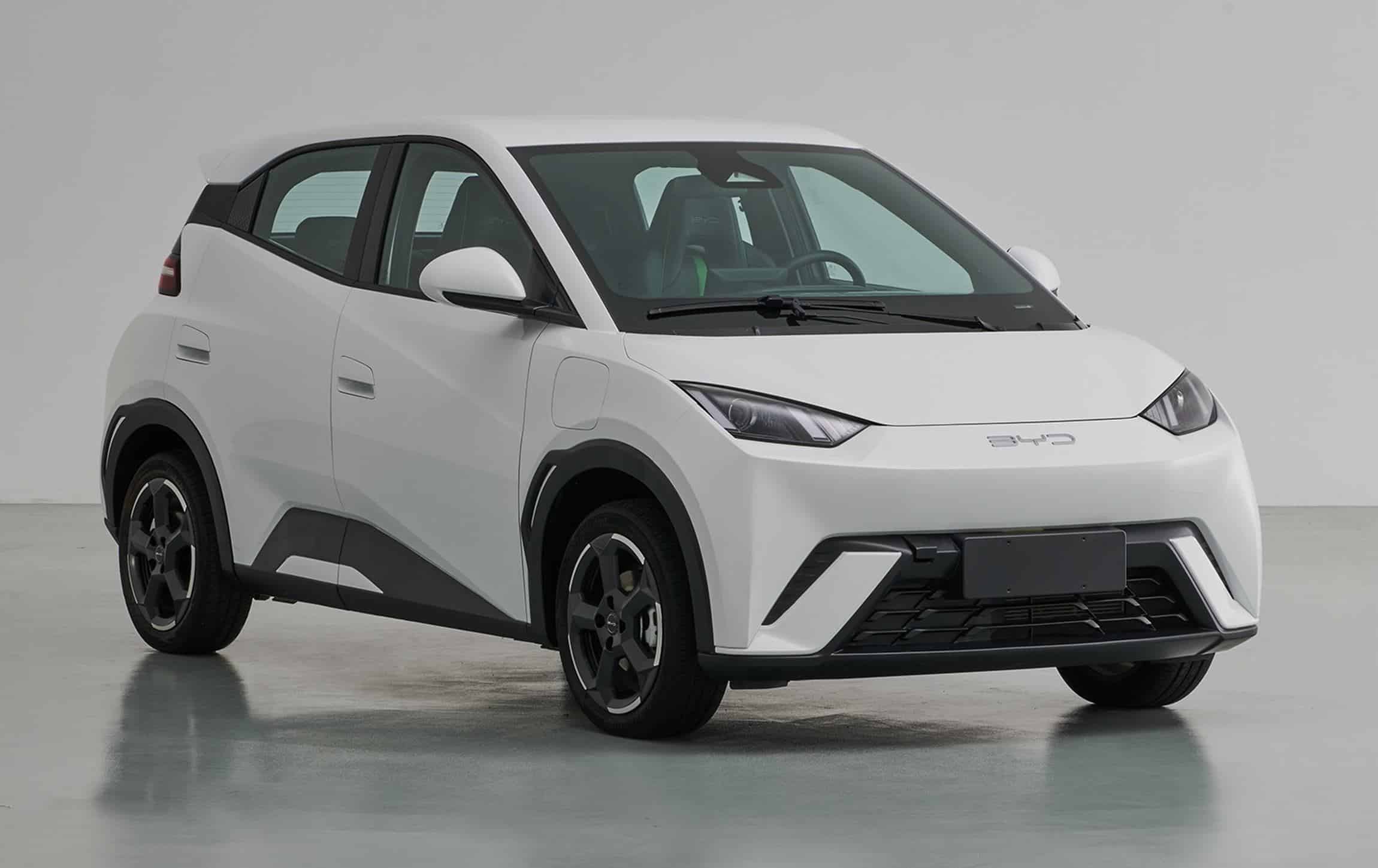
Model and Sales Comparison: Analysis of same-class models from BYD and Geely (Seagull vs Star Wish, Tang L vs Galaxy M9) shows that Geely models have advantages in configuration and cost-performance. In November 2025, Geely Star Wish sales reached 42,038 units, and Galaxy M9 sales hit a new high of 10,639 units [1], while BYD’s corresponding models did not enter the top ranks of China’s EV sales in the same period, with a clear sales gap.
-
R&D Investment and Efficiency: BYD’s 2024 R&D investment reached RMB 54.16 billion (approximately USD 7.5 billion), the highest among Chinese A-share companies [2]. However, its Q3 2025 net profit fell by 32.6% year-on-year, and it lowered its 2025 sales target from 5.5 million units to 4.6 million units [0][3], in sharp contrast to Geely’s 34% sales growth in November 2025 [1], indirectly reflecting BYD’s insufficient R&D efficiency. Xiaomi’s R&D investment in EV and autonomous driving exceeded USD 1.4 billion [4], far lower than BYD’s, but the Xiaomi SU7 delivered 135,000 units within 9 months of launch, and the YU7 SUV even had a waiting list of over a year [4][5], highlighting its R&D efficiency advantage.
-
Valuation and Market Position: BYD’s current market capitalization is USD 850.42 billion with a Price-to-Earnings Ratio (P/E) of 67.44 [0], while Geely’s market capitalization is USD 170.62 billion with a P/E ratio of only 10.38 [0]. BYD’s high valuation is mainly based on its early market dominance, but R&D efficiency issues may put pressure on future valuation.
-
R&D Efficiency Rather Than Scale Is the Core of Competition: BYD leads in R&D investment scale but has not focused resources on consumer pain points, leading to insufficient product competitiveness. Geely’s cost-performance strategy and Xiaomi’s efficient R&D path are more aligned with market demand, becoming key drivers of their sales growth.
-
Market Share Trend May Change: BYD’s 2024 China sales were 4.25 million units, ranking first in the market [3], with Geely following closely at 3.34 million units [6]. However, since 2025, BYD’s sales growth has stagnated, Geely’s sales have continued to grow, and Xiaomi, as a new entrant, has achieved monthly deliveries exceeding 20,000 units for seven consecutive months [5], so BYD faces the risk of market share erosion.
-
Two Sides of Vertical Integration Advantage: BYD has a vertically integrated supply chain from batteries to semiconductors [0], which helps reduce costs, but this advantage has not been converted into product competitiveness. If BYD cannot adjust its R&D direction to match consumer demand, the cost advantage brought by vertical integration may be difficult to offset the impact of insufficient R&D efficiency.
- Risks (BYD): Persistent low R&D efficiency may lead to further market share loss; the high P/E ratio (67.44) relies on early market position—if sales and profit growth continue to be weak, valuation may face correction pressure; R&D path deviating from consumer demand may lead to backward product iteration.
- Opportunities (BYD): The vertically integrated supply chain still has cost advantages; overseas market expansion potential is large, which may alleviate domestic market competition pressure [0].
- Opportunities (Competitors): Geely’s cost-performance strategy and Xiaomi’s efficient R&D path have been verified by the market—if they continue to advance, they are expected to further expand market share.
BYD’s R&D investment efficiency lags behind Geely and Xiaomi, which has led to lower sales volume and profit margin for same-class models. In the long run, this may affect market share and valuation. Geely has gained market recognition through its cost-performance strategy, and Xiaomi through its efficient R&D path, becoming BYD’s main competitors. BYD’s vertical integration advantage provides it with some buffer, but its future development depends on whether it can adjust its R&D direction to match consumer demand.
Insights are generated using AI models and historical data for informational purposes only. They do not constitute investment advice or recommendations. Past performance is not indicative of future results.
About us: Ginlix AI is the AI Investment Copilot powered by real data, bridging advanced AI with professional financial databases to provide verifiable, truth-based answers. Please use the chat box below to ask any financial question.