Analysis of Jim Cramer's 10-Year Treasury Yield Comments and Market Implications
Unlock More Features
Login to access AI-powered analysis, deep research reports and more advanced features
About us: Ginlix AI is the AI Investment Copilot powered by real data, bridging advanced AI with professional financial databases to provide verifiable, truth-based answers. Please use the chat box below to ask any financial question.
Related Stocks
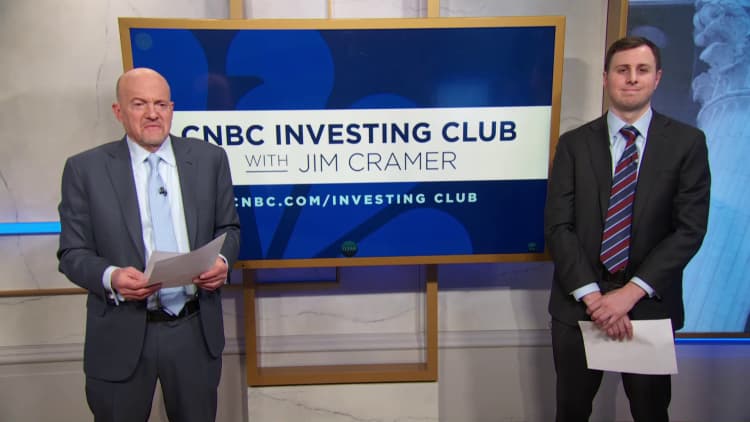
This analysis is based on the CNBC YouTube segment [3] featuring Jim Cramer’s comments on the 10-year U.S. Treasury yield, dated December 22, 2025. On that day, the 10-year yield closed at 4.17% [0], slightly above the 4% threshold Cramer cited as a confidence booster for bullish investors. The immediate market reaction was mild: the S&P 500 (+0.19%) and Dow Jones Industrial Average (+0.31%) posted small gains, while the NASDAQ Composite (-0.09%) edged lower [0]. This limited reaction is likely because Cramer’s statement reflects analyst sentiment rather than a fundamental economic announcement. A sustained drop below 4% could reduce borrowing costs for corporations and consumers, potentially making equities more attractive relative to fixed-income assets [2]. Market forecasts for the 10-year yield in 2026 vary: an Axios reader poll predicts 4.05% by year-end [1], while iCapital forecasts a range of 4.0%-4.5%, with potential to reach 4.5% in the second half if the U.S. fiscal deficit outlook worsens [2].
- The 10-year Treasury yield remains a critical benchmark for market sentiment, with sub-4% levels viewed as a positive catalyst for equity markets due to lower borrowing costs [2].
- Analyst comments like Cramer’s have limited immediate market impact, as investors prioritize fundamental economic data (inflation, Fed policy) and institutional forecasts [2].
- Uncertainty surrounds the yield’s future path, with competing forecasts highlighting the influence of factors such as fiscal policy, global economic conditions, and central bank actions [2].
- Opportunities: If the 10-year yield falls below 4% and stays there, interest rate-sensitive sectors (real estate, utilities, consumer durables) could benefit from reduced borrowing costs, while equities may become more attractive relative to bonds [2].
- Risks: A failure to reach sub-4% yields or a rise to 4.5% (as suggested by iCapital’s H2 2026 scenario) could pressure risk assets and capital market activity [2]. Key factors to monitor include monthly inflation reports (CPI, PCE), Federal Reserve policy decisions, U.S. fiscal deficit plans, and global geopolitical developments.
On December 22, 2025, Jim Cramer noted bullish investors would gain confidence if the 10-year Treasury yield fell below 4% and remained there [3]. The yield closed at 4.17% that day, with equities showing mixed mild performance [0]. Forecasts for 2026 suggest the yield could hover near or slightly above 4%, dependent on economic and policy factors [1][2]. Investors should monitor fundamental drivers of long-term yields to assess potential market impacts.
Insights are generated using AI models and historical data for informational purposes only. They do not constitute investment advice or recommendations. Past performance is not indicative of future results.
About us: Ginlix AI is the AI Investment Copilot powered by real data, bridging advanced AI with professional financial databases to provide verifiable, truth-based answers. Please use the chat box below to ask any financial question.