Rocket Lab USA (RKLB) Performance Drivers & Valuation vs. Space Tech Peers
Unlock More Features
Login to access AI-powered analysis, deep research reports and more advanced features
About us: Ginlix AI is the AI Investment Copilot powered by real data, bridging advanced AI with professional financial databases to provide verifiable, truth-based answers. Please use the chat box below to ask any financial question.
Related Stocks
Rocket Lab USA (RKLB) has delivered robust 2025 stock performance, driven by a combination of financial milestones, strategic defense contract wins, and technological progress [0]. Financially, the company reported record Q3 2025 revenue of $155.08M (48% year-over-year growth) with a 37% GAAP gross margin, alongside narrowing net losses ($18.3M vs. $52M in Q3 2024) due to operational efficiency gains [0]. Operationally, it completed 21 successful Electron rocket launches (100% success rate) in 2025, setting a new annual record [0][1].
A critical growth catalyst has been RKLB’s expansion into defense space contracts. In December 2025, the company was awarded an $816M prime contract from the U.S. Space Development Agency (SDA) to build 18 missile-defense satellites, its largest-ever contract [2]. This award doubled RKLB’s Space Systems backlog to $1.4B, pushing total SDA contract value over $1.3B and solidifying its position as a defense space prime [3].
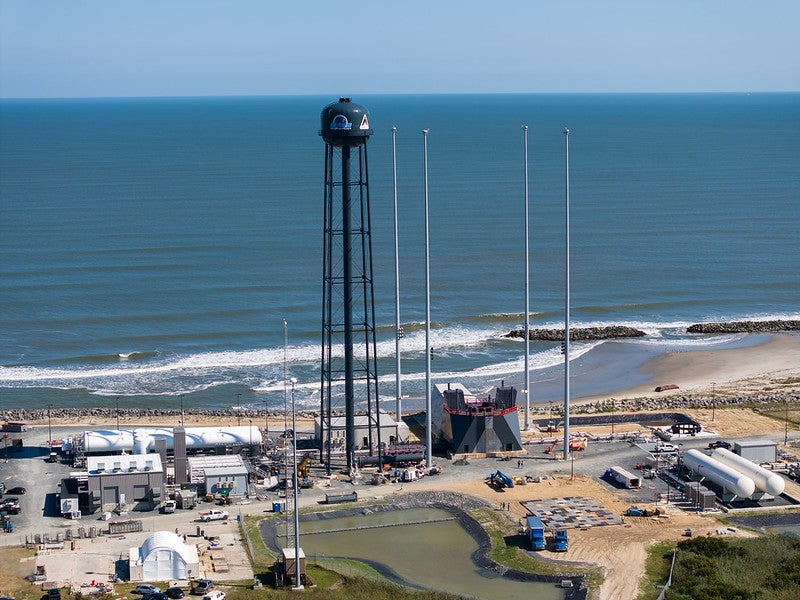
Technologically, the Neutron rocket—RKLB’s medium-lift, reusable competitor to SpaceX’s Falcon 9— is on track for an early 2026 maiden launch, which will expand its capabilities to serve larger launch markets and deploy entire satellite constellations [4].
In terms of valuation, RKLB trades at a P/B ratio of 31.09x (market cap $38.64B) as of 2025-12-24, a significant premium to peers like Planet Labs (PL: 14.18x, market cap $6.10B) and BlackSky (BKSY: 8.21x, market cap $758.49M) [0]. This premium reflects investor confidence in its defense contract pipeline, Neutron rocket potential, and vertically integrated business model [0].
- Defense Transition as a Growth Driver: RKLB’s shift from a niche launch provider to a defense prime has unlocked access to high-margin government contracts previously dominated by legacy aerospace firms, directly contributing to its 2025 stock surge [2].
- Valuation Premium Justification: The 31.09x P/B ratio is supported by RKLB’s clear path to revenue expansion (Neutron rocket, $1.4B backlog) and improving profitability, distinguishing it from smaller peers with less diversified revenue streams [0].
- Long-Term Market Expansion: The Neutron rocket enables RKLB to enter the medium-lift launch market, a segment larger than its current small-lift focus, providing a significant long-term growth runway [4].
- Valuation Correction Risk: The high P/B ratio implies substantial future growth expectations; any delays in Neutron development or contract execution could trigger a valuation correction [0][2].
- Competitive Pressures: SpaceX remains the dominant player in the launch market, and legacy aerospace companies (Boeing, Lockheed Martin) are expanding their space capabilities, posing competitive threats [1].
- Contract Execution Risk: The $816M SDA contract requires timely delivery of advanced satellites; delays may harm RKLB’s reputation and future government contract opportunities [2].
- Cash Burn Risk: Negative free cash flow (-$69.4M in the latest quarter) from Neutron development and infrastructure expansion could strain the balance sheet [0].
- Defense Space Market Growth: The SDA’s planned satellite constellations (estimated $1T total value) offer long-term contract opportunities [3].
- Medium-Lift Launch Market Access: Entry into the medium-lift launch market (projected $30B by 2030) could double RKLB’s addressable market [0].
- RKLB’s 2025 YTD return of +201.81% is driven by record financial performance, strategic defense contracts, and the upcoming Neutron rocket launch [0].
- Its P/B ratio (31.09x) is 2-3 times higher than space tech peers, reflecting investor optimism about its diversified growth drivers [0].
- Long-term investment potential depends on successful Neutron deployment and defense contract execution, while short-term risks include valuation volatility and execution challenges [0][2][4].
Insights are generated using AI models and historical data for informational purposes only. They do not constitute investment advice or recommendations. Past performance is not indicative of future results.
About us: Ginlix AI is the AI Investment Copilot powered by real data, bridging advanced AI with professional financial databases to provide verifiable, truth-based answers. Please use the chat box below to ask any financial question.