Stock Market vs Consumer Spending Disconnect Analysis: Jobless Boom Phenomenon in 2025
Unlock More Features
Login to access AI-powered analysis, deep research reports and more advanced features
About us: Ginlix AI is the AI Investment Copilot powered by real data, bridging advanced AI with professional financial databases to provide verifiable, truth-based answers. Please use the chat box below to ask any financial question.
This analysis examines the paradoxical economic environment of November 2025, where stock markets continue to perform strongly despite significant deterioration in labor market conditions and consumer spending patterns. Based on the Reddit post questioning this disconnect [0], our investigation reveals a complex “jobless boom” phenomenon driven by structural economic shifts.
Major US indices showed positive performance on November 7, 2025, with the S&P 500 gaining 0.49% to close at 6,728.81 points, Nasdaq Composite rising 0.49% to 23,004.54, and Dow Jones adding 0.41% to reach 46,987.11 [0]. However, this market resilience occurs amid unprecedented labor market deterioration, with October 2025 recording 153,074 planned layoffs - a 183% increase from September and the highest October level in 22 years [1][2].
The current disconnect stems from several interconnected factors:
-
Corporate Efficiency Focus: Companies are aggressively implementing cost-cutting measures and AI technologies, which investors reward with higher stock prices. Notably, Amazon’s stock surged 11.6% following major layoff announcements, as market participants interpreted these cuts as corporate agility [1].
-
Market Concentration: Gains are increasingly concentrated in mega-cap technology companies leading AI adoption, creating a narrow market foundation that doesn’t reflect broader economic conditions [1].
-
AI-Driven Restructuring: October 2025 saw over 31,000 job cuts directly attributed to AI adoption, with cost-cutting measures accounting for another 50,000+ layoffs [1]. This represents a fundamental structural shift rather than cyclical downturn.
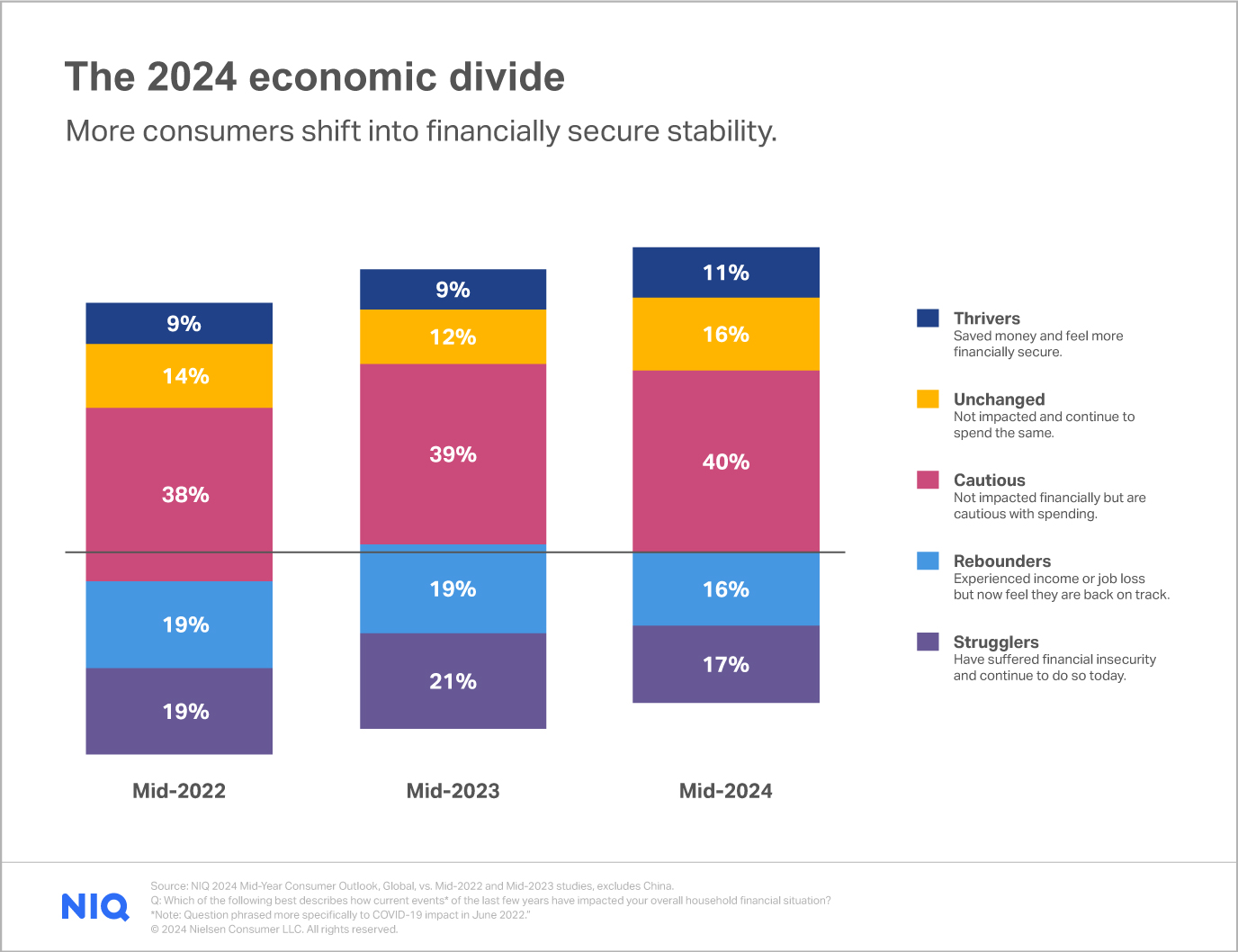
The University of Michigan Consumer Sentiment Index fell to 53.6 in October 2025, down from 55.1 in September and 70.5 in October 2024 [3]. Only 4% of Americans rate the economy as “excellent,” while 39% rate it as “poor” [2]. The Reddit poster’s observations about reduced tipping align with this broader consumer pessimism, as 54% of Americans believe the economy is getting worse versus 21% who think it’s improving [2].
The analysis reveals a complex economic landscape where traditional relationships between employment, consumer spending, and market performance have temporarily decoupled. Key factors include:
- Scale of Labor Disruption: 153,074 layoffs in October 2025 alone, with AI directly responsible for over 31,000 job cuts [1]
- Consumer Psychology Impact: 24% year-over-year decline in consumer sentiment, reaching five-month lows [3]
- Market Narrowness: S&P 500 gains driven by concentrated mega-cap tech performance, creating potential fragility [1]
- Policy Environment: Fed rate cuts supporting asset prices while employment conditions deteriorate [1]
- Economic Divergence: Nearly half of U.S. states in or near recession despite strong national market performance [2]
The sustainability of current market performance depends heavily on whether structural adjustments can generate new growth opportunities before consumer weakness significantly impacts corporate earnings. Historical precedents suggest such disconnects typically resolve through either economic adjustment or market correction.
Insights are generated using AI models and historical data for informational purposes only. They do not constitute investment advice or recommendations. Past performance is not indicative of future results.
About us: Ginlix AI is the AI Investment Copilot powered by real data, bridging advanced AI with professional financial databases to provide verifiable, truth-based answers. Please use the chat box below to ask any financial question.