Leather Price Surge (2025): Tariffs, Scarcity Impact Footwear, Luxury Goods, Furniture
Unlock More Features
Login to access AI-powered analysis, deep research reports and more advanced features
About us: Ginlix AI is the AI Investment Copilot powered by real data, bridging advanced AI with professional financial databases to provide verifiable, truth-based answers. Please use the chat box below to ask any financial question.
Related Stocks
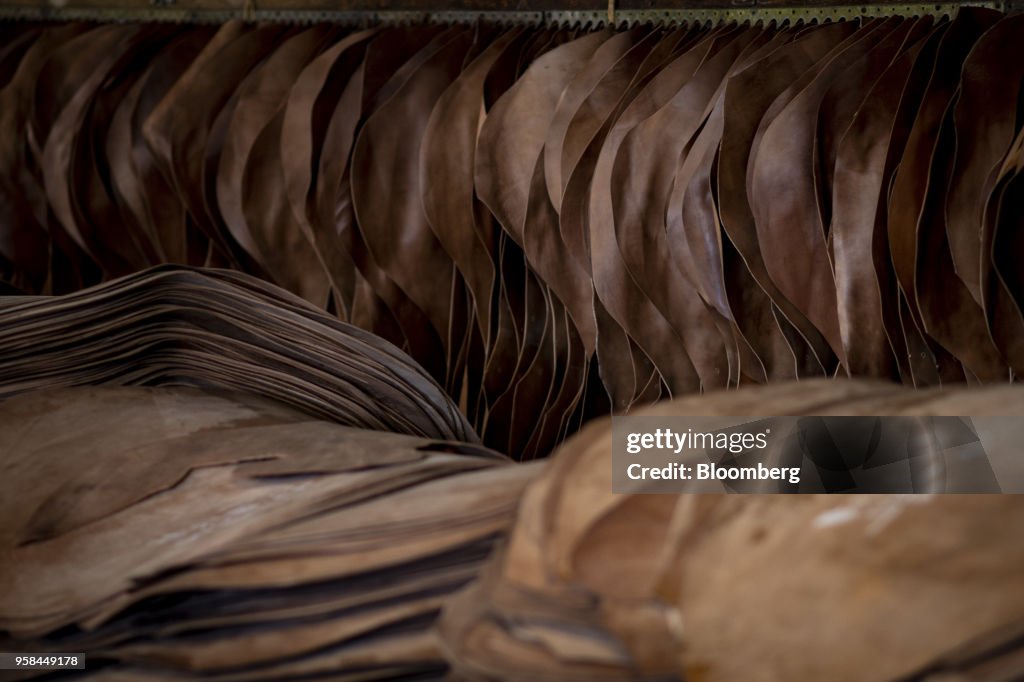
This report is based on the CNBC article [1] published on December 25, 2025, which highlights the sharp rise in leather prices affecting the footwear, luxury goods, and furniture industries. The price surge is driven by three key factors:
- Tariffs: In April 2025, President Donald Trump imposed 10% “Liberation Day” tariffs on nearly all imports (with Mexico, Canada, and select country exemptions) [3], which followed earlier actions lifting the average U.S. import tariff rate to nearly 17% (from <3% in 2024) [3]. These tariffs increased costs for companies importing leather or finished products directly.
- Hide Scarcity: The U.S. cattle herd, a primary source of raw hides, is at its smallest size since the 1950s due to prolonged drought, rising feed costs, and herd liquidation [1]. Fewer cattle mean reduced hide supply, even as global demand for top-grade leather persists [1].
- Supply Chain Disruptions: Tariffs have added complexity to global supply chains, increasing freight costs and delays as companies pivot sourcing [2]. The long-term decline of the U.S. leather manufacturing industry (tanneries reduced from 1,000+ in the 1950s to a few hundred in 2025; workforce down from 300k to 50k [1]) further limits domestic supply options.
- Cross-Domain Interdependencies: The crisis links agricultural (cattle herd scarcity) and trade policy (tariffs) factors, amplifying cost pressures across multiple downstream industries (footwear, luxury goods, furniture). For example, luxury brand LVMH, which already saw a 12% H1 2025 sales decline in its fashion/leather goods segment [0], now faces additional margin pressures.
- Consumer Financial Impact: A Yale Budget Lab study estimates the tariffs will reduce average U.S. household purchasing power by $2,700 in 2025 alone [3], with leather product price hikes exacerbating this strain.
- Sustainability Accelerator: The price volatility and scarcity of traditional leather may accelerate the adoption of vegan leather, a $10B+ market in 2024 [0] that has grown due to sustainability trends.
- Supply Chain Limits: While companies may shift sourcing to USMCA-exempt countries (Mexico, Canada) [3], the global nature of hide scarcity means this transition may not fully mitigate cost increases.
- Consumers: Higher leather product prices will reduce disposable income for household goods and fashion purchases [1][3].
- Manufacturers: Import-dependent companies (Twisted X, Tapestry, Steve Madden) face sustained margin compression [1], while domestic tanneries have limited capacity to meet increased demand [1].
- Investors: Industry volatility may persist due to policy uncertainty (tariff legal challenges [3]) and slow cattle herd recovery (a multi-year process [1]).
- Ranchers: Short-term beef price gains from scarcity may be offset by long-term earnings limits from reduced herd sizes.
- Domestic Tanneries: Reduced competition from imported leather could increase demand, though limited capacity restricts full benefit [1].
- Vegan Leather Market: Cost stability and sustainability appeal may drive market share growth [0].
- Supply Chain Adaptation: Companies successfully shifting to USMCA-exempt sources may gain a competitive edge.
The 2025 leather price surge stems from a convergence of tariffs, hide scarcity, and supply chain disruptions, affecting industries ranging from footwear to furniture. Companies are passing near-double-digit price increases to consumers, with sustained margin pressure expected for years. The crisis reshapes the competitive landscape, with import-dependent firms hardest hit, limited benefits for domestic tanneries, and potential growth for vegan leather. Stakeholders should monitor cattle herd recovery, tariff policy changes, and alternative material adoption to navigate the evolving market.
再升科技(603601)涨停动因及市场影响分析
Insights are generated using AI models and historical data for informational purposes only. They do not constitute investment advice or recommendations. Past performance is not indicative of future results.
About us: Ginlix AI is the AI Investment Copilot powered by real data, bridging advanced AI with professional financial databases to provide verifiable, truth-based answers. Please use the chat box below to ask any financial question.