Fed Policy and 2026 Market Outlook: Analysis of Steve Liesman's CNBC Segment
Unlock More Features
Login to access AI-powered analysis, deep research reports and more advanced features
About us: Ginlix AI is the AI Investment Copilot powered by real data, bridging advanced AI with professional financial databases to provide verifiable, truth-based answers. Please use the chat box below to ask any financial question.
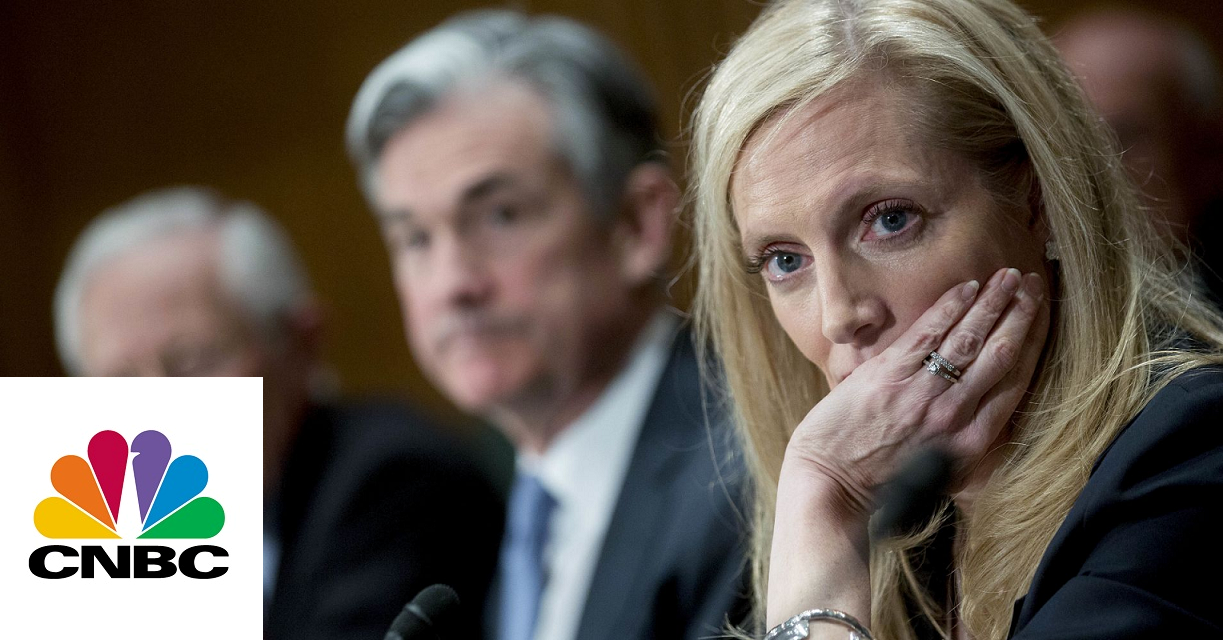
This analysis is based on CNBC’s “Halftime Report” segment featuring Fed correspondent Steve Liesman on December 26, 2025 [3]. The segment followed the Fed’s December 10 meeting, where it announced a 25-basis-point (bps) rate cut—its third consecutive quarter-point reduction—lowering the federal funds target range to 3.50%–3.75% [1]. The FOMC dot plot released during that meeting indicated only one additional 25 bps rate cut expected in 2026, a more conservative outlook than market participants initially anticipated, marking a “hawkish cut” [1]. On December 26, U.S. stock indices closed slightly lower in thin post-Christmas trading (S&P 500: -0.08%, NASDAQ Composite: -0.22%, Dow Jones: -0.04%) but remained near record highs [0]. The CBOE Volatility Index (VIX) stayed near December 2024 lows, reflecting market complacency [2]. Market pricing implied approximately 50 bps of rate cuts in 2026, contrasting with the Fed’s dot plot projection [2].
- Expectation Disconnect: The gap between the Fed’s projected one 2026 rate cut and market pricing of ~50 bps creates a critical tension point that could drive market reevaluation [1][2].
- Thin Trading Amplification: Low liquidity in holiday trading likely softened the market’s immediate reaction to the Fed’s hawkish cut outlook, as modest declines occurred despite the expectation mismatch [0][2].
- Policy Prioritization: The Fed’s consecutive rate cuts alongside a conservative 2026 outlook signal a focus on balancing economic stability with inflation concerns, even amid labor market weakness [1].
- Risks:
- Volatility from Expectation Adjustment: If the Fed follows through with only one rate cut in 2026, markets may experience volatility as they realign pricing [1][2].
- Inflation Reversal: Persistent inflation could force the Fed to raise rates, negatively impacting equity markets [1].
- Thin Trading Vulnerability: Low liquidity in holiday periods amplifies price movements, making markets sensitive to unexpected headlines [2].
- Sector Headwinds: Interest rate-sensitive sectors (real estate, utilities) may underperform if rates remain stable longer than expected [0].
- Opportunities:
- Cyclical Sector Benefits: A more gradually improving economic environment could support cyclical sectors (e.g., industrials, consumer discretionary) [0].
The December 26 CNBC segment focused on the Fed’s “hawkish cut” stance—three consecutive 25 bps rate cuts ending at 3.50%-3.75%, with one additional 2026 cut projected—contrasting with market expectations of ~50 bps cuts [1][3][2]. Short-term, indices closed slightly lower in thin trading but near records [0]. Risks include expectation disconnect volatility, inflation reversal, and sector-specific headwinds, while cyclical sectors may benefit from a gradual economic improvement [0][1][2].
Insights are generated using AI models and historical data for informational purposes only. They do not constitute investment advice or recommendations. Past performance is not indicative of future results.
About us: Ginlix AI is the AI Investment Copilot powered by real data, bridging advanced AI with professional financial databases to provide verifiable, truth-based answers. Please use the chat box below to ask any financial question.