Greebo-Zhiyuan Commercial Cleaning Robot: Progress, Challenges & Revenue Outlook
Unlock More Features
Login to access AI-powered analysis, deep research reports and more advanced features
About us: Ginlix AI is the AI Investment Copilot powered by real data, bridging advanced AI with professional financial databases to provide verifiable, truth-based answers. Please use the chat box below to ask any financial question.
Related Stocks
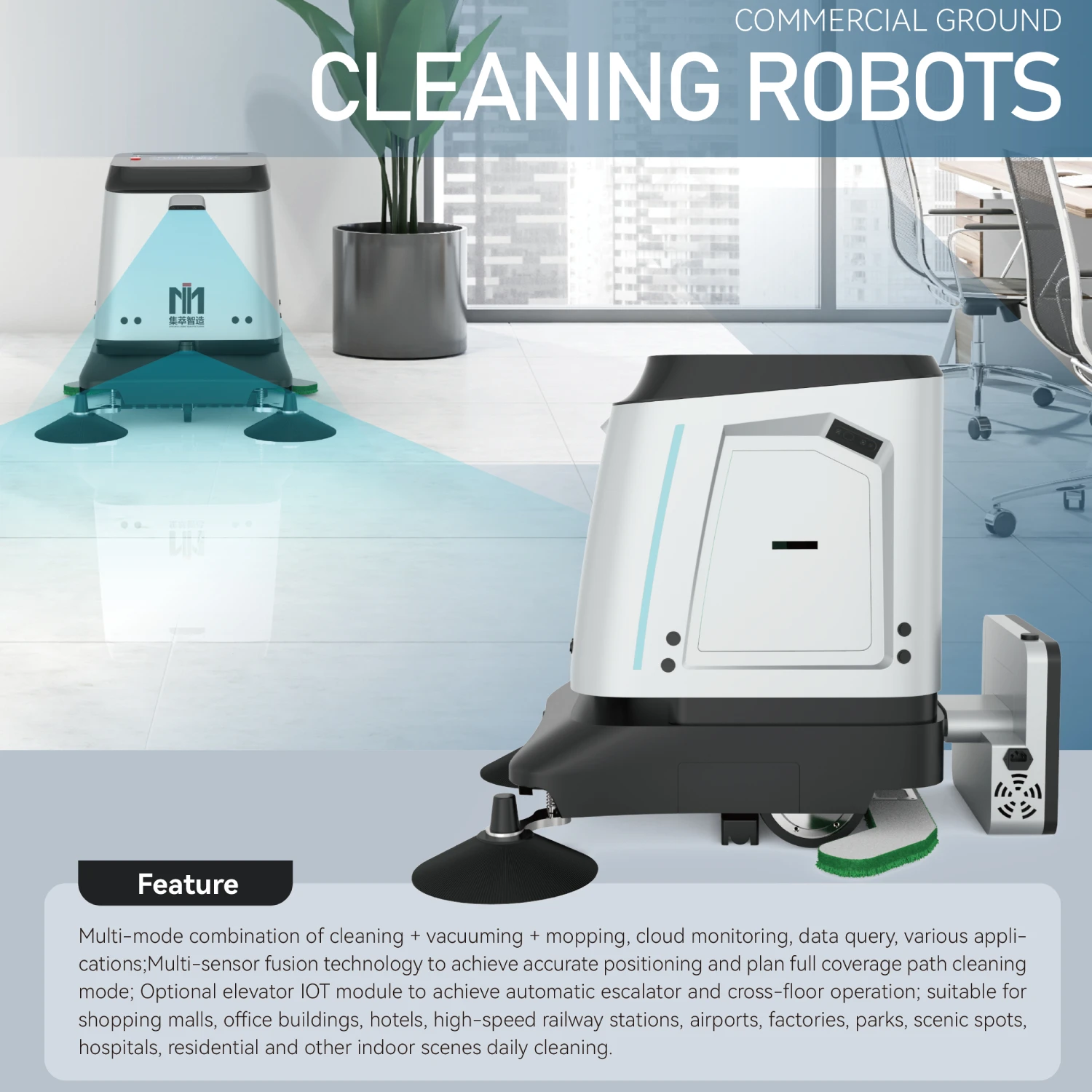
Greebo’s commercial cleaning robot developed in collaboration with Zhiyuan Robotics is currently in the pre-mass production testing and optimization phase, aiming for comprehensive validation in complex commercial scenarios and refinement of performance stability. No mass production timeline has been announced yet [1][2][3]. During this phase, four key challenges need to be addressed:
-
Complex Commercial Scenario Adaptation: Commercial properties (e.g., hotels, hospitals, office buildings) have distinct scenario differences. The robot needs to be compatible with different floor materials, diverse obstacles, cleaning path planning, and scheduling capabilities during peak pedestrian flow periods. This requires collaborative optimization of navigation systems, machine vision, and multimodal perception [2][3]. The system needs repeated iterations in real environments to meet high reliability standards.
-
Performance Stability & Long-Cycle Task Reliability: Commercial customers have much higher requirements for continuous operation stability and high availability of robots than for household products, especially in terms of connectivity, battery life, battery cycle life, consumable replacement, and predictive maintenance, which must be verified in advance. A large number of field tests are conducted to avoid the risk of “system crash + manual intervention” [2].
-
Overseas Regulatory & Certification Adaptation: The company is simultaneously advancing scenario validation and market access overseas (with a focus on the high-end U.S. market). It needs to meet safety certification, electromagnetic compatibility, data privacy, and service standards of export destinations. Different national standard systems prolong the testing cycle, which may affect the rhythm of first shipments [2].
-
Ecosystem & Service Capability Development: Commercial cleaning robots emphasize the combination of “software + hardware”. In addition to the hardware itself, corresponding intelligent scheduling platforms, maintenance service networks, and supporting consumable supply chains need to be built. This places higher demands on the company’s productization and servitization capabilities in the robotics business. The current collaboration is still in the implementation testing phase before product launch, and ecosystem development needs to progress in sync with mass production [1][3].
According to the latest industry research, the global commercial cleaning robot market sales will reach approximately $790 million in 2025, and the overall cleaning robot market size will be $2.92 billion. The compound annual growth rate (CAGR) is expected to be between 6.9% and 7% by 2035, with the commercial segment (hotels/medical/retail) growing at a CAGR of over 20% [4]. If Greebo can make breakthroughs in product stability, scenario adaptation, and overseas certification, based on the above growth rates, its robotics business is expected to become an important growth driver beyond its core new energy garden machinery business in the next 3-5 years.
Greebo’s main business is new energy garden machinery (including cleaning, mowing, zero-turn riding products, etc.). It has a foundation in industrial design, supply chain, and channel management, with synergistic potential in manufacturing processes, intelligent control, and mass delivery with commercial cleaning robots [5]. Meanwhile, collaboration with Zhiyuan Robotics can leverage its embodied intelligence and AI closed-loop to accelerate product function implementation.
As mass production has not yet officially started, the short-term revenue contribution will remain limited. It is expected that in 2025, it will still focus on testing and a small number of prototype validation orders; real revenue release depends on the mass production rhythm, delivery capacity, and first batch of overseas market certifications. If subsequent announcements confirm mass production and launch, it is necessary to closely track the order structure, customer types (hotels/medical/transportation/airports), and service models (sales + SaaS/managed operation and maintenance) to estimate unit selling prices and maintenance retention, thereby deriving annual revenue scale. If the company can achieve annualized delivery of thousands of units in 2026 and maintain basic service fees, the robotics business is expected to contribute hundreds of millions of yuan in revenue.
As the mass production timeline is still unclear, it is recommended to follow the company’s interactive platform announcements, field test feedback, and Zhiyuan Robotics’ overseas certification progress. When preparing more detailed financial forecasts or comparing competitive landscapes, consider enabling the deep research mode to obtain richer A-share/US stock-related data, industry reports, and technical indicator analysis to assist in judging the medium- to long-term value inflection point of the robotics business.
- In the short term (before 2025), the core is to solve complex scenario adaptation, performance stability, and overseas compliance to ensure the first batch of deliveries have a demonstration effect.
- In the medium term (2026-2027), the prerequisite is the simultaneous establishment of mass production launch and service capabilities. Once achieved, the commercial cleaning robot can form a dual engine with the existing new energy machinery business and gradually capture commercial scenario market share.
- Investors should focus on the following when judging revenue contribution:
- Mass production timeline and first batch order structure;
- Overseas certification (especially U.S.) progress and differentiated service capabilities;
- The company’s and Zhiyuan Robotics’ execution capabilities in supporting areas such as supply chain, software platform, and operation and maintenance services.
If further quantification of cash flow and revenue models, or comparative analysis with major global peers (e.g., Ecovacs, Pudu, Zhiyuan, etc.) is needed, the deep research mode can be enabled later to obtain more detailed financial, industry, and technical indicator data.
[1] Securities Times - “Greebo: Commercial Cleaning Robot Undergoing Pre-Mass Production Testing” (https://www.stcn.com/article/detail/3516503.html)
[2] Sina Finance - “Greebo: Commercial Cleaning Robot in Pre-Mass Production Testing & Optimization Phase” (https://finance.sina.com.cn/jjxw/2025-12-27/doc-inhefqqf7032415.shtml)
[3] East Money - “Greebo: Commercial Cleaning Robot with Zhiyuan Robotics Enters Implementation Phase” (https://finance.eastmoney.com/a/202512233599445418.html)
[4] Global Growth Insights - “Cleaning Robot Market to Grow at 7% CAGR by 2035” (https://www.globalgrowthinsights.com/zh/market-reports/cleaning-robots-market-121082)
[5] Futu NiuNiu - “Greebo Company Profile & Introduction” (https://www.futunn.com/stock/301260-SZ/company)
Insights are generated using AI models and historical data for informational purposes only. They do not constitute investment advice or recommendations. Past performance is not indicative of future results.
About us: Ginlix AI is the AI Investment Copilot powered by real data, bridging advanced AI with professional financial databases to provide verifiable, truth-based answers. Please use the chat box below to ask any financial question.