QDII Quota Relaxation: Analysis of Synergistic Effects on Wealth Management Companies' Cross-Border Business Development and RMB Internationalization
Unlock More Features
Login to access AI-powered analysis, deep research reports and more advanced features
About us: Ginlix AI is the AI Investment Copilot powered by real data, bridging advanced AI with professional financial databases to provide verifiable, truth-based answers. Please use the chat box below to ask any financial question.
-
Clear Logic for Cross-Border Business Expansion
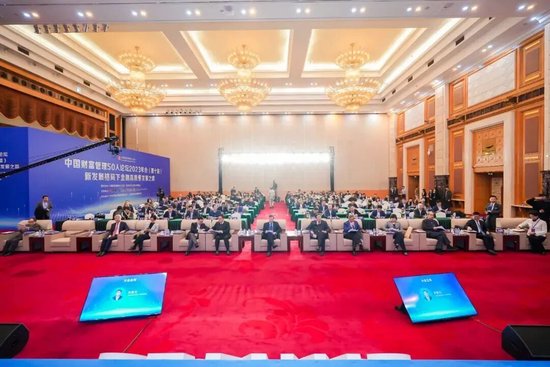
- Huang Danggui, Chairman of Bank of China Wealth Management, pointed out at the “China Wealth Management 50 Forum 2025 Annual Conference” that wealth management companies should moderately relax cross-border investment quota restrictions and strive for exclusive QDII quotas for wealth management institutions to match the business transformation demands of “wealth management companies + cross-border asset allocation”. Currently, demand for offshore RMB asset allocation is accumulating; relaxing QDII quotas will directly enhance wealth management companies’ ability to allocate overseas equities, bonds, and alternative assets, alleviating the current product issuance bottlenecks and market supply shortages [1].
- Direct market impacts of quota expansion include: ① It can enhance the issuance capacity and scale of cross-border products (such as QDII hybrid funds, ETFs), alleviate “premium” and “purchase restriction” pressures, and avoid significant deviations of secondary market prices from net asset value; ② Expand the space for wealth management companies to manage foreign exchange risks, enabling optimization of cross-border capital flows through hedging tools and foreign exchange position management; ③ Improve the return and risk adjustment capabilities of cross-border businesses through “both ends overseas” allocation designs (basis trading, cross-border notes, offshore RMB bonds).
-
Pathways to Promote RMB Internationalization
- Currently, cross-border use of RMB is steadily expanding: in the first half of 2025, the total amount of bank customer RMB cross-border receipts and payments reached 34.9 trillion yuan, a year-on-year increase of 14%; RMB has become the world’s second-largest trade finance currency and third-largest payment currency [2]. Against this backdrop, QDII quota relaxation can form an asset-side supporting mechanism, promoting domestic funds to invest overseas in RMB while driving foreign capital to form a compliant receiving end through RMB assets (including offshore bonds, loans, wealth management products).
- The offshore RMB market needs richer asset supplies to attract international investors. Wealth management companies can enhance the international liquidity and pricing system of RMB assets by channeling RMB funds overseas through QDII channels and launching RMB asset repatriation products (such as offshore wealth management, overseas RMB bonds) in the offshore market, thereby forcing the domestic financial market to form more sound exchange rate, interest rate, and risk management mechanisms.
-
Aligning with the 15th Five-Year Plan Goals and Regulatory Coordination
- The 15th Five-Year Plan emphasizes the wide application of RMB in international payments. The development of cross-border products by wealth management companies should focus on the three-level coordination of “payment + investment + asset support”. The optimization of QDII quotas needs to be advanced synchronously with mechanisms such as cross-border payment, RMB clearing, and offshore liquidity support to avoid disconnection between cross-border investment and financing due to poor capital scheduling.
- It is suggested to introduce “business-type + regional-type” classification management in the quota allocation process: for example, grant pilot quotas to wealth management companies with sound cross-border risk control capabilities, and set up special quotas to support RMB asset interconnection with the Belt and Road Initiative (BRI) and RCEP countries, thereby deepening the “depth + breadth” of the RMB internationalization network.
In summary, QDII quota relaxation not only helps wealth management companies meet cross-border asset allocation needs and enhance their competitiveness in the global market but also positively supports the international use of RMB and international investors’ recognition of RMB assets, promoting the synchronous improvement of the “real economy - financial market - internationalization” closed loop.
[1] NetEase — “Bank of China Wealth Management’s Huang Danggui: Suggest Appropriate Relaxation of Cross-Border Investment Quota Restrictions and Increase Exclusive QDII Quotas for Wealth Management Companies” (https://www.163.com/dy/article/KHQ4PJNB05198CJN.html)
[2] Shanghai Observer/Xinhua News Agency — “Why Has RMB Internationalization Accelerated Recently?” (https://www.jfdaily.com/news/detail?id=1039078)
Insights are generated using AI models and historical data for informational purposes only. They do not constitute investment advice or recommendations. Past performance is not indicative of future results.
About us: Ginlix AI is the AI Investment Copilot powered by real data, bridging advanced AI with professional financial databases to provide verifiable, truth-based answers. Please use the chat box below to ask any financial question.