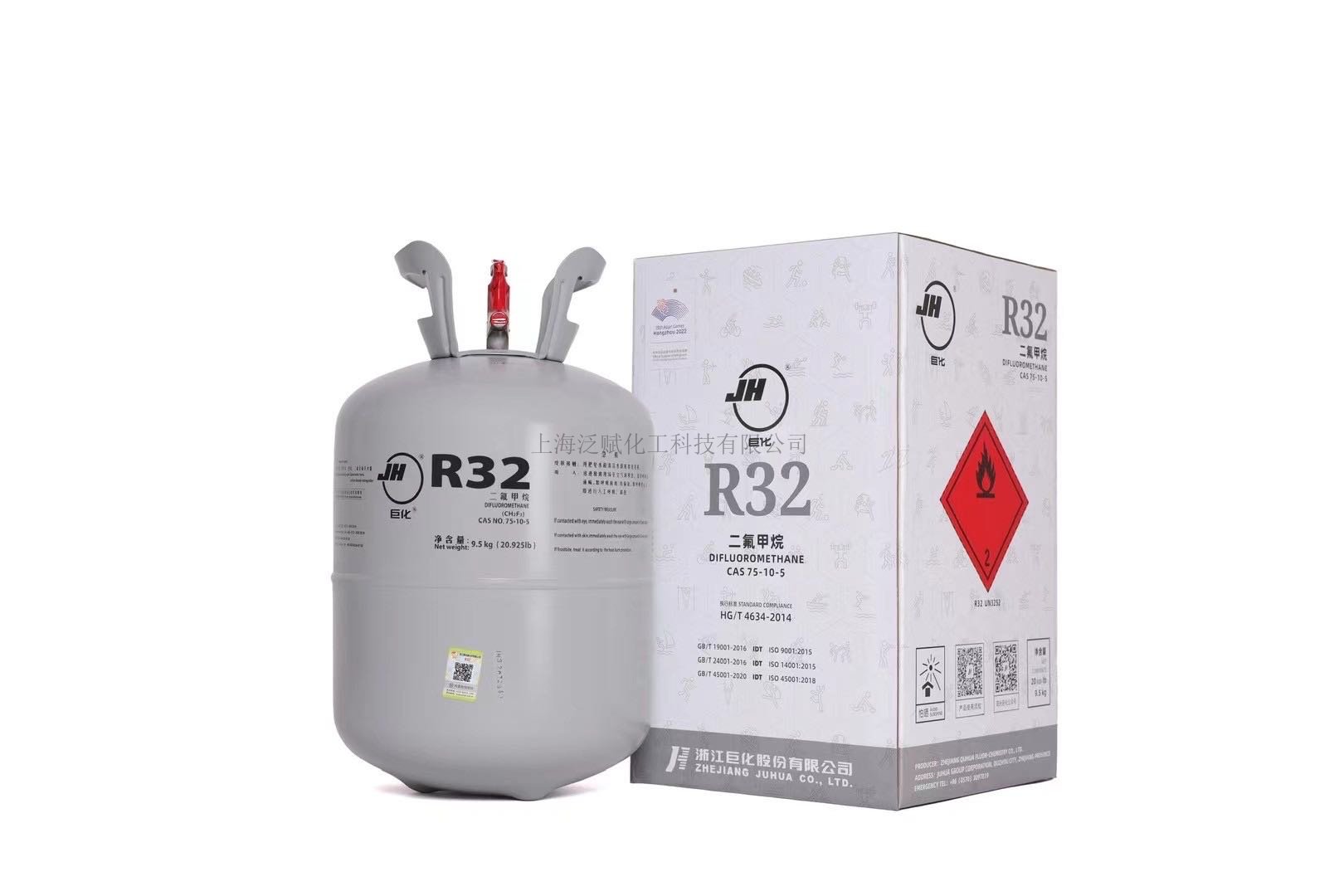
Juhua Co., Ltd. (600160) In-depth Analysis of Investment Value in Refrigerant Business
Unlock More Features
Login to access AI-powered analysis, deep research reports and more advanced features
About us: Ginlix AI is the AI Investment Copilot powered by real data, bridging advanced AI with professional financial databases to provide verifiable, truth-based answers. Please use the chat box below to ask any financial question.
Related Stocks
- Current stock price: $37.87, market capitalization: approximately $1022.4 billion
- Year-to-date increase: 58.19%, 1-year increase: 61.84%, 3-year increase:144.32%,5-year increase:365.81% [0]
- Valuation indicators: P/E ratio:25.88x, P/B ratio:5.00x, ROE:20.77%, net profit margin:14.66% [0]
- Technical trend: Sideways consolidation, no clear direction
- Support level: $35.87; Resistance level: $38.38 [0]
- KDJ indicates overbought warning (K:80.3, D:78.8), short-term volatility risk needs attention [0]
- Current ratio:1.61, quick ratio:1.23, short-term solvency is good [0]
- Conservative financial stance, high depreciation/capital expenditure ratio, future profit has room for improvement [0]
- Debt risk: Low risk [0]
- At the beginning of 2024: approx.17,000-18,000 yuan/ton; by Q4 2025, it rose to the range of62,500-63,300 yuan/ton (yearly increase: approx.45%-250%, starting point difference due to data caliber) [1][3]
- Q3 2025 average price: approx.59,000 yuan/ton; Q2-Q3 quarterly increase:8,534 yuan/ton; current mainstream transaction:61,000-62,000 yuan/ton [5]
- Mid-December East China market quotation:63,300 yuan/ton; Q4 increase: approx.1.2%; cumulative yearly increase: approx.45% [3]
- 2026 total HFCs quota:797,800 tons, an increase of approx.6,000 tons compared to2025; R32 quota increase: only1,171 tons [3]
- R32 domestic demand gap continues to expand from2025-2027: -124,000/-153,000/-239,000 tons (domestic quota - domestic demand) [2]
- High industry concentration; quota adjustment range is still capped at10%; high GWP varieties are more concerned, R32 is relatively stable [5]
- Production cost: approx.14,500 yuan/ton [2]
- Quota system forms a specific model of “global supply-side structural reform + franchise rights + head concentration”, with strong supply rigidity [5]
- Second-generation refrigerant R22 price dropped sharply from high: Q32025 average price:34,100 yuan/ton; October dropped to15,000-18,000 yuan/ton (low-price destocking), then回升 to18,000-20,000 yuan/ton [5]; this volatility raised concerns about R32 replicating a similar path
- R32 currently remains “high price and stable volume”, enterprises have strong willingness to support prices:2025 first three quarters refrigerant average price:40,554 yuan/ton (YoY +58.1%), Q3 refrigerant average price:42,956 yuan/ton [5]
- Currently, the composite procurement model of “long-term agreement + short-term rigid demand” is dominant; actual transactions are moving towards high ranges, showing the characteristic of “structural price support” [2]
- Mainstream varieties (R32, R410A, R134a) continue to be strong; tight supply supports prices [2]
- R22 demand shrinks and quota is surplus (expected to reach40%), destocking through price reduction, which is industry clearing and structural switching; R32 supply-demand remains tight, quota increment is limited, so the possibility of replicating R22’s sharp drop is low [5][3]
- North American market: R410A demand cuts, R454B (68.9% R32 +31.1% R1234yf) penetration increases [2]
- R32 accounts for nearly70% of R454B; North American demand switch will significantly drive R32 exports and structural increments [2]
- Jan-Oct 2025 domestic air conditioner cumulative output: approx.230 million units, YoY +3% [2]
- Jan2026 domestic sales production schedule is YoY +30% on a high base; stock maintenance demand supports refrigerants (especially R32) [5]
- Jan-Nov2025 auto sales:31.127 million units, YoY +11.4%; new energy vehicles:14.78 million units, YoY +31% [5]
- New energy vehicle per-unit refrigerant filling volume is approx.2-4x that of fuel vehicles; demand for varieties like R134a increases significantly [5]
- Accelerated industrialization and urbanization in global southern regions drive air conditioner penetration and ownership increase, bringing medium-to-long-term increments for refrigerants [2]
- Fourth-generation refrigerant cost is approx. several times that of third-generation; energy efficiency decreases across generations; large-scale substitution is not economically feasible for now [2]
- R32 domestic demand gap continues to expand from2025-2027; supply-demand scissors difference is significant [2]
- 2026 quota is generally stable; demand side grows steadily (driven by domestic sales/exports/maintenance/new energy vehicles) [3]
- Supply quota rigidity + demand increment; R32 price center is expected to remain high and rise slowly; probability of sharp drop is low [3]
- Risk points lie in short-term capital sentiment or unexpected quota adjustments; however, high industry concentration, strong bargaining power of leading enterprises, and strong price resilience [5]
- Industry Boom Continues: Supply rigidity under quota system; multi-dimensional demand growth (R454B/maintenance/new energy vehicles/developing countries); tight supply-demand supports high prices and profit elasticity [2][3]
- Leading Enterprise Advantages: Juhua Co., Ltd. has obvious quota and industrial chain integration advantages;2025 first three quarters refrigerant average price:40,554 yuan/ton (YoY +58.1%), profit quality improved [5]
- Valuation Matching: Current P/E ratio: approx.25.9x, ROE: approx.20.8%; valuation and profitability matching is acceptable, but need to be vigilant of valuation volatility caused by sentiment decline [0]
- Long-term Pattern: Third-generation refrigerants are still the medium-term mainstream; fourth-generation substitution has high cost and slow pace; the industry is expected to experience an “extra-long boom cycle” [2]
- Policy Risks: Unexpected quota adjustments, international trade frictions (US “double anti-dumping and countervailing duties”), etc. [5]
- Demand Below Expectations: Weak terminal demand for real estate/automobiles/home appliances; slowdown in maintenance and renewal pace
- Raw Material Volatility: Sharp price fluctuations of upstream materials like fluorite and hydrofluoric acid affect costs and gross profits [1]
- Technology/Competition Risks: Fourth-generation refrigerant technology breakthrough pace or new competitors entering (short-term impact is limited)
- Short-term: Technical side is sideways and KDJ is at high level; be vigilant of increased volatility; suggest batch layout; pay attention to volume and sustainability after breaking through $38.38 [0]
- Mid-term: Seize supply-demand rebalancing under quota rigidity from2025-2026; R32 high price operation supports company performance; ROE is expected to remain high [3]
- Long-term: The business model formed by third-generation refrigerants’ “quota system + head concentration + rigid demand” has strong sustainability; as a leader, the company has long-term allocation value [2][5]
Overall, the probability that R32 prices will replicate R22’s sharp drop path is low: R22’s decline is mainly due to demand shrinkage and destocking, while R32 has tight supply-demand balance, expanding gap, and limited quota increment. Long-term agreement disputes are more about rhythm games and do not change the trend direction. Third-generation refrigerant demand growth (R454B substitution, maintenance cycle, new energy vehicles, emerging markets) is likely to offset price drop risks from2025-2027, supporting price center and profit resilience. As a leader, Juhua Co., Ltd., supported by quota and integration, is expected to continue to benefit from the industry boom in terms of performance and valuation.
[0] 金灵API数据
[1] 我的钢铁网 - 六氟磷酸锂及制冷剂市场行情(提及R32出厂报价区间)(https://m.mysteel.com/hot/1522702.html)
[2] 国海研究/产业在线 - 三代制冷剂需求与替代(海外R454B转向、维修周期、发展中国家、四代成本)(https://finance.sina.com.cn/roll/2025-12-03/doc-infznvhn9613588.shtml; http://www.chinaiol.com/News/Content/202512/44_63354.html)
[3] 网易/东方财富 - 2026年配额与价格数据(2026年HFCs总配额及R32增量;R32年内涨幅)(https://www.163.com/dy/article/KGVQETIV05567I2C.html; https://finance.eastmoney.com/a/202512183595193452.html)
[4] 巨化制冷剂行业动态 - 2025年末配额与价格博弈(长协+刚需复合采购模式)(https://www.zhileng1.com/hangye/)
[5] 巨化股份投资者关系及卖方报告 - R22与R32价格、长协、供需与配额政策(R22库存去化、价格区间;R32价格与价差;公司量价与业绩;配额集中与调整上限)(https://finance.sina.com.cn/roll/2025-12-23/doc-inhcthkx7380011.shtml; https://pdf.dfcfw.com/pdf/H3_AP202510241767996508_1.pdf)
Insights are generated using AI models and historical data for informational purposes only. They do not constitute investment advice or recommendations. Past performance is not indicative of future results.
About us: Ginlix AI is the AI Investment Copilot powered by real data, bridging advanced AI with professional financial databases to provide verifiable, truth-based answers. Please use the chat box below to ask any financial question.