Analysis of Unitree Robotics' Commercialization Path: Low-Price Strategy to Capture Market Share, IPO Prospects and Challenges Coexist
Unlock More Features
Login to access AI-powered analysis, deep research reports and more advanced features
About us: Ginlix AI is the AI Investment Copilot powered by real data, bridging advanced AI with professional financial databases to provide verifiable, truth-based answers. Please use the chat box below to ask any financial question.
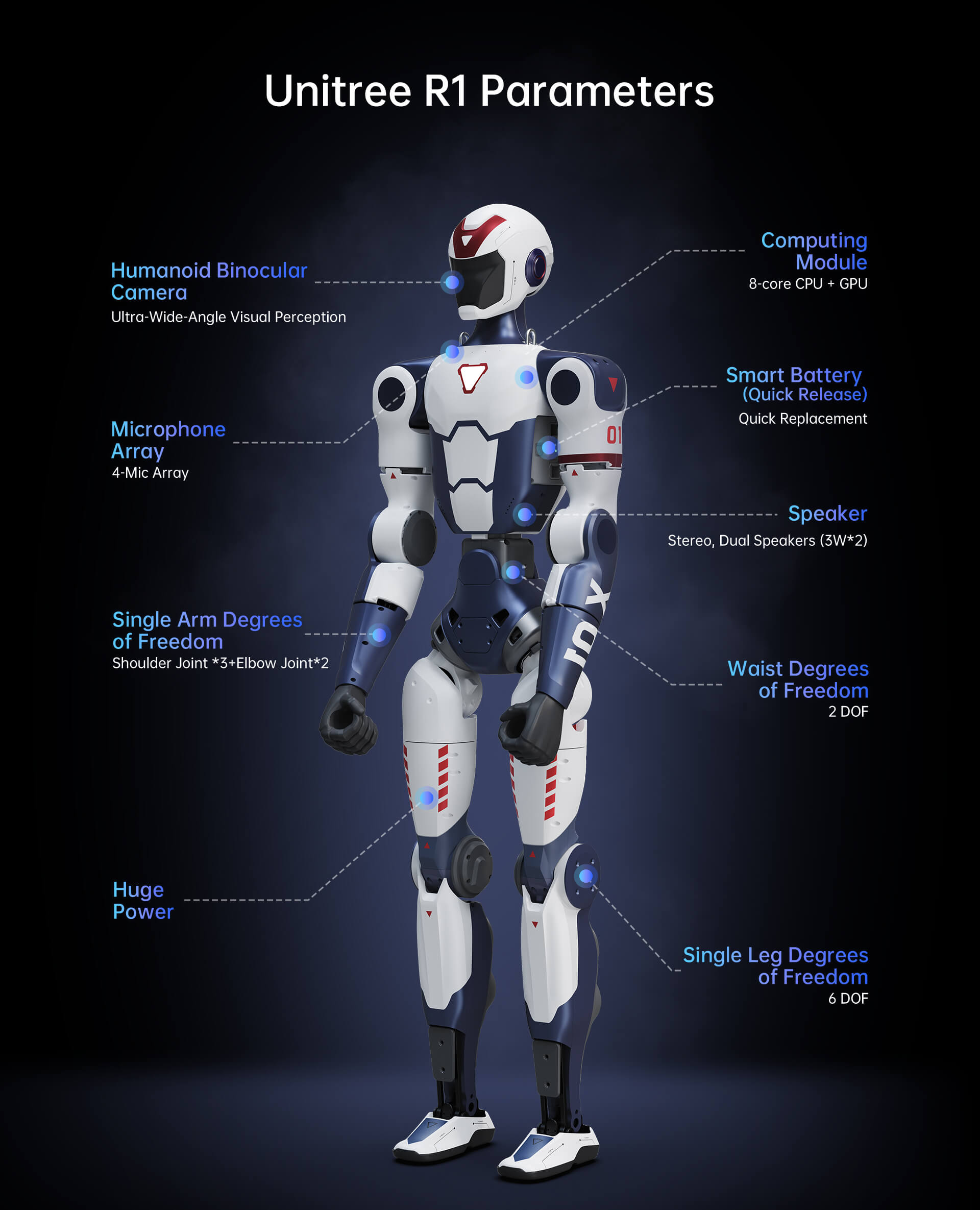
According to the latest data, the commercialization path of Unitree Robotics’ robot business
Unitree Robotics has formed
The company has completed 10 rounds of financing in total, attracting well-known institutions such as Shunwei Capital, Sequoia China, and CITIC Securities. It completed a nearly 1 billion yuan Series B2 financing in 2024, and this year’s Series C financing was co-led by China Mobile, Tencent, Alibaba, and Ant Group, with a valuation reaching 12 billion yuan [1]. It plans to submit an IPO application by the end of 2024, with a target valuation of 7 billion US dollars [0].
According to Tianyancha statistics, Unitree Robotics has won 25 government procurement projects this year, close to the total of 32 winning projects in the whole year of 2024, ranking first in the industry in direct winning bids [2]. About 20% of quadruped robots have been applied in industrial scenarios such as fire detection, while humanoid robots have established a stable customer base in scientific research and education fields [1].
Although Unitree robots have performed well in specific scenarios such as the Spring Festival Gala performance and robot sports competition races,
As competitors like DeepRobotics and Songyan Power accelerate their entry, the price war for humanoid robots is becoming increasingly fierce. The rapidly evolving K1 model is priced at 88,000 yuan, forming internal competition with the H1 series. This ‘involutionary’ development may compress the overall profit margins of the industry [0].
Morgan Stanley’s research report points out that current humanoid robots still have capability bottlenecks when performing basic tasks such as object retrieval [3]. Although the company has demonstrated strong hardware cost control capabilities, the commercial verification of core technologies such as software algorithms and motion control remains a key challenge.
The commercialization path of Unitree Robotics
[0] Yahoo Hong Kong Finance - ‘Robots Dance at Spring Festival Gala to Show Future, Unitree Robotics Plans Year-End IPO’ (https://hk.finance.yahoo.com/news/機器人春晚舞出未來-宇樹科技擬年底上市-025904035.html)
[1] Tiger Brokers - ‘Unitree Robotics Confirms IPO Timeline’ (https://www.itiger.com/news/1172288996)
[2] 36氪 - ‘The Trillion-Dollar Robot Market: Will Unitree or Figure…’ (https://eu.36kr.com/en/p/3517025641535873)
[3] Yahoo Hong Kong Finance - ‘Morgan Stanley Predicts: $5 Trillion Humanoid Robot Industry Boom!’ (https://hk.finance.yahoo.com/news/大摩預言-人形機器人產業5兆市場爆發-034005525.html)
京东与理想汽车合作分析:股价表现与潜在协同效应
Insights are generated using AI models and historical data for informational purposes only. They do not constitute investment advice or recommendations. Past performance is not indicative of future results.
About us: Ginlix AI is the AI Investment Copilot powered by real data, bridging advanced AI with professional financial databases to provide verifiable, truth-based answers. Please use the chat box below to ask any financial question.