UBTech Acquires Fenglong Co., Ltd. to Extend Industrial Chain: Analyzing Its Cost Reduction Path from Humanoid Robot BOM Cost Breakdown
Unlock More Features
Login to access AI-powered analysis, deep research reports and more advanced features
About us: Ginlix AI is the AI Investment Copilot powered by real data, bridging advanced AI with professional financial databases to provide verifiable, truth-based answers. Please use the chat box below to ask any financial question.
Related Stocks
On December 24, 2024, UBTech (9880.HK) issued an announcement stating its intention to acquire a 43% stake in Shenzhen Stock Exchange-listed Fenglong Co., Ltd. (002931.SZ) through a combination of “agreement transfer + tender offer”, with a total transaction value of 1.665 billion yuan. According to the announcement, both the share transfer price and the tender offer price are 17.72 yuan per share, representing a 10% discount compared to the pre-suspension price of 19.68 yuan per share [1][2]. After the acquisition is completed, Fenglong Co., Ltd. will become UBTech’s first A-share listed company and its first non-wholly-owned subsidiary [3].
First,
Second,
According to industry research data, the core composition of humanoid robot material costs (BOM) is as follows [4][5]:
| Cost Category | Proportion | Core Components |
|---|---|---|
| Actuators | ~42% | Servo motors, motor drivers, reducers |
| Dexterous Hands | ~31% | 6-axis force sensors, tactile perception, precision motors |
| Semiconductor Chips | 4%-6% (current) →24% (forecast) | AI processors, image sensors, analog chips |
| Sensors & Encoders | - | MEMS IMU, depth perception, electronic skin |
| Batteries & Thermal Management | - | Solid-state batteries, heat dissipation systems |
-
Actuators and Dexterous Hands Dominate Costs: On average, dexterous hands account for 31% of BOM, and actuators account for about 42%, together making up nearly 73% of the material costs of humanoid robots [4].
-
Rapid Increase in Semiconductor Value: Morgan Stanley predicts that as the unit cost of humanoid robots drops from the current $131,000 to $23,000 by 2045, the proportion of semiconductors in BOM will surge from the current 4%-6% to 24%, and AI processors will account for about 93% of semiconductor costs [5].
-
Concentration in Three Core Tracks: The industry’s real value is concentrated upstream in the three core tracks of “brain” (computing chips), “vision” (image sensors), and “sensing” (analog chips) [5].
In 2025, the localization process of core components for humanoid robots will accelerate significantly [6]:
-
Planetary Roller Screws: Long monopolized by European companies such as GSA, Rollvis, and Rexroth, with a unit price as high as tens of thousands of yuan. Domestic enterprises like Shuanglin Co., Ltd. and Wuzhou Xinchun Co., Ltd. are expected to reduce costs from “sky-high prices” to “affordable prices” through process innovation and reverse engineering [6].
-
Frameless Torque Motors and Joint Modules: Previously dominated by European and American manufacturers such as Kollmorgen, Wittenstein, and Maxon Motor. A large number of domestic players like Inovance Technology, Wolong Electric Drive, and Haozhi Electromechanical have emerged, continuously accelerating the low-cost mass production of high-torque density motors [6].
-
Dexterous Hands: High-resolution tactile perception dexterous hands from companies like Pasini, Daimon, and Hanwei Technology have entered the “mass production-oriented” stage [6].
Fenglong Co., Ltd.'s main business is highly aligned with UBTech’s cost reduction needs:
| Business Area | Main Products | Contribution to Humanoid Robot Cost Reduction |
|---|---|---|
| Garden Machinery Parts | Igniters, flywheels, cylinders | Transfer precision manufacturing capabilities to actuator components |
| Auto Parts | Precision aluminum die-casting and iron parts | Reduce raw material costs through large-scale production |
| Hydraulic Control Parts | Hydraulic control parts for engineering, industrial, and semiconductor equipment | Apply precision processing technology to joint modules |
From the financial data, Fenglong Co., Ltd.'s revenue from 2022 to 2024 was 587 million yuan, 433 million yuan, and 479 million yuan respectively; net profit attributable to the parent company was 49 million yuan, -7 million yuan, and 5 million yuan. In the first three quarters of this year, the company’s revenue was 373 million yuan, a year-on-year increase of 9.47%; net profit attributable to the parent company was 22 million yuan, a year-on-year increase of 1714.99% [2].
Combined with industry research data, the cost reduction path for humanoid robots can be divided into three stages [7]:
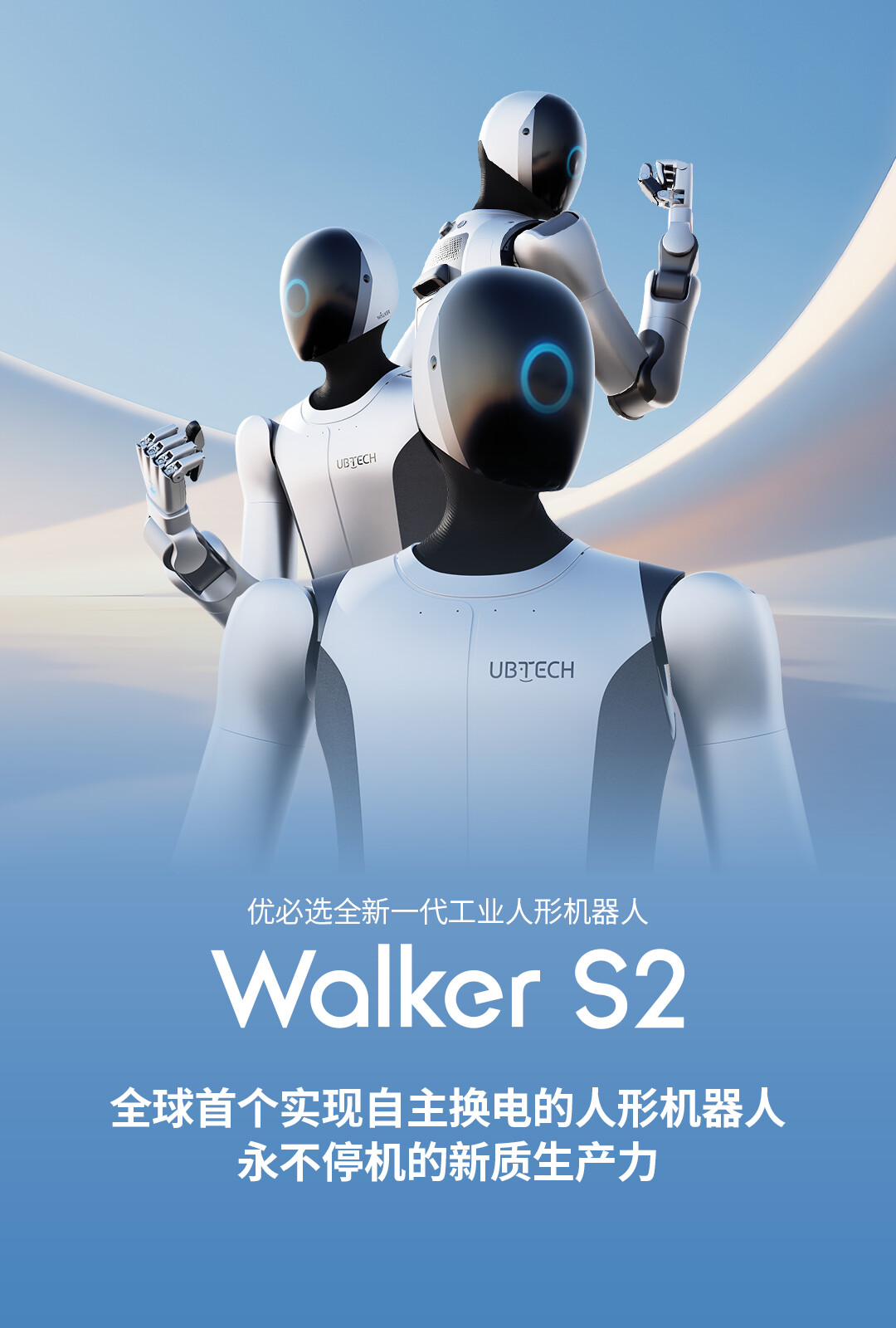
UBTech’s industrial humanoid robot Walker S2 began mass production and delivery in November 2025, with the first batch of hundreds of Walker S2 units deployed in industrial frontlines such as automotive manufacturing, intelligent manufacturing, smart logistics, and embodied intelligence data centers [1]. In terms of capacity, Walker S2’s current monthly capacity has exceeded 300 units, with an expected annual delivery volume of over 500 units, and the industrial humanoid robot capacity is expected to reach 10,000 units by 2026 [1][2].
With the increase in shipment volume, fixed costs will be significantly diluted. After UBTech acquires Fenglong Co., Ltd., it can achieve:
-
Internalization of Core Component Production: Internalize the manufacturing capabilities of core components such as actuators and joint modules to reduce outsourcing costs.
-
Vertical Integration of Supply Chain: Optimize upstream supply chain management through Fenglong Co., Ltd.'s precision manufacturing capabilities.
-
Release of Scale Effects: As capacity increases to the 10,000-unit level in 2026, unit manufacturing costs will decrease significantly.
According to industry data, in terms of expected shipment volume in 2025, Unitree Technology is in the leading position, with a market share almost twice that of Tesla, and Agibot Robotics ranks third [4]. Although UBTech is leading in financing (cumulative financing of 4.3 billion US dollars), it still needs to catch up in shipment volume [4].
| Enterprise | Strategy | Price |
|---|---|---|
| Unitree Technology | “Price butcher” strategy, G1 basic version at 99,000 yuan | 99,000 yuan |
| Tesla | Plan to reduce to 20,000-30,000 US dollars | Approximately 150,000-220,000 yuan |
| UBTech | Industrial scenarios + industrial chain integration | Over 350,000 yuan (current) |
The average price of Unitree R1 is about 5,600 US dollars, allowing more creators and developers to access humanoid robots [4]. In contrast, the current price of industrial-grade humanoid robots is still above 50,000 US dollars (about 350,000 yuan) [7].
In the agreement, UBTech made commitments to Fenglong Co., Ltd.'s performance in the next three years: the net profit attributable to the parent company and non-GAAP net profit for 2026, 2027, and 2028 will be no less than 10 million yuan, 15 million yuan, and 20 million yuan respectively [3]. This reflects UBTech’s confidence in the integration effect after the acquisition.
-
Integration Risk: There are differences in business models and management cultures between UBTech and Fenglong Co., Ltd., and the integration effect is uncertain.
-
Capacity Release Risk: Although UBTech plans to increase capacity to 10,000 units in 2026, the actual delivery volume is affected by multiple factors such as market demand and technical maturity.
-
Technology Iteration Risk: Humanoid robot technology is iterating rapidly, and the localization process of core components may not meet expectations.
UBTech’s acquisition of Fenglong Co., Ltd. is a typical case of industrial chain integration in the embodied intelligence track. From the BOM cost breakdown, actuators (about 42%) and dexterous hands (about 31%) are the largest cost items for current humanoid robots. Through the acquisition of Fenglong Co., Ltd., UBTech can achieve:
-
Internalization of core component manufacturing capabilities, reducing outsourcing dependence and procurement costs;
-
Vertical integration of the supply chain, enhancing the right to speak in the industrial chain;
-
Release of scale effects, diluting fixed costs with the landing of 10,000-unit-level capacity.
Looking ahead, with the acceleration of domestic substitution (the cost of core components such as planetary roller screws and torque sensors is expected to drop by 70%-80%) and the increase in the value proportion of semiconductors such as AI processors to 24%, the cost structure of humanoid robots will undergo profound changes [5][7]. It is expected that by 2035, the humanoid robot market size will reach 154 billion US dollars [7]. Through this acquisition, UBTech has laid a solid foundation for seizing cost advantages in fierce competition.
[1] Guangzhou Daily Dayoo.com - UBTech Plans to Acquire Fenglong Co., Ltd. for 1.665 Billion Yuan (https://news.dayoo.com/finance/202512/25/171077_54909769.htm)
[2] 36kr - 1.6 Billion Yuan to Take Control of Fenglong Co., Ltd., “Robot” Leader UBTech Sounds the Capital Horn (https://m.36kr.com/p/3611053045105925)
[3] Sina Finance - UBTech Acquires Fenglong Co., Ltd. for 1.665 Billion Yuan, Targets 10,000-Unit Capacity Next Year (https://finance.sina.com.cn/jjxw/2025-12-26/doc-inhczxpx2994988.shtml)
[4] Electronic Engineering Album - Current Status of Humanoid Robot Industry - 2026 Version (https://www.eet-china.com/mp/a461940.html)
[5] Wall Street Insights/Sina Finance - Humanoid Robot Cost Structure Changes Dramatically! Semiconductor Proportion Will Surge to 24% (https://finance.sina.com.cn/roll/2025-12-01/doc-infzhiap2270768.shtml)
[6] Tencent Cloud - Humanoid Robots in 2025: How Far Are They from “Entering Homes”? (https://cloud.tencent.com/developer/article/2608558)
[7] CSDN - Eve of Physical AI Outbreak: 2026 Commercialization Blueprint for Humanoid Robots and Industrial Intelligence (https://blog.csdn.net/lpllpl11/article/details/155793494)
财通证券合规风控体系缺陷分析报告
Insights are generated using AI models and historical data for informational purposes only. They do not constitute investment advice or recommendations. Past performance is not indicative of future results.
About us: Ginlix AI is the AI Investment Copilot powered by real data, bridging advanced AI with professional financial databases to provide verifiable, truth-based answers. Please use the chat box below to ask any financial question.