Analysis of Jingrui Electronic Materials' Acquisition of Hubei Jingrui and R&D Expense Ratio Comparison with Industry Peers
Unlock More Features
Login to access AI-powered analysis, deep research reports and more advanced features
About us: Ginlix AI is the AI Investment Copilot powered by real data, bridging advanced AI with professional financial databases to provide verifiable, truth-based answers. Please use the chat box below to ask any financial question.
Related Stocks
Based on my detailed search and analysis of public information, I found an important clarification:
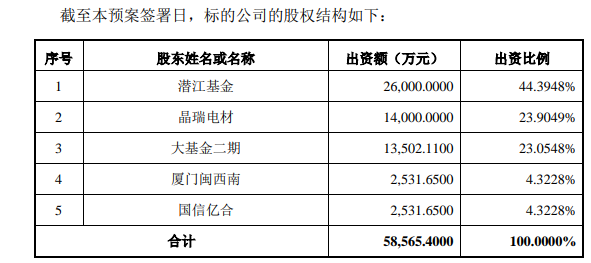
On November 27, 2025, Jingrui Electronic Materials disclosed the “Report on Issuance of Shares to Purchase Assets and Connected Transactions”, planning to issue shares to Qianjiang Fund, National Integrated Circuit Industry Investment Fund Phase II, Xiamen Minnan-Southwest China, and Guoxin Yihe to acquire their 76.1% equity in Hubei Jingrui [1]. After the transaction is completed, Jingrui Electronic Materials will hold 100% equity of Hubei Jingrui, with the transaction price being 595 million yuan [1].
Hubei Jingrui was established in November 2019, mainly engaged in R&D, production and sales of high-purity chemicals, including wet electronic chemicals such as high-purity hydrogen peroxide and high-purity ammonia water, which are widely used in three major fields: integrated circuits, new displays, and photovoltaic solar cells [1].
- R&D expense ratio: 6.91%(2024) [2]
- R&D expenses: 99.2375 million yuan(2024, up 39.74% year-on-year) [2]
- Number of R&D personnel increased by 20.69%year-on-year [2]
| Company | R&D Expense Ratio | R&D Investment | Main Business |
|---|---|---|---|
Tongcheng New Materials |
6.62% (2024) [3] | 217 million yuan (2024) [3] | Semiconductor photoresist, panel photoresist |
Nanda Optoelectronics |
Approx.7.3% (H1 2025) [4] | 89.476 million yuan (H1 2025) [4] | ArF photoresist, electronic specialty gases |
Huamao Technology |
Industry average of 15% [5] | - | Photoresist monomers, ArF photoresist |
Industry Average |
Approx.15% [5] | - | - |
Jingrui Electronic Materials’ R&D expense ratio of 6.91% is significantly lower than the photoresist industry average of 15% [2][5], which means:
- In a technology-intensive industry, insufficient R&D investment may limit technological breakthroughs in high-end photoresist
- Compared with international leaders like TOK and JSR, there is a clear gap in R&D resources
- R&D of high-end ArF/KrF photoresist requires continuous and large capital investment
Although the R&D expense ratio is relatively low, Jingrui Electronic Materials has advantages in the following aspects:
- Fast growth in R&D investment: 2024 R&D expenses increased by 39.74% year-on-year [2]
- Profound technical accumulation: Its subsidiary Suzhou Ruihong has been producing photoresist since 1993, and undertook and completed the national 02 special project “i-line photoresist product development and industrialization” [2]
- Complete product layout: Covers full range of photoresist including UV broadband, g-line, i-line, KrF, ArF [2]
By acquiring Hubei Jingrui, Jingrui Electronic Materials can achieve:
- Industrial chain synergy: Hubei Jingrui’s high-purity chemicals and photoresist business form upstream and downstream synergy
- Scale effect: Expand the scale of wet electronic chemicals business and enhance market competitiveness
- Resource integration: Quickly inject high-quality assets through the capital market [1]
From the perspective of R&D expense ratio comparison with industry peers, there is
- Challenges: The current R&D expense ratio of 6.91% is lower than the industry average; technological breakthroughs in high-end photoresist require more intensive R&D investment
- Opportunities: Acquiring Hubei Jingrui helps with industrial chain integration; R&D investment grows rapidly; profound technical accumulation
- Recommendations: The company needs to further increase R&D investment, especially in the field of high-end ArF/KrF photoresist, to narrow the technical gap with international leading enterprises
[1] Securities Times - Jingrui Electronic Materials plans to buy over 76% equity of Hubei Jingrui for 600 million yuan to deepen investment layout in wet electronic chemicals field (https://www.stcn.com/article/detail/3515784.html)
[2] Jingrui Electronic Materials Co., Ltd. 2024 Annual Report Summary (https://file.finance.qq.com/finance/hs/pdf/2025/04/24/1223245738.PDF)
[3] Tongcheng New Materials Group Co., Ltd. 2024 Annual Report (http://static.cninfo.com.cn/finalpage/2025-04-18/1223159664.pdf)
[4] Jiangsu Nanda Optoelectronic Materials Co., Ltd. 2025 Semi-Annual Report (http://static.cninfo.com.cn/finalpage/2025-08-27/1224574859.PDF)
[5] 2025 Third Photoresist Materials and Technology Seminar (https://www.huiyi-123.com/article/4g7n1o9m-179.html)
Insights are generated using AI models and historical data for informational purposes only. They do not constitute investment advice or recommendations. Past performance is not indicative of future results.
About us: Ginlix AI is the AI Investment Copilot powered by real data, bridging advanced AI with professional financial databases to provide verifiable, truth-based answers. Please use the chat box below to ask any financial question.