Financial Risk Analysis Behind Avatr's Antarctic Marketing Controversy
Unlock More Features
Login to access AI-powered analysis, deep research reports and more advanced features
About us: Ginlix AI is the AI Investment Copilot powered by real data, bridging advanced AI with professional financial databases to provide verifiable, truth-based answers. Please use the chat box below to ask any financial question.
Based on public data analysis, multiple financial risks are hidden behind Avatr’s Antarctic marketing controversy, as detailed below:
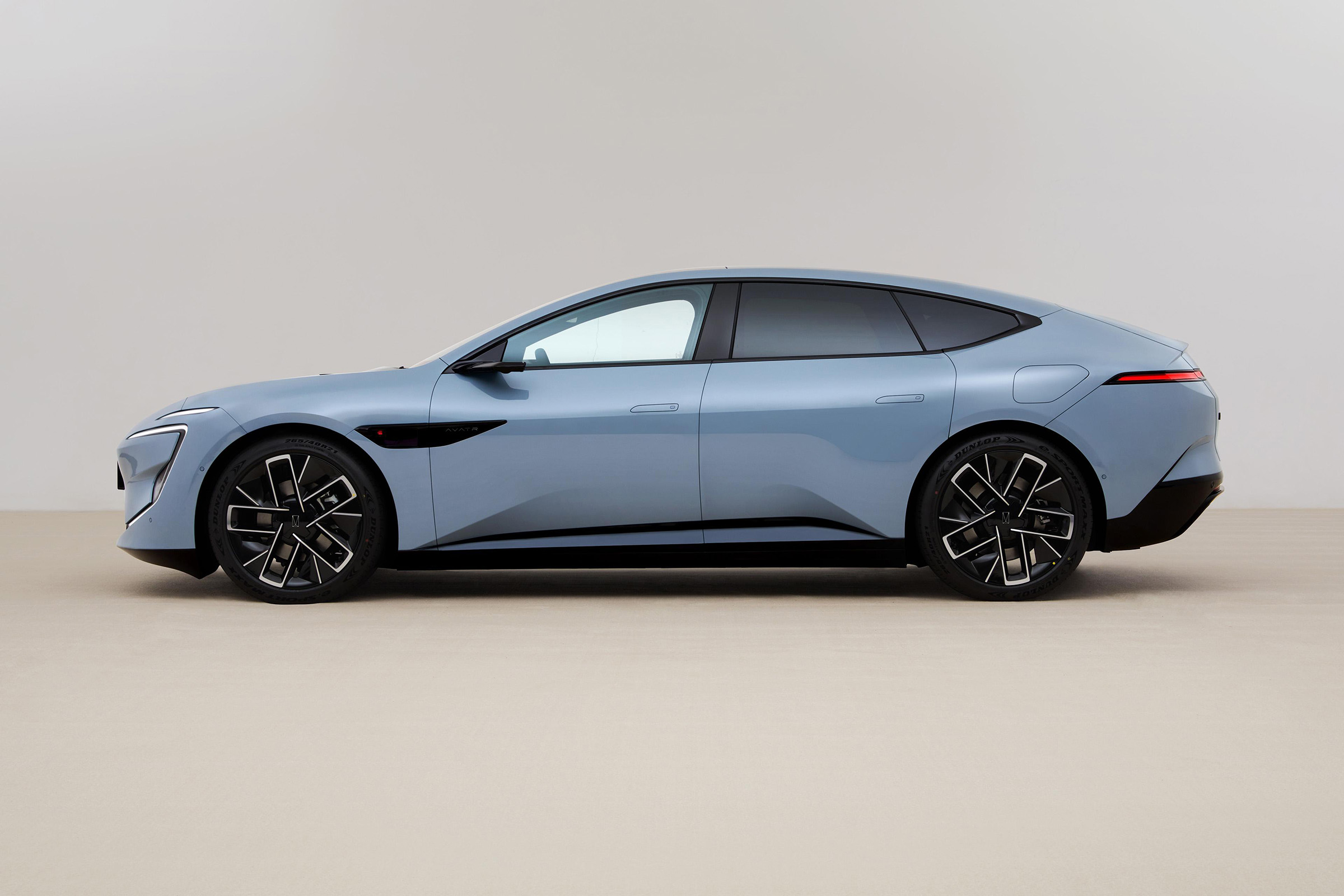
On December 8, 2025, Avatr announced that its model “Avatr 12” would go to China’s Zhongshan Station in Antarctica for winter testing, claiming to face extreme cold of -50°C. However, netizens questioned this: December is summer in the Southern Hemisphere, and the actual measured temperature at Zhongshan Station is about -1°C to 5°C, which is far from the “extreme cold” in the promotion [1]. Half a month after the controversy fermented, Avatr responded on December 24 that it would stay for 16 months until April 2027 to fully experience different seasonal changes in the polar region [1].
According to Avatr’s prospectus data, from 2022 to the first half of 2025, the company’s revenue was 28.337 million yuan, 5.645 billion yuan, 15.195 billion yuan, and 12.208 billion yuan respectively; the net losses during the period were about 2.015 billion yuan, 3.693 billion yuan, 4.018 billion yuan, and 1.585 billion yuan respectively. Since 2022, the accumulated loss has been about 11.3 billion yuan [1][2].
Although revenue in the first half of 2025 increased by 98.52% year-on-year, the loss margin only “narrowed slightly”, and the company expects to continue net losses for the full year of 2025 [2]. From the perspective of financial indicators, from 2022 to 2023, Avatr’s sales costs were always higher than its operating income, in the stage of “losing money on every car sold”, and the gross profit margin did not turn positive until 2024 [2].
In the first half of 2025, Avatr’s gross profit margin hit a record high of 10.1%, but the sales cost accounted for 89.84% of total revenue [2]. Comparing with peers: The gross profit margin of independent self-developed “Mi Xiao Li” (Xiaomi, Li Auto, Xpeng) remains between 14% and 25%; Seres, which is also deeply tied to Huawei, has a gross profit margin of nearly 30%, ranking first among new energy vehicle brands [2].
Avatr needs to pay a total of about 113,100 yuan to Changan, CATL, and Huawei for each car sold (estimated based on sales of 56,700 units in the first half of 2025). Calculated at an average price of 200,000 yuan per car, the three take more than half of the revenue [2]. Specific expenditures:
- Total expenditures of 2.251 billion yuan paid to Changan Automobile and its subsidiaries for purchasing original products, materials, and production services [2]
- Total expenditures of 2.210 billion yuan paid to Shenzhen Yinwang under Huawei for purchasing products, materials, and R&D services [2]
- Total expenditures of 1.956 billion yuan paid to CATL for products, materials, and R&D services [2]
Avatr’s cumulative sales in 2024 were 73,606 units, which did not meet the sales target set that year [1].
The company has significantly raised its 2025 sales target to 220,000 units, planning an increase of more than 200%. However, as of the first 10 months, the cumulative sales have only completed about 50%, and there is still a clear gap from the monthly target of 18,000 units [1]. Sales have exceeded 10,000 units for eight consecutive months, but it is difficult to meet the annual target at this rate.
Avatr’s average price per vehicle has dropped from 226,400 yuan/unit in 2022 to 202,500 yuan/unit in the first half of 2025, always in the 200,000-yuan price range where new energy competition is the fiercest, and the overall trend is downward [2].
From 2022 to the first half of 2025, Avatr’s R&D expenses were 544 million yuan, 660 million yuan, 1.214 billion yuan, and 831 million yuan respectively [1]. To maintain technological competitiveness, it is difficult to significantly reduce R&D investment.
The number of Avatr’s offline stores increased from 313 at the end of 2024 to more than 560 at the end of June 2025, nearly doubling the total number, which significantly increased operating costs [1].
In October 2025, the Ministry of Industry and Information Technology and other departments issued a document stating that starting from 2026, the purchase tax reduction policy will change from “full exemption” to “half reduction”, and the maximum subsidy will be reduced from 30,000 yuan to 15,000 yuan [2]. Avatr has launched a “floor subsidy” activity to lock in orders, which will directly compress profit margins.
High-end models are “popular but not selling well”——Avatr 11 (manufacturer’s suggested retail price 289,900-429,900 yuan) had a peak annual sales of only 18,000 units, while the more affordable Avatr 07 (219,900-279,900 yuan) achieved sales of 25,000 units from January to June 2025 [2].
Avatr submitted its application to the Hong Kong Stock Exchange on November 27, 2025, and is in the silent period before listing [1]. The Antarctic winter testing controversy broke out just one month after the application was submitted. Although it is a marketing-level controversy, under the scrutiny of the capital market, any negative public opinion may affect investor confidence. According to the data of Avatr’s last equity transfer before IPO, the company’s valuation can reach 26 billion yuan [2]. Against the background of sustained losses and unmet sales expectations, the marketing controversy may exacerbate market doubts about the management’s judgment ability and the company’s governance level.
| Risk Dimension | Severity | Specific Performance |
|---|---|---|
| Sustained Losses | High | Accumulated loss of over 11.3 billion yuan in three and a half years; expected to continue losing money in 2025 |
| Profitability | High | Gross profit margin of only 10.1%, far lower than industry competitors |
| Cost Structure | High | Extremely high dependence on three major shareholders; cost per vehicle exceeds 110,000 yuan |
| Sales Achievement | Medium-High | 2025 target of 220,000 units; only about 50% completed in the first 10 months |
| Cash Flow | Medium | R&D + channel expansion continue to consume cash reserves |
| Policy Risk | Medium | Purchase tax reduction compresses profit margins |
| Capital Confidence | Medium-High | Reputation crisis during critical IPO period |
[1] 新浪财经 - “冲刺港股前夜:阿维塔冬测争议缠身,亏损与售后投诉双重承压” (https://finance.sina.com.cn/jjxw/2025-12-26/doc-inhecmrf8010158.shtml)
[2] 新浪财经 - “与巨人共舞,阿维塔的突围” (https://finance.sina.com.cn/jjxw/2025-12-26/doc-inhecrxc7932681.shtml)
Insights are generated using AI models and historical data for informational purposes only. They do not constitute investment advice or recommendations. Past performance is not indicative of future results.
About us: Ginlix AI is the AI Investment Copilot powered by real data, bridging advanced AI with professional financial databases to provide verifiable, truth-based answers. Please use the chat box below to ask any financial question.