In-depth Analysis of Duan Yongping's NetEase Investment Case and Its Implications for Current Chinese Concept Stock Investments
Unlock More Features
Login to access AI-powered analysis, deep research reports and more advanced features
About us: Ginlix AI is the AI Investment Copilot powered by real data, bridging advanced AI with professional financial databases to provide verifiable, truth-based answers. Please use the chat box below to ask any financial question.
Related Stocks
From 2000 to 2002, the global Internet bubble burst, and the Nasdaq Composite Index plummeted from a historical high of 5048 points to less than 1200 points, a drop of more than 75%. In this unprecedented market disaster, almost all Internet companies suffered devastating blows. NetEase’s stock price fell from an initial listing price of $15.50 to a low of $0.51, a drop of more than 97%, facing the risk of delisting [1].
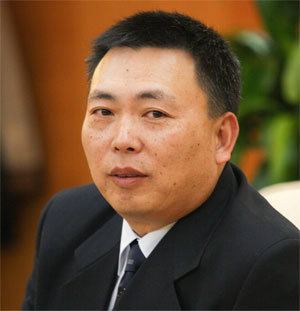
At that time, NetEase was in multiple predicaments: its core SMS business was impacted by policy regulation, its game business was still in its infancy, financial reports showed continuous losses, and investor confidence hit rock bottom. However, it was at this moment of widespread panic and selling that Duan Yongping made a major decision that changed his investment career—buying a large number of NetEase shares at an average price of about $1 [1].
Duan Yongping’s investment logic for NetEase was not based on short-term technical analysis or market sentiment judgment, but on a deep understanding of NetEase’s business model and full trust in the management’s capabilities. He saw the following key investment values:
Duan Yongping’s investment in NetEase eventually yielded more than 100 times returns. This case not only established his status as the “Chinese Warren Buffett” but also profoundly influenced the investment philosophy of a generation of Chinese value investors. This case perfectly interprets the core concept of value investment: buying high-quality companies with long-term competitive advantages when the market is extremely pessimistic and stock prices deviate significantly from their intrinsic value, and holding them for the long term until value returns [1].
In his publicly shared investment insights in 2023, Duan Yongping clearly stated: “Qualitative analysis is more important than quantitative analysis; the most important thing is the business model. The most important thing I have figured out over the years is the business model. Once this is understood, investing really becomes very interesting.” [2]
The formation of this investment philosophy originated from deep reflections on early investments such as NetEase. He found that what truly determines a company’s long-term value is whether its profit model is sustainable, whether it has differentiated competitive advantages, and whether it can continuously strengthen rather than weaken over time. An excellent business model can generate a strong moat, allowing the company to maintain a leading position in fierce market competition and continuously create value for shareholders [2].
In Duan Yongping’s investment framework, corporate culture and management quality occupy the same important position as the business model. He emphasized: “If you have (a good corporate culture or business model) in your heart, the probability of finding it in the end will be much higher, although this probability is still small. But if you don’t have it in your heart, the probability of finding it in the end may be very close to zero.” [2]
This view profoundly reveals the probabilistic basis of investment success. Companies with good corporate culture and management are more likely to achieve a turnaround through correct strategic adjustments and capability improvements even if they encounter difficulties in the short term. Conversely, companies lacking an integrity culture or professional management capabilities are difficult to sustain even if they have short-term competitive advantages [2].
Duan Yongping further pointed out: “If I no longer trust the company’s culture and management, I will decide to leave. For me, it is time-consuming to understand every detail of the company’s operations to decide whether to vote against or for, which may be more difficult than understanding the business model or corporate culture.” [2] This indicates that in his investment decision-making framework, trust in management is a prerequisite for investment, not a monitoring tool after investment.
Duan Yongping clearly stated that he is a “full-positionist”, but this full position is not mindless long-term holding, but based on value judgment from a ten-year perspective. He explained: “‘No timing’, my understanding is probably: when I think it is not expensive from a ten-year perspective, I can buy it, no need to wait for a cheaper price, because this price is already very good from a ten-year perspective.” [2]
This investment methodology requires investors to have two core capabilities: first, the qualitative judgment ability to accurately evaluate the company’s competitive advantages and profitability after ten years; second, the execution ability to果断 build positions when the current price is lower than the long-term intrinsic value. Duan Yongping emphasized: “Vague correctness is better than precise error. Investment is a comprehensive comparison; I will tend to companies with better business models.” [2]
The successful practice in Apple investment fully embodies this concept. Duan Yongping said: “I have never had the idea of reducing my holdings in Apple. I always think about how to increase my holdings. If you really plan to hold it for ten years, it is probably not going to lose money, at least no one has lost money in the past ten years, right?” [2] His continued heavy position in Apple is based on high recognition of its business model and corporate culture, as well as firm confidence in its ten-year competitiveness.
Although Duan Yongping emphasizes qualitative analysis and long-term holding, he does not completely ignore valuation factors. He clearly stated that the prerequisite for investment is “not expensive from a ten-year perspective”. This statement means that even for the most competitive high-quality companies, they need to be bought at a reasonable valuation level, otherwise, they may face long-term opportunity cost losses or even principal risks [2].
Duan Yongping warned investors about the risk of using leverage: “In the past twenty years, Apple has dropped by 40% or more at least ten times, and 10-20% drops are countless. If you bought Apple with margin, even if you didn’t go bankrupt, you would probably be scared out of your wits, right?” [2] This reminder is also of great significance for current Chinese concept stock investments.
The regulatory environment faced by Chinese concept stocks is completely different from the period when Duan Yongping invested in NetEase. Since 2021, the U.S. Securities and Exchange Commission (SEC) has continued to promote the implementation of the “Foreign Company Accountability Act”, requiring foreign companies listed in the U.S. to allow the Public Company Accounting Oversight Board (PCAOB) to inspect their audit working papers, otherwise they will face delisting risks [3].
According to the interpretation of Citigroup’s research report, if a company fails to meet the SEC’s information disclosure requirements for three consecutive years, the real ADR delisting risk may become a reality between 2024 and 2025 [3]. This policy risk has become an important systemic factor affecting the valuation of Chinese concept stocks, leading to long-term pressure on the valuations of many high-quality Chinese concept stocks, and some companies even have stock prices below their net cash assets.
However, it is worth noting that this regulatory pressure has also spawned a series of positive changes. More and more Chinese concept stock companies have chosen to list dual or primary listings in Hong Kong to hedge geopolitical risks. Major Chinese concept stocks such as Alibaba, JD.com, and NetEase have completed or are in the process of primary listing in Hong Kong, which not only reduces regulatory risks in a single jurisdiction but also provides investors with more trading and exit channels [3].
From 2024 to 2025, the global capital market has experienced significant changes in the liquidity environment. After a cycle of aggressive interest rate hikes by the U.S. Federal Reserve, the interest rate policy path has become a key variable affecting global capital flows. The high-interest rate environment continues to put pressure on the valuations of growth-oriented Chinese concept stocks, while once interest rates enter a downward cycle, the valuation repair space will be considerable.
At the same time, China’s economic structural adjustment and consumption recovery process directly affect the fundamental performance of Chinese concept stocks. Internet platform companies have experienced multiple shocks such as anti-monopoly regulation, education and training industry rectification, and real estate adjustments, but the regulatory authorities have also clearly stated their support for the standardized and healthy development of the platform economy, and the marginal improvement of policies is obvious [4].
From a liquidity perspective, although short-term capital flows may be affected by geopolitical factors, China’s long-term growth potential and huge consumer market continue to attract the attention of international institutional investors. BlackRock’s 13F filing report for the fourth quarter of 2024 shows that while it is fully increasing its holdings of the “U.S. Stock Seven Giants”, it also increased its holdings of some high-quality Chinese concept stocks [5].
After years of adjustments, the overall valuation of current Chinese concept stocks is at a historically low level. Taking the Nasdaq China Golden Dragon Index (HXC) as an example, the index started from the level of 3000 points at the end of January 2024, rebounded to a high of 6715 points on October 2 (an increase of 1.2 times), but then entered a correction period [6].
From a technical analysis perspective, the index is facing a test of key support levels. According to market analysis, if the index pulls back to the 50% retracement level, it may test the 4850-point level; if calculated by the 0.382 retracement amplitude, the target level is around 5290 points [6]. This technical pattern not only reflects short-term adjustment pressure but also indicates potential bargain-hunting opportunities at key support levels.
From a fundamental perspective, the valuation indicators such as price-earnings ratio and price-sales ratio of many high-quality Chinese concept stocks are now close to or even lower than historical lows, while their business fundamentals have not deteriorated, and some companies have even improved their market position and competitive advantages during industry adjustments. This divergence between valuation and fundamentals provides value investors with investment opportunities similar to those when Duan Yongping invested in NetEase that year.
The core implication of Duan Yongping’s investment in NetEase is: extreme market panic often creates the best investment opportunities. When the Internet bubble burst in 2000, the market almost sentenced all Internet companies to death. NetEase’s stock price fell below $1, and its market value was lower than cash assets. This extreme pessimism created a once-in-a-century investment window [1].
The current policy risks, liquidity pressure, and low market sentiment faced by Chinese concept stocks have many similarities with that era. Regulatory uncertainty has led to excessive suppression of the valuations of some high-quality Chinese concept stocks, the market overreacts to negative news, and is slow to respond to positive changes. As Duan Yongping said during the U.S. stock market crash in 2022: “Ha, it’s finally here! This is the consequence of reckless折腾. If the bubble doesn’t burst, investing is difficult. It’s very likely that opportunities like遍地黄金 are coming again.” [7]
However, this does not mean blind bottom-fishing. Duan Yongping emphasized the premise of “understanding the company”—only on the basis of in-depth understanding of the company’s business model, management capabilities, and long-term competitive advantages can one maintain resolve in market panic,果断 build positions when valuations deviate extremely, and obtain returns from value regression in long-term holdings [2].
Duan Yongping’s success in investing in NetEase came from his accurate judgment of the long-term competitive advantages of NetEase’s game business. At that time, online games were an emerging industry in China with huge market space, and NetEase was expected to become an industry leader with its self-research capabilities and product innovation awareness [1].
This investment logic has important guiding significance for current Chinese concept stock investments. Among numerous Chinese concept stocks, investors should focus on companies with clear business models, strong moats, and excellent management. Specifically, the following directions can be considered:
Duan Yongping emphasized that “investing is investing in people”, and management quality and corporate culture are core considerations for investment decisions. This principle is particularly important in current Chinese concept stock investments because:
Duan Yongping’s approach is worth learning from: he will deeply understand the management before investing, establish communication channels with the management, and continuously track whether the management’s words and deeds are consistent after investing [2]. Although ordinary investors may not be able to do this, they can evaluate management quality by studying the management’s public speeches, historical decision records, equity incentive plans, and other information.
The key to Duan Yongping’s hundred-fold return from investing in NetEase is not only choosing the right target but also holding it for the long term. He held NetEase stocks for more than ten years, going through multiple market cycles, and finally achieved rich returns [1].
This long-term resolve requires two prerequisites: first, the investment decision is based on a deep understanding of the company’s long-term competitive advantages, not short-term stock price fluctuation expectations; second, sufficient safety margin is established when buying, so that even if adverse situations are encountered in the short term, the confidence in long-term holding will not be shaken.
Duan Yongping shared: “Holding cash is more likely to make mistakes. One important reason not to sell a good company easily is: what to replace it with after selling! Holding cash is usually uncomfortable. Many people may sell a good company, can’t hold cash, then switch to a company whose profit model is unclear, start a life of sleepless nights, which is not worth it.” [2] This view profoundly reveals the harm of frequent trading and wrong stock switching, and emphasizes the importance of maintaining the stability of the investment portfolio.
Maintaining long-term resolve is particularly important in the current environment of increased volatility in Chinese concept stock markets. Investors should avoid being swayed by short-term market sentiment, stick to high-quality investment targets established after in-depth research, and maintain appropriate diversification to control non-systemic risks.
In the era when Duan Yongping invested in NetEase, Chinese concept stocks were mainly listed in the U.S., and investors had limited choices. Currently, investors should fully pay attention to the Hong Kong listing arrangements of Chinese concept stock companies and take them as an important consideration for investment decisions.
Duan Yongping’s investment operations in the fourth quarter of 2024 also reflected the flexible allocation of Hong Kong and U.S. Chinese concept stocks. He increased his holdings of Pinduoduo and Alibaba (both have Hong Kong listing status), showing a preference for Chinese concept stocks with multiple listing channels [5].
Although Duan Yongping emphasizes concentrated investment in high-quality companies, appropriate diversification is still an important means to control non-systemic risks. He has layouts in the three major markets of U.S. stocks, A-shares, and Hong Kong stocks, with main positions including Apple (U.S. stocks), Moutai (A-shares), and Tencent (Hong Kong stocks), achieving appropriate diversification across markets and industries [2].
For ordinary Chinese concept stock investors, it is recommended:
Based on the implications of Duan Yongping’s NetEase investment case and the current Chinese concept stock market environment, the following stock selection standard framework is recommended:
Chinese concept stocks still face uncertainties regarding regulatory policy risks. The United States
耀坤液压IPO前景综合评估
Insights are generated using AI models and historical data for informational purposes only. They do not constitute investment advice or recommendations. Past performance is not indicative of future results.
About us: Ginlix AI is the AI Investment Copilot powered by real data, bridging advanced AI with professional financial databases to provide verifiable, truth-based answers. Please use the chat box below to ask any financial question.