Analysis of Patent Disputes Between Ecovacs and Roborock and Their Impact on Industry Landscape
Unlock More Features
Login to access AI-powered analysis, deep research reports and more advanced features
About us: Ginlix AI is the AI Investment Copilot powered by real data, bridging advanced AI with professional financial databases to provide verifiable, truth-based answers. Please use the chat box below to ask any financial question.
Related Stocks
Based on the searched information, I conducted a systematic analysis of the patent disputes between Ecovacs and Roborock and their impact on the industry landscape.
The patent dispute between Ecovacs (603486.SS) and Roborock (688169.SS) is one of the most attention-grabbing legal controversies in China’s robot vacuum industry in recent years. The technical patent conflicts between the two companies mainly focus on core innovation areas such as cleaning systems, navigation and obstacle avoidance technologies, and base station self-cleaning functions.
According to the information from the search results, the relevant lawsuits have been heard and ruled by the Düsseldorf Patent Court in Germany [1]. This indicates that the patent disputes between the two parties have entered an international legal process and are no longer limited to the Chinese market. As an important consumer market and highland for intellectual property protection in Europe, the court’s ruling in Germany has a significant impact on both parties’ business layouts in the European market.
As a pioneer in China’s robot vacuum industry, Ecovacs is currently listed on the A-share market with a market capitalization of 45.37 billion USD and a latest share price of 80.40 RMB. From the perspective of financial indicators, the company has a price-to-earnings ratio of 28.45 times, a price-to-book ratio of 5.25 times, a return on equity (ROE) of 20.28%, and a net profit margin of 8.38%, showing strong profitability and shareholder return levels [2]. In recent years, the company has continued to invest in technological innovation, launching flagship products such as T50 Pro and X8 Pro, and forming differentiated competitive advantages in technologies such as ultra-thin body, roller mopping, and AI recognition.
Roborock is listed on the STAR Market with a market capitalization of 39.9 billion HKD and a latest share price of 154.00 RMB. Its price-to-earnings ratio is 25.70 times, lower than Ecovacs, and its net profit margin is 9.07%, slightly higher than Ecovacs. In recent years, the company has performed strongly in overseas markets, especially achieving significant growth in Europe and North America [3]. Roborock’s products are known for high performance and intelligence, and have accumulated a good reputation in algorithm optimization and user experience.
The patent dispute reflects that the robot vacuum industry has entered a critical stage of technological competition. The core technologies contested by both parties include:
- Navigation and Obstacle Avoidance Technologies: Laser Radar (LDS), dToF, AI visual recognition, etc.
- Cleaning System Design: Side brush extension, roller brush anti-tangling, mop structure innovation
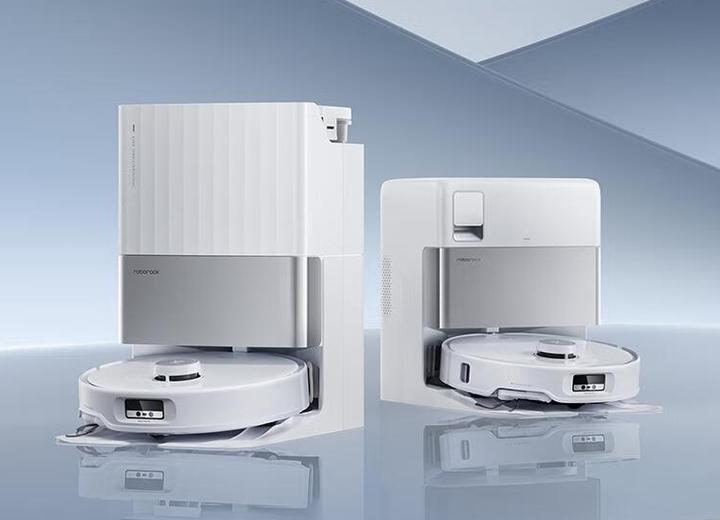
- Base Station Intelligence: Automatic dust collection, mop washing, drying, etc.
This technological patent competition will prompt the industry to increase R&D investment and accelerate technological iteration, but it may also lead to an increase in product homogenization risks.
From a global market perspective, the robot vacuum industry is undergoing a transformation from a “duopoly” to a “multi-player” pattern. The founder of iRobot recently stated that Chinese competitors such as Roborock, Ecovacs, and Dreame have fundamentally changed the global market pattern [4]. The outcome of the patent dispute will directly affect:
- Chinese Market: Competitive strategies and pricing power of both parties in the domestic market
- European Market: The Düsseldorf ruling may become a bellwether for the European market
- North American Market: Entry barriers and market share of both parties in the high-end market
Patent litigation involves huge legal costs and potential compensation, which will directly affect the short-term profitability of both parties. At the same time, to avoid patent risks, enterprises may need to adjust product design routes, increasing R&D costs. From the 2025 stock performance year-to-date, Ecovacs has risen by 73.84%, while Roborock has fallen by 2.14%, reflecting the market’s different expectations for the development prospects of the two companies [2][3].
The outcome of the patent dispute will affect the cooperation model of the upstream and downstream industry chains. Core component suppliers (such as laser radar, motor, and chip manufacturers) may face negotiation pressure from customers for “patent exclusivity”. At the same time, channel partners and retailers may also re-evaluate the cooperation risks with the litigated brands.
- Ultra-thin Trend: Ecovacs T50 Pro achieves an ultra-thin body of 8.1 cm, representing the industry’s exploration direction towards covering low-lying areas [5]
- Floor Washing Integration: Ecovacs X8 Pro adopts a roller mopping structure, introducing floor washer technology into robot vacuums [6]
- AI Intelligence: Stain recognition, adaptive cleaning strategies, voice interaction, and other AI functions have become standard configurations
According to IDC data, the global smart cleaning robot market showed a diversified competitive situation in Q1 2024. Cloud Whale led with a growth rate of 38.7%, Xiaomi grew by 22.9%, and Roborock grew by 18.3% [7]. This indicates that industry concentration is declining, and mid-tier brands are gaining more market opportunities.
The patent dispute between Ecovacs and Roborock is an inevitable result of the upgrading of industry competition, and its impact will continue to ferment. In the short term, the litigation outcome may lead to product adjustments and marketing strategy changes for both parties in the European market; in the medium and long term, patent competition will push the industry towards higher technical barriers, and enterprises with independent R&D capabilities will gain more sustainable competitive advantages.
For investors, it is recommended to pay attention to:
- The progress of the litigation between the two parties and its substantive impact on overseas business
- Whether the patent dispute will affect the rhythm of product innovation and new product launch plans
- M&A or strategic cooperation opportunities that may arise under the industry integration trend
[1] Relevant ruling documents of the Düsseldorf Patent Court (https://newsfile.futunn.com/public/NN-PersistNewsContentImage/7781/20251227/66687453-0-4259a2b167727a9cead665bbfe25cde4.png/big)
[2] Ecovacs Company Profile - Jinling API Data
[3] Roborock Company Profile - Jinling API Data
[4] Business Insider - iRobot founder says company’s bankruptcy revealed a new kind of competitor (https://www.businessinsider.com/irobot-ceo-bankruptcy-china-fast-followers-competition-2025-12)
[5] In-depth Review of Ecovacs T50 Pro (https://www.zhihu.com/tardis/zm/art/719059648)
[6] Detailed Review of Ecovacs X8 Pro (https://www.zhihu.com/tardis/bd/art/8763267869)
[7] IDC Q1 2024 Global Smart Cleaning Robot Market Data (https://img.cifnews.com/dev/1eae6eba39914f68b383cf7ce8cd4aca.png)
ST诺泰财务造假案中南京证券连带责任分析
Insights are generated using AI models and historical data for informational purposes only. They do not constitute investment advice or recommendations. Past performance is not indicative of future results.
About us: Ginlix AI is the AI Investment Copilot powered by real data, bridging advanced AI with professional financial databases to provide verifiable, truth-based answers. Please use the chat box below to ask any financial question.