Jefferies' EUR100 Price Target and Buy Rating on Sanofi: Comprehensive Analysis
Unlock More Features
Login to access AI-powered analysis, deep research reports and more advanced features
About us: Ginlix AI is the AI Investment Copilot powered by real data, bridging advanced AI with professional financial databases to provide verifiable, truth-based answers. Please use the chat box below to ask any financial question.
Related Stocks
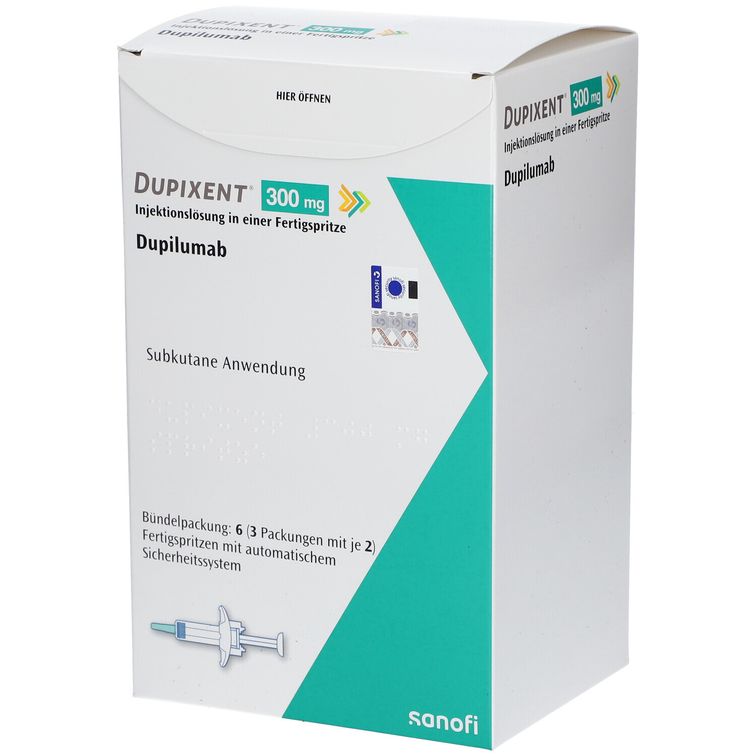
The EUR100 target reflects confidence in Sanofi’s long-term growth trajectory, particularly driven by its flagship product
- YTD return: +0.58%
- 1-year return: +0.50%
- 52-week range: $44.62 - $60.12
- P/E Ratio: 10.96x (indicating undervaluation)
- Price-to-Book: 1.43x
- EV/OCF: 7.99x
- Strong profit margins: Net margin 21.16%, Operating margin 36.66%
- Record Performance:In late 2025, Dupixent achieved a historic milestone withquarterly sales exceeding €4 billionfor the first time[4]
- Ambitious Targets:The drug is on track to reach Sanofi’s€22 billion annual sales target by 2030[4]
- Expanding Indications:Recent regulatory approvals include Japan’s authorization for pediatric bronchial asthma in children aged 6-11 years (December 2025), expanding addressable patient populations[5]
- Commercial Strength:Global net sales grew 27% year-over-year to $4.86 billion in Q3 2025[3]
Sanofi maintains a robust financial position that supports both R&D investments and strategic acquisitions:
- Cash Position:Approximately€9.7 billion in cash and equivalentsas of late 2025[4]
- Capital Deployment:The company comfortably funded the$2.2 billion all-cash Dynavax acquisitionwithout stressing debt metrics[4]
- Profitability:Net profit margin of 21.16% and ROE of 12.39% demonstrate efficient capital allocation[0]
2025 marked a significant year for Sanofi’s pipeline visibility, with the company emphasizing
- Immunology assets:Multiple candidates in late-stage development
- Respiratory disease pipeline:Expanding therapeutic areas
- Vaccines franchise:Strengthened through strategic acquisitions (Dynavax)
- R&D discipline:Focused capital allocation with higher probability of success
The
- HEPLISAV-B:Marketed adult hepatitis B vaccine with differentiated two-dose regimen
- Shingles vaccine candidate (Z-1018):Phase 1/2 clinical-stage asset with significant market potential
- Strategic Rationale:Enhances adult immunization presence, leverages Sanofi’s global scale and commercial reach[0]
| Factor | Impact | Rationale |
|---|---|---|
Dupixent Expansion |
High | New indications, geographic expansion, pediatric populations drive revenue growth toward €22B target |
Pipeline Execution |
Medium-High | Late-stage assets in immunology and respiratory could deliver multiple blockbusters |
Strategic Acquisitions |
Medium | Dynavax deal demonstrates disciplined capital deployment with accretive potential |
Valuation Re-rating |
Medium | Attractive P/E of ~11x leaves room for multiple expansion as growth visibility improves |
Cost Efficiency |
Low-Medium | Operational excellence and R&D discipline support margin expansion |
- Continued market share gains in immunology (Sanofi ranked #3 globally in 2025)[6]
- Potential approval and launch of new pipeline assets
- M&A opportunities leveraging strong balance sheet
- Improved investor sentiment as pipeline diversification materializes
The most significant recent headwind occurred on
- Implications:This represents a major pipeline setback, with further FDA guidance not expected untilQ1 2026
- Financial Impact:Sanofi is conducting animpairment test on tolebrutinib’s intangible asset value, though the outcome will not impact 2025 business EPS guidance[1]
- Expanded Access:Sanofi has submitted an expanded access protocol, allowing eligible patients compassionate use during the regulatory review process[1]
- The company must identify and develop replacement blockbusterswithin the next 5-7 years[4]
- Biosimilar competition could pressure margins post-patent expiry
- This creates urgency around pipeline diversification efforts
- Commercialization timelinesfor late-stage assets may slip
- Clinical trial outcomesremain uncertain despite strong fundamentals
- Competitive dynamicsin immunology and respiratory markets intensifying
Recent analyst actions show mixed sentiment:
- Guggenheim:Downgraded to Neutral from Buy (December 9, 2025)
- JP Morgan:Downgraded to Neutral from Overweight (December 8, 2025)
- However, Morgan Stanleyupgraded to Overweight in September 2025, highlighting divergent views[0]
- Conviction in Dupixent’s trajectoryas the primary growth driver
- Confidence in pipeline diversificationreducing dependency on any single asset
- Belief in management’s strategic visionunder CEO Paul Hudson
- Attractive valuationcreating margin of safety for long-term investors
| Metric | Sanofi (SNY) | Peer Average | Assessment |
|---|---|---|---|
| P/E Ratio | 10.96x | ~15-18x | Attractive discount |
| P/B Ratio | 1.43x | ~2.5-3.5x | Undervalued |
| EV/OCF | 7.99x | ~10-12x | Cash flow undervalued |
| Dividend Yield | Notable | Competitive | Income appeal |
- Consensus target:$61.00 (+19.7% from current)
- Target range:$48.07 - $64.00
- **Buy ratings:**14 out of26 analysts (53.8%)
- Overall consensus:BUY
- Execute on Dupixent’s €22 billion opportunitythrough2030
- Successfully diversify the portfoliobeyond reliance on a single blockbuster
- Leverage the strong balance sheetfor disciplined M&A and R&D investments
- Navigate patent cliff challengesthrough pipeline innovation
The
For investors, Sanofi offers a
[0] 金灵API数据 - Real-time quotes, company overview, stock price performance, analyst ratings, financial metrics, and news data for Sanofi (SNY)
[1] Investing.com - “Jefferies reiterates Buy rating on Sanofi stock despite FDA setback for tolebrutinib” (https://www.investing.com/news/analyst-ratings/jefferies-reiterates-buy-rating-on-sanofi-stock-despite-fda-setback-for-tolebrutinib-93CH-4422416)
[2] TipRanks - “Sanofi (SAN) Stock Forecast, Price Targets and Analysts Predictions” (https://www.tipranks.com/stocks/fr:san/forecast)
[3] PharmExec - “JP Morgan2026 Preview: Sanofi Looks to Bolster Future Pipeline” (https://www.pharmexec.com/view/jp-morgan-2026-preview-sanofi-looks-to-bolster-future-pipeline)
[4] FinancialContent - “Sanofi’s $2.2 Billion Strategic Pivot: Deconstructing the Dynavax Acquisition” (https://markets.financialcontent.com/wral/article/predictstreet-2025-12-24-sanofis-22-billion-strategic-pivot-deconstructing-the-dynavax-acquisition-and-the-future-of-specialty-medicine)
[5] Yahoo Finance - “Press Release: Sanofi and Regeneron’s Dupixent approved in Japan for children aged 6 to11 years” (https://finance.yahoo.com/news/press-release-sanofi-regeneron-dupixent-060000039.html)
[6] PharmaShots - Immunology Market Analysis (https://pharmashots.com/wp-content/uploads/2025/07/image-1-1.jpg)
Insights are generated using AI models and historical data for informational purposes only. They do not constitute investment advice or recommendations. Past performance is not indicative of future results.
About us: Ginlix AI is the AI Investment Copilot powered by real data, bridging advanced AI with professional financial databases to provide verifiable, truth-based answers. Please use the chat box below to ask any financial question.