
Pop Mart's IP Incubation & Comparison with Tencent's Longevity Path
Unlock More Features
Login to access AI-powered analysis, deep research reports and more advanced features
About us: Ginlix AI is the AI Investment Copilot powered by real data, bridging advanced AI with professional financial databases to provide verifiable, truth-based answers. Please use the chat box below to ask any financial question.
Following is the revised complete analysis (including data source explanations):
Core Conclusions (Prefaced)
- “Replicating Tencent” Path: Replicable, but needs to fill gaps in contentization and ecological depth. Pop Mart already has platform capabilities (IP matrix, channels, supply chain, and data-driven operations) and has formed a unique methodology for systematic management of “hit uncertainty”; the difference lies in content narrative depth and social network stickiness, making it more like “Nike of the trendy toy industry” rather than a fully comparable “game version of Disney”.
- Sustainability: Depends on the establishment of “IP incubator” capabilities and optimization of supply rhythm. The success of Labubu has verified platform capabilities, but reliance on a single IP remains a structural risk; the cycle can be smoothed through the relay of more top IPs and continuous expansion of categories/channels.
- Long-term value of business model: Has high moat and globalization potential, but needs to be alert to the “accessibility paradox” and blind box penetration ceiling; the leap from “Chinese trendy toys” to “global cultural symbols” is the core support for valuation.
- Core Data Verification and Source Explanation (Financial Report vs. Network/Institution Forecasts)
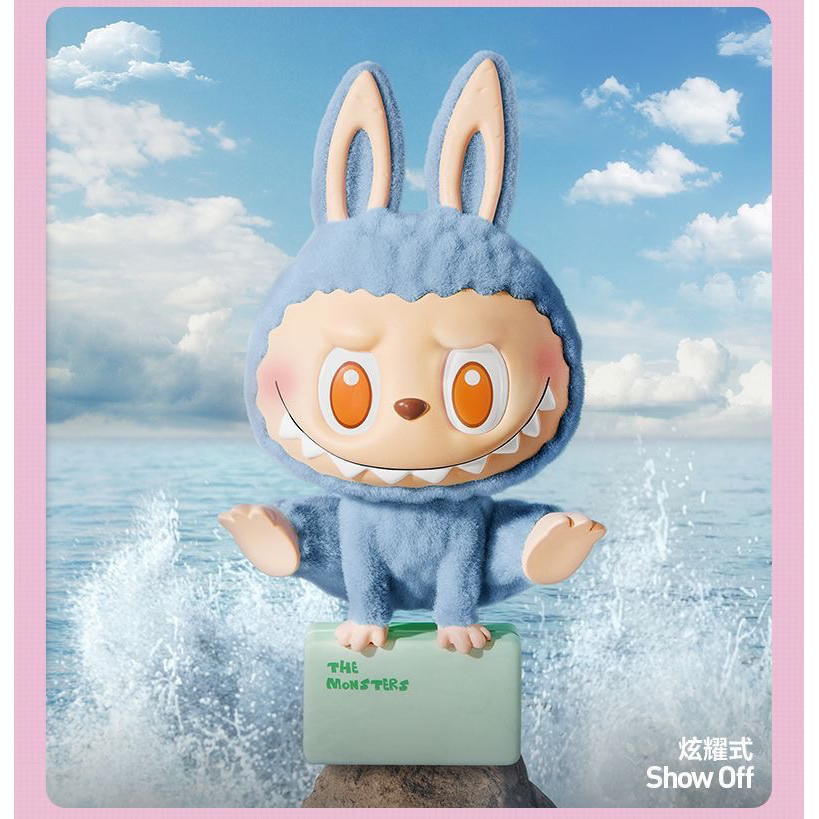
- Realized in financial reports (interim report/H1): Revenue 13.88 billion yuan (+204.4%), adjusted net profit 4.71 billion yuan (+362.8%); THE MONSTERS (IP where Labubu belongs) revenue 4.814 billion yuan (+668%), accounting for about 34.7% of artist IP revenue [1,2] (financial report).
- Network search/institution estimates (non-financial report): Some reports mention “Labubu’s 2025 sales are expected to reach 15.5 billion yuan” and “monthly average production capacity will rise to 50 million units”, etc., which are from institution/media reports and are forecast or production capacity planning data, not realized financial report data; please cite with caution [3,4]. This analysis clearly distinguishes between the two.
- Resonance of Labubu and Honor of Kings’ “10th Anniversary”
- Honor of Kings (Tencent): Launched in 2015, 2025 marks its 10th anniversary; Tencent Games has achieved “reverse growth” under AI-driven and long-term operation, with DAU peak and global revenue at high levels, proving the vitality of “long-lived IP” [5].
- Labubu (Pop Mart): THE MONSTERS IP was born in 2015, coinciding with the 10th anniversary window; it entered the global phenomenon-level heat cycle in 2024-2025, becoming the main growth engine [1,2]. The high alignment of their “10th anniversary” timelines forms a natural entry point for comparison.
- Can the Next Labubu Be Continuously Launched? (Platform Capabilities Verified)
- Matrix depth: In H1, 13 artist IPs had revenue exceeding 100 million yuan, and 5 IPs had revenue exceeding 1 billion yuan (THE MONSTERS, MOLLY, SKULLPANDA, CRYBABY, DIMOO) [2], showing the ability to drive multiple IPs in parallel.
- New IP paths:
- Content co-branding to break circles (e.g., Nezha, My Little Pony, etc.) to guide traffic to self-owned IPs [2];
- Overseas localization (social media hot topics, KOL and celebrity exposure) and cooperation with local artists;
- Category and form iteration (vinyl plush, MEGA, scene figures, etc.) to expand IP consumption scenarios [1,2].
- Supply rhythm and flexibility: Small-batch, multi-batch trial sales + pre-sales; data-driven (social media heat capture) to guide restocking, reducing inventory risks and improving conversion [6].
- Trendy Toy Track Ceiling and Differentiation
- Penetration concern: Institutions estimate that the penetration rate of China’s blind box market is close to 35%, and linear extrapolation needs to be cautious due to high base and intensified competition [3].
- “Accessibility paradox”: To meet demand, Labubu’s production capacity increase and restocking acceleration have led to premium contraction or even breakage in some channels/styles, indicating that dynamic management of scarcity attributes is crucial [3,4].
- Differences in business nature: Image IPs爆发快、波动大, relying on continuous operation and community stickiness; content IPs have thicker worldviews but longer cultivation cycles [6]. Pop Mart occupies a position in the “emotional companionship + social display” track, but differs from Tencent’s strong social network and PVP stickiness.
- Methodology for Systematic Management of “Hit Uncertainty”
- Data-driven selection and trial sales: Capture全网声量/热度 data, establish first batch and restocking decision models [6].
- Flexible supply chain: Small-batch, rapid iteration + pre-sale system to hedge inventory risks and capture demand pulses [6].
- Artist ecosystem and contentization: Sign and incubate designers, and enhance IP depth and emotional connection through stories/co-branding/social media [1,2,6].
- Global layout: Regional headquarters (Greater China/Americas/Asia Pacific/Europe), localized operations to reduce concentration risks of single markets and single IPs [1].
- Investment and mergers to expand IP library: Continuous investment and acquisition of IPs to expand upstream resource pools [6].
- Isomorphism and Differences with Tencent’s IP Operations (Core Comparison)
- Isomorphism:
- Matrixization and longevity (multiple IPs in parallel, extending life cycle);
- Strong channels and data-driven operations (offline stores/robot shops + online e-commerce/communities, driven by DAU, conversion, and repurchase) [1,2,5];
- Investment in AI and digital ecology (e.g., Tencent’s AINPC/advertising models in games; Pop Mart also uses data prediction and automated selection) [5].
- Differences:
- Content depth: Tencent Games (especially Honor of Kings) has “long-term narrative” with continuous updates and event ecology; Pop Mart’s image IP narrative relies more on social media and co-branding (e.g., Nezha, My Little Pony, etc.), with lighter worldviews but faster iteration [1,2,6].
- Social network stickiness: Game PVP and season mechanisms form high-stickiness ecology; trendy toys rely on community sharing and scene display, with stickiness leaning towards “interest circles” rather than “necessities” [5,6].
- Business leverage: Games excel in digital goods and operation leverage; trendy toys use physical carriers and offline experiences as touchpoints, with greater challenges in global logistics and localized operations [1,2].
- Replication Path and Key Gaps
- Replication path (achievable):
- At the “platform capability” level, further strengthen data selection, flexible supply, and global localization;
- At the “contentization” level, complement top IPs with worldviews, animation/short content, and game linkage to enhance “long-tail stickiness”;
- At the “ecologicalization” level, build cross-scenario reach of IPs through parks/authorization/co-branding, etc. [1,2].
- Key gaps:
- Content narrative and long-term operation system (continuous output of IP stories/worldviews/cross-media content);
- Regulation and intellectual property protection (infringement and compliance risks in overseas expansion) [7];
- Category structure balance (avoid over-reliance on “blind box mechanism”).
- Conclusions and Implementable Recommendations
- Conclusions: Pop Mart has the organizational and systematic capabilities to transition from “hit maker” to “IP incubator”, and the platform path is isomorphic with Tencent. However, there is a “contentization gap” in content depth and social network stickiness. Whether it can replicate Tencent Games’ long-lived ecology depends on whether it can complement “the thick narrative and cross-media operation of content IPs” while maintaining “the agility of image IPs”.
- Recommendations:
- Short to medium term: Adhere to multi-IP parallelism + flexible supply to extend the monetization curve of top IPs like Labubu (story/co-branding/scene/category extension);
- Medium term: Strengthen contentization of top IPs (animation/short content/game linkage) and offline experiences (parks/pop-ups/exhibitions) to enhance emotional depth and repurchase;
- Long term: Build a combination of “local artists + local stories + local channels” in globalization to form a regional IP incubation and monetization closed loop;
- Investor perspective: Focus on changes in indicators such as “IP matrix health” (contribution ratio and concentration of top 10 IPs), “overseas revenue ratio and growth rate”, “gross margin and inventory turnover”, and “content/derivative business revenue ratio” [1,2,3,4].
References (Data Source Explanations)
[1] Dongfang Caizhi · Brokerage Research Report (2025-07-17): Pop Mart 25H1 revenue, profit margin, IP matrix, channels, and overseas progress (financial report).
[2] Pop Mart 2025 Interim Performance Report: Revenue, net profit, and IP revenue structure (financial report).
[3] Observer Network (2025-08-19): Performance interpretation and IP matrix; forecasts/estimates of Labubu sales and production capacity by Morgan Stanley, Deutsche Bank, etc. (non-financial report).
[4] Sina Finance (2025-12-11): Short-selling reports, institutional target price adjustments, estimates of Labubu sales and production capacity (non-financial report).
[5] Tencent News/Industry Media: Honor of Kings revenue, long-term operation, and AI strategy (network).
[6] 36Kr/Interface/Prospect Network/Industry Research: IP operation methodology, flexible supply chain, social media data-driven selection, life cycle management (network).
[7] Xinhuanet/People’s Daily Online: Trendy toy overseas expansion progress and customs interception data (network).
[8] Huaan Securities: Research on globalization of Chinese trendy toys and IP ecology (industry report).
Important Notes
- Numbers like “15.5 billion yuan” and “50 million units per month” in the text come from institutional forecasts or media reports, not realized data in the company’s financial reports. This analysis regards them as “market expectations/production capacity planning” and clearly distinguishes them from “realized financial report data”. Investors should refer to company announcements and regular reports.
Insights are generated using AI models and historical data for informational purposes only. They do not constitute investment advice or recommendations. Past performance is not indicative of future results.
About us: Ginlix AI is the AI Investment Copilot powered by real data, bridging advanced AI with professional financial databases to provide verifiable, truth-based answers. Please use the chat box below to ask any financial question.