Analysis of Investment Impacts of the Russia-Ukraine Peace Process on Energy, Defense, and European Stock Markets
Unlock More Features
Login to access AI-powered analysis, deep research reports and more advanced features
About us: Ginlix AI is the AI Investment Copilot powered by real data, bridging advanced AI with professional financial databases to provide verifiable, truth-based answers. Please use the chat box below to ask any financial question.
Related Stocks
Based on the latest market data [0] and online search results [1][2][3], I will systematically analyze the potential investment impacts of the Russia-Ukraine peace process on relevant markets. This analysis focuses on three core sectors: the energy market, defense stocks, and European stock markets.
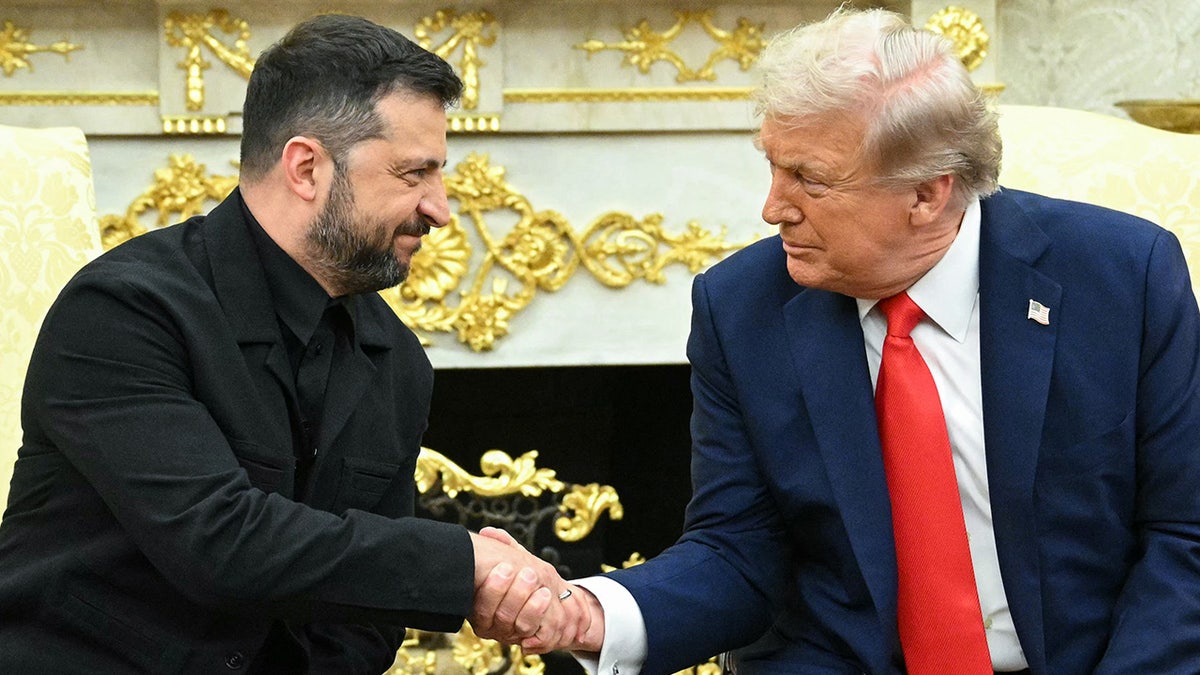
After meeting at Mar-a-Lago on December 28, 2025, Donald Trump and Volodymyr Zelensky announced that the two sides had reached approximately 95% consensus on the ‘20-Point Peace Plan’ [1][2]. Key contents include:
- Confirmation of Ukraine’s sovereignty and a non-aggression pact
- Ukraine maintaining an 800,000-strong military
- Security guarantees from the U.S. and NATO
- Ukraine continuing to advance its EU accession process
According to brokerage API data [0], as of the end of December 2025:
- Brent Crude: Approximately $60.64/barrel, down 17.82% annually
- WTI Crude: Approximately $56.89/barrel, down 19.41% annually
- European Natural Gas (TTF): Approximately 28.07 EUR/MWh, down 41.25% year-on-year [3]
Energy Sector ETF Performance:
- XLE (Energy Select Sector SPDR ETF): Down 0.83% in the past 60 days with low volatility (1.11%) [0]
- UNG (Natural Gas ETF): Down 6.29% in the past 60 days with high volatility (3.56%) [0]
- Bearish: If substantial progress is made in the peace agreement, geopolitical risk premiums may fade quickly, putting downward pressure on oil prices
- Bullish: Reduce supply disruption risks and stabilize energy trade flows
- Russia’s Energy Return to Market: If sanctions are relaxed, Russia’s crude oil and natural gas exports may increase, putting downward pressure on global supply
- Accelerated Transformation of European Energy Structure: The EU plans to completely stop importing energy from Russia by 2028 [3], a strategy that will not change due to the peace process
- European natural gas prices may remain relatively low; TTF has plummeted from a high of 345 EUR/MWh in 2022 to approximately 28 EUR currently [3]
- However, structural supply security issues persist; EU gas storage filling rate reaches 83% [3]
- Short-Term: Adopt a cautious attitude toward energy stocks, especially pure oil price-sensitive stocks
- Long-Term: Focus on U.S. LNG exporters and European energy infrastructure companies, which will benefit from Europe’s energy diversification strategy
- Lockheed Martin (LMT): $483.03, P/E 26.88, market cap $113 billion, Q3 2025 order backlog exceeding $170 billion
- Raytheon Technologies (RTX): $185.17, P/E 38.02, market cap $247.9 billion
- Northrop Grumman (NOC): $577.37, P/E 20.79, market cap $82.4 billion
- Rheinmetall: Up nearly 200% [4]
- Leonardo: Up over 100% [4]
- BAE Systems: Up over 60% [4]
- FTSE European Aerospace & Defense Index up 72.66% year-to-date [4]
- Bearish: The signing of a peace agreement may trigger a short-term correction in defense stocks as the market re-evaluates long-term demand
- Limited Bullish: Even if the conflict cools down, the trend of increased European defense spending has been established and will not reverse immediately
-
Sustained Structural Demand:
- European defense investment reached 381 billion EUR in 2025, accounting for 2.1% of GDP, exceeding NATO’s 2% target for the first time [4]
- The NATO Foreign Ministers’ Meeting confirmed a feasible path to achieve 5% GDP defense spending by 2035 [4]
- The EU’s 150 billion EUR SAFE instrument requires 65% of defense procurement to be conducted within Europe [4]
-
Long-Term Order Backlog:
- Revenue of the world’s top 100 arms dealers hit a record high in 2024 [3]
- European arms dealers’ sales increased by 13% year-on-year, while U.S. defense companies’ revenue grew by 3.8% [3]
- Demand Foundation Will Not Disappear: Even if the Russia-Ukraine conflict cools down, other geopolitical risks such as NATO expansion and Indo-Pacific tensions remain
- Continued Defense Modernization: Long-term projects such as F-35 fighter jets, hypersonic missiles, and autonomous systems continue to advance
- European Strategic Autonomy: The EU’s strategy to reduce reliance on U.S. military technology will not change due to Russia-Ukraine peace
- Short-Term: Focus on potential correction opportunities; progress in the peace agreement may bring bargain-hunting opportunities
- Mid-Term: Focus on leading companies with long-term order backlogs and diversified revenue sources
- Long-Term: European defense companies may still have growth potential, but caution is needed as valuations have risen sharply
- Euro Stoxx 50 Index: Up 4.28% in the past 60 days [0]
- French CAC 40 Index: Slightly up 0.97% in the past 60 days [0]
- European stock markets showed relatively stable performance overall in 2025
- Significant Bullish: A peace agreement will significantly reduce the geopolitical risk premium in Europe
- Improved Economic Confidence: Reduce uncertainty, which is beneficial to business investment and consumer confidence
- Decline in Energy Costs: Natural gas prices have plummeted 41% from the 2022 high [3], and corporate energy cost pressure continues to ease
- Recovery of Trade Channels: The Black Sea Grain Corridor and trade routes may reopen, benefiting agriculture and logistics industries
- Reconstruction Demand: Ukraine’s reconstruction may create new business opportunities, especially for construction, engineering, and infrastructure companies
- Structural Challenges Persist: Europe faces structural issues such as aging workforce, digital lag, and lack of innovation
- Fiscal Pressure: High defense spending (currently 2.1% of GDP) may squeeze other public investments
- Political Risks: There are divisions within the EU on supporting Ukraine, and the influence of far-right parties is rising [3]
- Short-Term: Europe may see a recovery in risk appetite; bullish on cyclical sectors
- Mid-Term: Focus on industries benefiting from lower energy costs and Ukraine reconstruction concept stocks
- Long-Term: Adopt a cautiously optimistic attitude toward Europe overall; need to select individual stocks and industries carefully
- European Cyclical Stocks: Banks, automobiles, luxury goods, and other sectors benefiting from economic recovery
- Ukraine Reconstruction Concept Stocks: Construction, engineering, and infrastructure companies
- U.S. LNG Exporters: Benefit from the long-term trend of European energy diversification
- U.S. Defense Stocks: Valuations are reasonable but may have short-term volatility; focus on companies with strong order backlogs and cash flow
- European Blue-Chip Stocks: Select companies with strong fundamentals that benefit from lower energy costs
- Pure Oil Price-Sensitive Energy Stocks: The peace process may suppress oil prices
- High-Valuation European Defense Stocks: Although the long-term trend is positive, short-term overvaluation risks correction
- Uncertainty of Peace Agreement: Key disputes such as territorial issues may still break down
- Risk of Geopolitical Escalation: Negotiation failure may lead to conflict escalation
- Overreaction of Market: Short-term may see ‘buy the rumor, sell the fact’ volatility
- Other Geopolitical Risks: Risks in other hotspots such as the Middle East and Taiwan Strait remain
- Peace Talk Progress: Focus on negotiations over territorial issues and nuclear power plant control
- Energy Prices: Key ranges: Brent crude $60-70/barrel, TTF natural gas 25-35 EUR/MWh
- Defense Orders: Monitor quarterly orders and backlogs of U.S. and European defense companies
- European Economic Data: PMI, consumer confidence, corporate investment, etc.
If the Russia-Ukraine peace process succeeds, it will have far-reaching impacts on global financial markets.
[0] Jinling API Data - Real-time stock quotes, historical price data, market index data (as of December 28, 2025)
[1] Deutsche Welle - “Zelensky Announces New 20-Point Peace Proposal: What Disputes Remain?” (December 24, 2025) https://www.dw.com/zh/泽连斯基公布新版20点和平提案-还有哪些分歧未解/a-75297077
[2] Xinhua News Agency - “Trump: ‘20-Point Peace Plan’ 95% Agreed” (December 28, 2025) http://www.news.cn/world/20251229/9fe407ac42dc4abea94870764d5bda01/c.html
[3] Xinhua News Agency - “International Observation | Huge Arms Sales Highlight Global Security Deficit” (December 1, 2025) http://www.news.cn/world/20251201/a1b3253787a74db58c67b9389e20f8ea/c.html
[4] VisionWave Holdings via Newswire - “Sovereign Defense Boom: The €381 Billion Shift to Local Military Tech” (December 24, 2025) https://www.newswire.ca/news-releases/sovereign-defense-boom-the-eur381-billion-shift-to-local-military-tech-815927141.html
[5] CNBC - “Zelenskyy meets Trump in Florida for talks on Ukraine peace plan” (December 28, 2025) https://www.cnbc.com/2025/12/28/zelenskyy-to-meet-trump-in-florida-for-talks-on-ukraine-peace-plan.html
[6] Trading Economics - “EU Natural Gas - Price - Chart - Historical Data” (December 26, 2025) https://tradingeconomics.com/commodity/eu-natural-gas
[7] Trading Economics - “Crude Oil | 1983-2025 Data | 2026-2027 Forecast” (December 28, 2025) https://zh.tradingeconomics.com/commodity/crude-oil
[8] LSEG (Formerly Refinitiv) - “How to gain index traction in defence” (Data as of July 31, 2025) https://www.lseg.com/en/insights/ftse-russell/how-to-gain-index-traction-in-defence
[9] RFI French International Radio - “Europe Today” (December 2025) https://www.rfi.fr/cn/专栏检索/今日欧洲/podcast
[10] Futu News - “A ‘Ticking Time Bomb’ Beneath Prosperity!盘点2026年还需小心的十大风险” https://news.futunn.com/hk/post/66661770/a-ticking-time-bomb-beneath-the-prosperity-a-review-of
[11] GO Markets - “Impact of Red Sea Tensions on Maritime Transport” (January 15, 2024) https://www.gomarkets.com/zh-au/articles/hong-hai-jin-zhang-ju-shi-dui-hai-yun-de-ying-xiang
Insights are generated using AI models and historical data for informational purposes only. They do not constitute investment advice or recommendations. Past performance is not indicative of future results.
About us: Ginlix AI is the AI Investment Copilot powered by real data, bridging advanced AI with professional financial databases to provide verifiable, truth-based answers. Please use the chat box below to ask any financial question.