
Pop Mart's IP Long-Lifecycle Strategy: Insights from Tencent Games on the Path to the Next Blockbuster After Labubu
Unlock More Features
Login to access AI-powered analysis, deep research reports and more advanced features
About us: Ginlix AI is the AI Investment Copilot powered by real data, bridging advanced AI with professional financial databases to provide verifiable, truth-based answers. Please use the chat box below to ask any financial question.
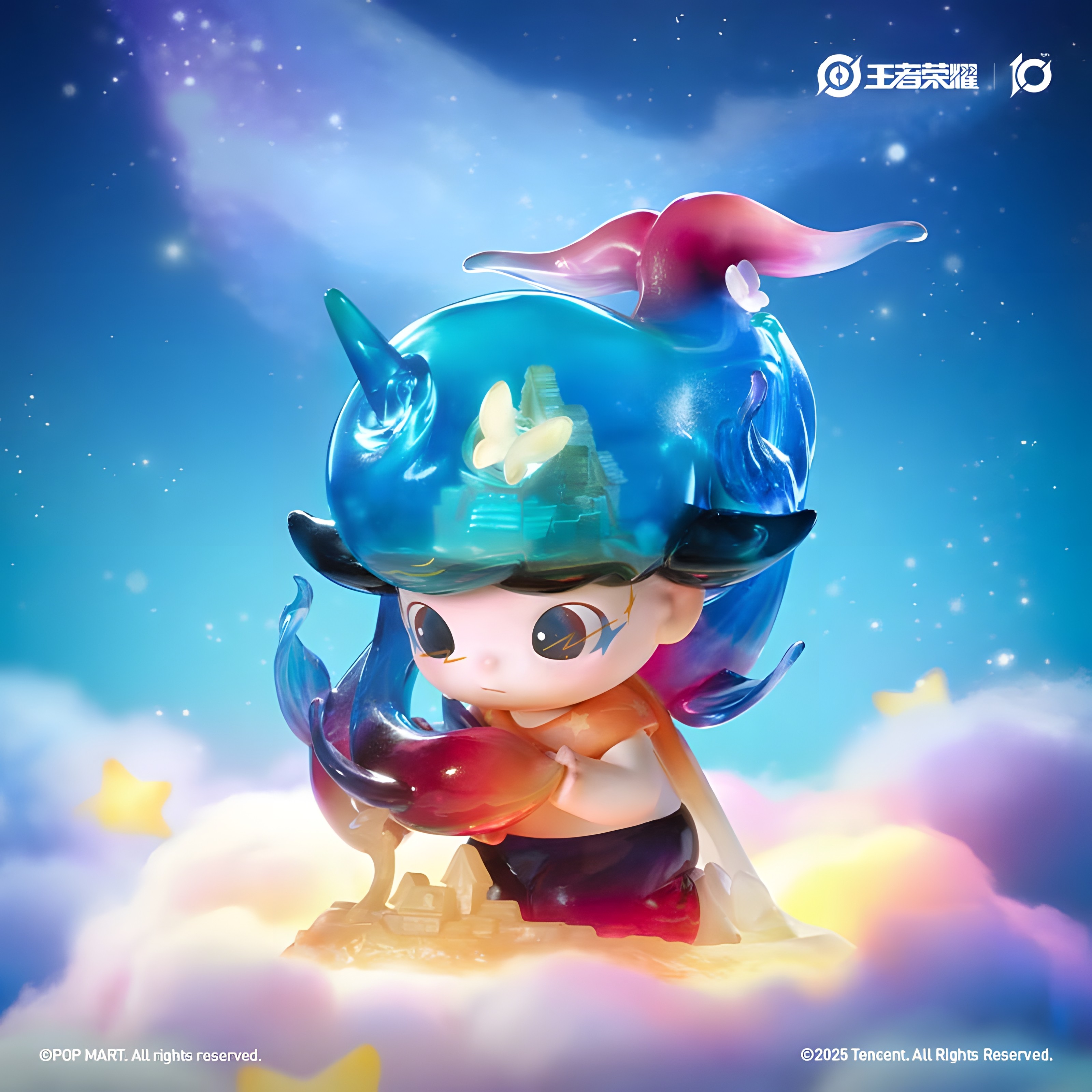
2025 marks the 10th anniversary of both Honor of Kings and Labubu, a coincidence that reveals the possibility of IP longevity. In 2015, the average lifecycle of mobile games was only 6-12 months, but Honor of Kings successfully broke this cycle curse and still maintains strong vitality to this day [2]. Similarly, Labubu still drove explosive growth in Pop Mart’s performance 10 years after its launch: in H1 2025, THE MONSTERS series generated revenue of RMB 4.814 billion, a year-on-year increase of 668%, accounting for 34.7% of total revenue [3].
Pop Mart and Tencent Games have highly similar business models, both building a strong “IP operation platform” to transform the “uncertainty of blockbusters” in the creative industry into manageable and replicable “systematic success probability” [2]. Both have打通 the full industry chain closed loop from creative sources to end consumers, relying on systematic capabilities to form a strong growth flywheel and achieve a positive cycle of “the larger the scale, the stronger the barriers” [2].
Tencent maintains user retention through continuous gameplay integration and content updates for games, such as the subway mode in Peace Elite which constantly provides freshness to players [4].
Honor of Kings has become a social tool; in family-friendly scenarios like the Spring Festival, it is the optimal solution for ice-breaking and interaction. Even old players who quit multiple times return because of the game’s social attributes [4].
Tencent maintains extremely high review efficiency and industrial processes in strong execution tracks like shooting and competitive games. A 60-point game can slowly iterate to 70, 80, or even 90 points based on strong channel foundations [4].
Honor of Kings is building a “Kingdom Universe”, expanding the game IP into a cultural symbol through diversified content such as animations, movies, and derivatives, breaking the lifecycle limitations of a single game product [4].
Tencent systematically manages the uncertainty of blockbusters through the following mechanisms:
- Cast a Wide Net to Capture Blockbusters: Invest in a large number of potential game studios and establish an internal horse-racing mechanism [2]
- Full Industry Chain Closed Loop: No obvious shortcomings in the business chain from R&D, distribution to operation [2]
- Channel Advantages: Utilize social platforms like WeChat and QQ to gain unparalleled distribution capabilities [2]
- Risk Control: Diversify risks through investment portfolios; even if individual products fail, they do not affect the overall
Pop Mart has established a
- Quickly Identify Blockbuster Potential: SKULLPANDA was classified as Grade A when signed; stock sold out in half a day within a month, immediately upgraded to Grade S and increased investment [1]
- Timely Stop Loss for Failed Projects: IPs with poor performance will quickly have resources withdrawn to avoid waste [2]
- Periodic Adjustments: Sometimes adjustments are fast (e.g., Labubu adjusted in a few months), sometimes longer (e.g., CRYBABY复苏 after two years of silence) [2]
Pop Mart has built a complete business closed loop from
2025 H1 financial report shows:
- Revenue: RMB 13.88 billion, a year-on-year increase of 204.4%
- Net profit: RMB 4.71 billion, a year-on-year increase of 362.8%
- Gross margin: 70.3%, approaching the profit level of international luxury brands [3]
- 13 artist IPs with revenue exceeding 100 million yuan, 5 IPs with revenue exceeding 1 billion yuan [1]
- Overseas market explosion: 1142.3% growth in the Americas, 729.2% growth in Europe [3]
Pop Mart has established a
- Quickly Identify Blockbuster Potential: SKULLPANDA was classified as Grade A when signed; stock sold out in half a day within a month, immediately upgraded to Grade S and increased investment [1]
- Timely Stop Loss for Failed Projects: IPs with poor performance will quickly have resources withdrawn to avoid waste [2]
- Periodic Adjustments: Sometimes adjustments are fast (e.g., Labubu adjusted in a few months), sometimes longer (e.g., CRYBABY复苏 after two years of silence) [2]
Pop Mart has built a complete business closed loop from
2025 H1 financial report shows:
- Revenue: RMB 13.88 billion, a year-on-year increase of 204.4%
- Net profit: RMB 4.71 billion, a year-on-year increase of 362.8%
- Gross margin: 70.3%, approaching the profit level of international luxury brands [3]
- 13 artist IPs with revenue exceeding 100 million yuan, 5 IPs with revenue exceeding 1 billion yuan [1]
- Overseas market explosion: 1142.3% growth in the Americas, 729.2% growth in Europe [3]
The key to Tencent’s success lies in not relying on a single game but continuously incubating new blockbusters through platform capabilities. Pop Mart needs to strengthen its “platform-based” positioning and reduce dependence on a single IP. Currently, THE MONSTERS’ 34.7% share is still high [3].
Data shows that the “public opinion heat” and “commercial value” of Pop Mart’s various IPs are not bound. As an old IP, Molly has little topic heat in the mass circle, but its sales are still growing and have not been squeezed by Labubu [1]. This indicates that Pop Mart needs to establish an IP value evaluation system beyond short-term heat, focusing on core audience retention and repeat purchases.
Pop Mart has shown strong IP revival capabilities. CRYBABY and Xingxingren are second-hand or even third-hand IPs; the original operators invested a lot of resources but finally failed, but Pop Mart achieved explosive growth after taking over with its mature operation system [2]. This IP revival mechanism needs to be normalized to become the core competitiveness of the platform.
Pop Mart has cooperated with Sony Pictures to launch the Labubu movie project [5], which is the right direction. Referring to the experience of Disney and Pokémon, IPs need to break through a single carrier to achieve long lifecycles. Mario and Pokémon can cover a wider audience and adapt to broader commercial scenarios because they are simple enough [1].
The significance of Pop Mart’s park business is not to directly contribute revenue, but to build offline experience scenarios for IPs and deepen user emotional connections. This is consistent with Tencent’s logic of building a game social ecosystem—extending the IP lifecycle through diversified experiences.
Although Pop Mart’s self-developed games are progressing slowly, this is still an important part of the IP ecosystem. Tencent Games’ Kingdom Universe attracts a large number of users through the game itself and then expands user value through derivative content. Pop Mart needs to find game forms suitable for its IP tone.
Pop Mart founder Wang Ning mentioned that he is studying the logic of luxury brands, such as how LV achieves “sufficient scarcity” [5]. This points to three directions for branding upgrading:
The “scarcity” of Moutai and luxury brands is not simple out-of-stock, but the unique emotional symbol value given by the brand to each product [5]. Pop Mart needs to build its own value narrative; when “Pop Mart” itself becomes a brand with cultural recognition and emotional appeal, it no longer needs to rely on IP to “lift it up” but can instead inject value into more IPs [5].
Labubu has become a spiritual symbol for young people to express their “small rebellion”, evolving into an identity marker and social currency [5]. This kind of cultural symbol-level value is the foundation for IPs to achieve long lifecycles.
Pop Mart invited former Burberry executive Wu Yue to join, promoting the luxury strategy and global expansion [5]. This is a key measure to build long-term brand value.
Trendy toys themselves have strong self-propagation and social attributes; platforms like Douyin and Xiaohongshu are full of a large number of unboxing videos of Pop Mart products, forming a closed loop of “sharing—种草—following” [1]. Over 100,000 WeChat groups are 90% user-initiated, forming continuous discussions and repeat purchases [1]. This UGC ecosystem needs to be systematically operated instead of being left to its own devices.
Trendy toys are a highly segmented market; even different IPs of the same company may correspond to very different audiences. The key to trendy toy IP operation is not to continuously expand the consumer group, but to serve the “retained” consumer group well, thereby expanding product depth and repeat purchases [1]. Public opinion heat can help enterprises screen IP consumers, but when public opinion heat decreases and marginal audiences gradually leave, the remaining core audiences determine the commercial value of the IP [1].
Labubu’s success is largely due to a “material revolution”—from hard PVC figures to plush pendants, from static display items to walking fashion items [3]. This allowed trendy toys to complete the scene transition from “self-pleasure” to “social display”, opening the door to mass consumption beyond the core trendy toy group [3].
Pop Mart decided to “narrow the width and deepen the depth” of categories, i.e., create maximum value with the fewest SKUs [1]. Through sales analysis, they found that 30% of the store’s sales came from the agent Japanese trendy toy SonnyAngel, which made them see the possibility of focusing on trendy toys [1]. This focusing strategy needs to be continuously promoted.
Pop Mart has proven its IP operation capabilities. The popularity of second-hand IPs like CRYBABY and Xingxingren truly reflects Pop Mart’s excellent IP operation capabilities [2]. This systematic blockbuster production capability is more valuable than the success of a single Labubu.
The success of Pop Mart’s early IPs was largely because the signed designers were all giants in the trendy toy industry, such as the designers of Molly and Labubu who were among the four major trendy toy designers in Hong Kong [2]. But as the platform matures, Pop Mart needs to discover and cultivate a new generation of artists to build a more diverse and sustainable artist ecosystem.
Currently, Pop Mart has 13 IPs with revenue exceeding 100 million yuan and 5 IPs with revenue exceeding 1 billion yuan [1], which is a good foundation. But it needs to avoid over-reliance on a single IP and build a more balanced IP matrix. The most important indicator to observe Pop Mart is whether it can “continuously incubate new IPs with 1 billion yuan in sales” [1].
Labubu’s “bloom inside the wall and fragrance outside” model proves the global potential of Chinese IPs [1]. In 2025, Pop Mart’s overseas market grew explosively: 1142.3% in the Americas and 729.2% in Europe [3]. Internationalization is not only a growth engine but also an important guarantee for the long lifecycle of IPs.
Morgan Stanley pointed out that the penetration rate of China’s blind box market has approached 35%, and the high base effect combined with intensified competition will抑制 growth, lowering Pop Mart’s 2026 revenue growth forecast from 30% to 18% [3]. The growth space of the blind box model is not unlimited; new growth engines need to be found.
Despite explosive performance, Pop Mart’s stock price has fallen by more than 40% since the August 2025 high, with a market value evaporation of over HK$200 billion [3]. Short positions surged to 6.3% of circulating shares, and the short selling ratio hit a two-year high [3]. This reflects the capital market’s deep concerns about Pop Mart’s long-term growth logic.
Trendy toys are not “essential goods”, and there are natural limits to user loyalty and consumption frequency [3]. How to make non-essential trendy toy products achieve long lifecycles is the core challenge facing Pop Mart.
The core paths for Pop Mart to copy Tencent Games’ IP long-lifecycle operation model are:
- Strengthen Platform Positioning: Shift from relying on a single blockbuster to platform-based operation, continuously incubating new IPs through systematic capabilities
- Build Diversified Ecosystem: Extend the IP lifecycle through diversified content such as films, parks, and games
- Branding Upgrading: Upgrade from a trendy toy brand to a cultural symbol and build the brand’s own value narrative
- Refined User Operation: Serve core audiences well, expand product depth and repeat purchases, rather than blindly expanding the consumer group
- Continuous Innovation: Continuously innovate in product forms, materials, and categories to open up new growth spaces
As Wang Ning said: “We have always insisted on respecting time and operation; things that take ten years to accomplish cannot be rushed to finish in two or three years.” [5] The long-lifecycle operation of IPs requires strategic determination and systematic capabilities, which is the most valuable experience Pop Mart has learned from Tencent Games.
[1] Zhihu Column - “Business Logic of Trendy Consumption from the Perspective of Pop Mart” (https://zhuanlan.zhihu.com/p/1979569921697531732)
[2] Sina Finance - “Labubu for Pop Mart is Like Honor of Kings for Tencent” (https://finance.sina.com.cn/roll/2025-12-26/doc-inhecwfc2504819.shtml)
[3] Guandian.cn - “Pop Mart: The End of a Global Trendy Toy Story?” (https://www.guandian.cn/m/show/531906)
[4] The Paper - “Tencent Games: New Magic Beats Old Magic” (https://m.thepaper.cn/newsDetail_forward_31967992)
[5] Caifuhao - “Pop Mart’s ‘Coming-of-Age Ceremony’” (https://caifuhao.eastmoney.com/news/20251223102509379928310)
Insights are generated using AI models and historical data for informational purposes only. They do not constitute investment advice or recommendations. Past performance is not indicative of future results.
About us: Ginlix AI is the AI Investment Copilot powered by real data, bridging advanced AI with professional financial databases to provide verifiable, truth-based answers. Please use the chat box below to ask any financial question.