
2025 A-Shares Style Split In-Depth Analysis: Long-Term Trend Research on Hard Tech vs. Traditional Blue Chips
Unlock More Features
Login to access AI-powered analysis, deep research reports and more advanced features
About us: Ginlix AI is the AI Investment Copilot powered by real data, bridging advanced AI with professional financial databases to provide verifiable, truth-based answers. Please use the chat box below to ask any financial question.
Related Stocks
Based on the obtained market data and analysis, I will analyze the style split phenomenon in the 2025 A-share market and its long-term trends from multiple dimensions.
The
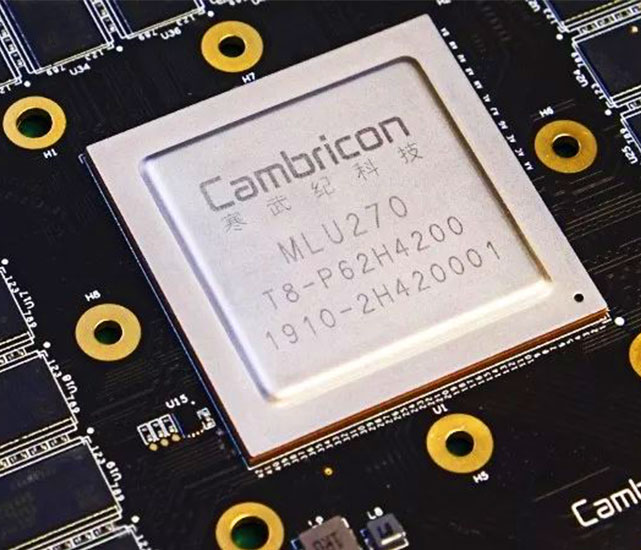
- Cambricon (688981.SS): The annual increase in 2025 reached+32.65%, with the stock price soaring from $93.81 at the beginning of the year to $124.44, peaking at $153 during the period, and a single-month increase of over 110% in August [0][1]
- Kweichow Moutai (600519.SS): Fell-7.80%throughout 2025, with the stock price dropping from $1524 to $1405.10, expanding the annual decline to 6.4%, becoming one of the only two trillion-market-cap stocks that closed down during the year [0][2][3]
- Ping An Bank (000001.SS): Fell-1.71%in 2025, with financial blue chips showing weak performance [0]
According to data obtained from online searches:
- STAR 50 Index: The annual increase once exceeded40%, rising 37.3% as of November 18 [4]
- ChiNext Index: The annual increase reached43.3%, rising 49.66% as of December 23, with a P/E ratio of only 40.8 times [4][5]
- Shanghai Composite Index: Rose nearly 15% during the year, but traditional blue chips like Moutai fell against the trend [1]
- 85 new hundred-yuan stocks were added during the year (excluding new stocks)
- Electronic stocks accounted for 36.5%, with hard tech dominating the high-priced stock camp [3]
- Dominated by high-growth industries such as power equipment, communications, electronics, pharmaceuticals, and computers
- The communications industry rose 23% in the past month, and the electronics industry rose 10%
- The total weight of “technology content” accounted for over 60%
- STAR Marketfocuses on “hard tech” enterprises, serving core technology fields such as semiconductors, biomedicine, and artificial intelligence
- Specialized, Sophisticated, Unique, and Newpolicies continue to catalyze, and breakthroughs in “chokepoint” technologies receive valuation premiums
- AI computing power demand explosiondrives the increase in localization rate of semiconductor equipment and materials [4]
- The consumer sector faces growth ceilings, and the valuation system shifts from PEG to DCF
- Real estate risks continue to be cleared, and the financial sector is constrained by narrowing interest spreads
- “Anti-involution” policies promote supply-side clearing in traditional industries [4]
- Global AI evolves rapidly, and demand for high-end circuit boards and optical devices remains strong
- L3 autonomous driving models are approved, and the new energy vehicle industry chain continues to benefit
- AI spurs incremental demand for electricity, and technological breakthroughs in energy storage and solid-state batteries [5]
- High-end consumption recovery falls short of expectations, and optional consumer goods such as white wine are under pressure
- Demographic structure changes, and consumption habits shift from ostentatious to functional
- Under the trend of national tide replacement, the moat of traditional brands is weakened
- The scale of STAR Market and ChiNext ETFs grows rapidly
- Active equity funds overweight the hard tech sector
- Northbound funds increase positions in A-share tech leaders [4]
- Although value style once dominated (low-valued style performed better in the past 6 months) [6], it is unsustainable
- Financing balances in the consumer and financial sectors decline
- Although Moutai’s financing balance has rebounded recently, its stock price continues to decline [3]
China is in a critical period of transformation from a “world factory” to a “science and technology innovation center”. Hard tech is not only a market choice but also a national strategy. Referring to the US tech stock bull market in the 1990s, the tech-dominated style may last more than 10 years.
- Traditional industries: Valuation focuses on profit stability and dividend capacity (DCF model主导)
- Hard tech: Valuation pays more attention to growth and technical barriers (PEG, PS model主导)
This difference in valuation systems will exist for a long time, leading to continuous capital flow to high-growth tracks.
- Generation Z becomes the main consumer force, preferring tech products over traditional consumption
- Aging accelerates, and demand for hard tech such as biomedicine and medical equipment grows rigidly
- Rising labor costs promote substitution of hard tech such as intelligent manufacturing and robots
- Sino-US tech decoupling accelerates, and domestic substitution demand is urgent
- Chinese enterprises have global competitiveness in AI, new energy, and other fields
- Hard tech enterprises go overseas to open up incremental market space
- Tech leaders like Cambricon are already at historical highs
- The STAR 50 Index has increased by over 40% during the year, with short-term correction pressure
- High-valued sectors are more sensitive to liquidity changes
- AI, new energy, and other emerging fields iterate rapidly, and leading companies are easily disrupted
- New technologies may reshape the competitive landscape
- Profitability of some hard tech enterprises has not been verified
- During economic recovery, traditional blue chips are expected to see valuation repair
- In a loose liquidity environment, high-dividend assets have allocation value
- Easing geopolitical tensions may推动价值股反弹
Looking back at A-share history, companies like Hepalink, QuanTong Education, Anshuo Information, and Baofeng Group once surpassed Moutai briefly, but all proved to be “flash in the pan” and then entered a long-term decline [2].
Based on current data and policy orientation, it is expected that the hard tech main line will continue in the next 1-3 years:
- STAR Market and ChiNext have relatively reasonable valuations (ChiNext Index PE is only 40.8 times) [5]
- AI industrialization enters an acceleration period, and application scenarios continue to land
- There is huge room for improvement in localization rate of semiconductor equipment and materials (self-sufficiency rate is still below 30%)
- Policy dividends continue to be released (specialized, sophisticated, unique, and new, STAR Market refinancing relaxation)
- Global economic recession may impact demand for tech products
- Geopolitical frictions intensify technical blockade
- Fed rate hikes may suppress revaluation of global risk assets
From a longer-term perspective,
- Mean reversion law: Any style has periodicity and will be corrected after excessive deviation
- Diversification of investment demand: Funds with different risk preferences need different asset classes
- Economic structure balance: Hard tech and traditional industries need to develop synergistically, not one-sidedly
- International experience reference: Although the weight of tech stocks in the US stock market has increased, consumer and financial blue chips still occupy an important position
- Phase 1(current): Hard tech dominates, traditional blue chips continue to adjust
- Phase 2(1-2 years): Tech stocks分化, leading companies remain strong, and theme stocks retreat
- Phase 3(3-5 years): Valuation repair of traditional blue chips, market style tends to balance
- Phase 4(long-term): Tech weight increases to 50%+, but consumption and finance still occupy half of the market
Referring to mature global markets, A-shares may form in the next 10 years:
- Hard tech(semiconductors, AI, new energy, biomedicine): 40-50% of market value
- Consumption(high-end white wine, food and beverage, optional consumption): 20-25% of market value
- Finance(banks, insurance, securities): 15-20% of market value
- Others(energy, materials, utilities, etc.): 10-15% of market value
Compared with the current situation, the weight of hard tech will continue to increase, but traditional blue chips will still occupy an important position.
- Focus on real leaders: Enterprises with core technical barriers and strong commercialization capabilities
- Avoid fake tech: Companies that only rely on theme speculation and lack profit support
- Allocate ETFs: STAR 50 ETF and ChiNext ETF to obtain sector Beta returns
- Wait for valuation repair: After adjustment, the valuation of leaders like Moutai has returned to a reasonable range
- Attach importance to high dividends: Banks, energy, and other sectors provide stable cash flow
- Seize cycle reversal: There are opportunities for困境反转 in consumer and real estate sectors
- Early/mid bull market: Overweight hard tech, underweight traditional blue chips
- Late bull market/bear market: Increase allocation of defensive assets to reduce portfolio volatility
- Extreme style: Reverse operation, avoid chasing ups and downs
- Although STAR Market and ChiNext have large increases, some individual stocks’ valuations have overdrawn growth in the next 3-5 years
- It is recommended to focus on high-quality growth stocks with PEG <1.5 and avoid pure theme speculation
- High-valued sectors are sensitive to liquidity changes, pay attention to the central bank’s monetary policy
- The Fed’s interest rate hike cycle may trigger revaluation of global risk assets
- Emerging fields such as AI and new energy iterate rapidly, and leading companies are easily disrupted
- It is recommended to diversify allocation and avoid betting on a single technical route
- Sino-US tech decoupling may accelerate, pay attention to domestic substitution progress
- “Chokepoint” fields such as chips and high-end manufacturing may benefit
- Short-term (within 1 year): Hard tech main line continues, but differentiation intensifies, alert to theme stock bubbles
- Mid-term (1-3 years): Tech dominance remains unchanged, and structural opportunities emerge in traditional blue chips
- Long-term (3-10 years): Style tends to balance, hard tech weight increases to 40-50%, but traditional blue chips will not disappear
- Embrace long-term trends: Hard tech is the core main line in the next 10 years, irreversible
- Maintain strategic focus: Avoid short-term style fluctuations interfering with long-term allocation
- Select high-quality targets: Real tech leaders cross cycles, fake tech will eventually retreat
- Dynamically adjust positions: Flexibly allocate according to valuation levels and market cycles
Cambricon replacing Moutai as the “stock king” is not only a market event but also a microcosm of China’s economic structure transformation. Investors should not only顺应 the long-term trend of technology-powered country but also be alert to valuation risks brought by excessive optimism, and maintain rationality while embracing changes.
[0] Jinling API Data - Stock Price Data (Cambricon 688981.SS, Kweichow Moutai 600519.SS, Ping An Bank 000001.SS)
[1] 21 Economic Network - “Cambricon surpasses Moutai to become A-share stock king, has Moutai stepped down from the ‘altar’?” (August 29, 2025)
https://www.21jingji.com/article/20250829/herald/e8bc2b42f899d4d8e2a804a5f398916c.html
[2] Shanghai Securities News/Sina Finance - “When Cambricon’s stock price surpasses Kweichow Moutai” (August 31, 2025)
https://finance.sina.com.cn/roll/2025-08-31/doc-infnwvuy0149072.shtml
[3] Ca联社 - “‘Han Wang’ stock price surpasses Moutai again! Total market value returns to 600 billion, scan of new hundred-yuan stocks during the year” (December 9, 2025)
https://www.cls.cn/detail/2224187
[4] FX168 Finance - “Two innovation sectors lead the market during the year, how to choose investment?” (November 26, 2025)
https://www.fx168news.com/article/969770
[5] 21 Finance - “After four consecutive rises, can ChiNext become the leader of the ‘year-end market’?” (December 28, 2025)
https://www.21jingji.com/article/20251228/herald/1012e4116cdc4370bbb6f72b9db4f808.html
[6] Jinyuan Tongyi Securities - “Index Investment Strategy Monthly Report (June 2025)”
https://pdf.dfcfw.com/pdf/H3_AP202506031684166340_1.pdf?1748978958000.pdf
Insights are generated using AI models and historical data for informational purposes only. They do not constitute investment advice or recommendations. Past performance is not indicative of future results.
About us: Ginlix AI is the AI Investment Copilot powered by real data, bridging advanced AI with professional financial databases to provide verifiable, truth-based answers. Please use the chat box below to ask any financial question.