
Four Leading Domestic GPU Companies: Commercial Breakthroughs and Investment Value Analysis Under CUDA Ecosystem Barriers
Unlock More Features
Login to access AI-powered analysis, deep research reports and more advanced features
About us: Ginlix AI is the AI Investment Copilot powered by real data, bridging advanced AI with professional financial databases to provide verifiable, truth-based answers. Please use the chat box below to ask any financial question.
NVIDIA’s CUDA ecosystem is its strongest moat in the GPU market, building a complete system covering hardware architecture, programming models, development toolkits, developer communities, and industry applications. This ecological barrier makes it hard for competitors to shake NVIDIA’s market dominance in the short term even if they catch up in hardware performance.
However, geopolitical factors have created a historic opportunity for domestic GPU manufacturers. Since 2022, U.S. export controls on high-end GPUs to China have continued to tighten, forcing NVIDIA to exit China’s high-end market [1][4]. This “vacuum” has opened a window for domestic substitution. Data shows that China’s GPU market size will be approximately 120 billion yuan in 2024, a year-on-year increase of 11.8%, with a substitution gap of about 30 billion yuan in the high-end market [1]. The global GPU market is expected to grow at a CAGR of 24.5% from 2025 to 2029, with China’s market growing even faster [1].
- GPU/GPGPU: General-purpose parallel processors with high flexibility, mature ecosystems (CUDA/OpenCL), and support for both training and inference.
- ASIC: Application-specific integrated circuits with extreme computing power/power consumption efficiency, high inference efficiency, limited flexibility, and long development cycles [4].
- NPU/TPU: Belong to the ASIC camp, optimized for specific tasks like neural networks, focusing on tensor/convolution operations [4].
- Start with graphics rendering to accumulate cash flow, then shift to AI computing.
- Compatible with CUDA ecosystem to reduce developer migration costs.
- Positioned as “China’s NVIDIA” to pursue full-scenario coverage.
- Guojin Securities research team reports that Moore Threads is the “only domestic manufacturer to achieve mass production and sales of full-function GPUs” [1].
- Revenue in H1 2024 was approximately 700 million yuan, exceeding the full-year 2023 figure, but still in a loss state [1].
- Management expects to achieve consolidated statement profitability as early as 2027 [1].
- In 2024, the company’s market share in domestic segments like AI intelligent computing, graphics acceleration, and smart SoC was still less than 1%, leaving significant substitution space [1].
- Issuance price: RMB 114.28 per share, raising nearly 8 billion yuan [1].
- Retail subscription multiple reached 2751x, setting an A-share IPO record since 2022 [1].
- Stock price surged 723% cumulatively in the first five trading days after listing, with a maximum market value exceeding 442.3 billion yuan [1].
- Price-to-sales ratio reached 123x, triggering valuation concerns [1].
- Listed on the U.S. “Entity List”, cutting off access to advanced manufacturing equipment and technology [1].
- Highly dependent on domestic foundries and upstream supply chains, with process node evolution constrained.
- High valuation, unclear profit timeline, significant secondary market volatility and liquidity risks.
- Focus on high-margin training markets to avoid low-end red ocean competition with NVIDIA.
- Target customers: large Internet companies, research institutions and intelligent computing centers.
- Emphasize “training + inference” integrated capabilities to expand full-stack product lines.
- Completed the latest round of financing, planning to submit an application to the Hong Kong Stock Exchange as early as August 2025 [3].
- Plans to raise up to $623 million through Hong Kong IPO [3].
- Products have been piloted and introduced in some Internet and research scenarios (specific order scale not disclosed).
- More aggressive process nodes, higher dependence on advanced manufacturing processes, amplified external sanctions and supply chain risks.
- High customer concentration; long import cycle and strict certification under high single customer proportion.
- Hong Kong market liquidity, valuation and pricing are more affected by market sentiment and foreign capital flows.
- Focus on government-enterprise markets (government cloud, finance, energy, manufacturing) to avoid direct competition with NVIDIA in Internet giants.
- Deeply bind with industry leading customers to provide customized solutions.
- Start with scenarios like government-enterprise intelligent computing centers and gradually penetrate into broader markets.
- Plans to publicly issue 40.1 million shares, with the initial inquiry date on January 2, 2025 and subscription date on January 5 [2].
- Raised funds will be used for “new high-performance general GPU R&D and industrialization project”, “new generation AI inference GPU R&D and industrialization project” and “high-performance GPU technology R&D project for cutting-edge fields and emerging application scenarios” [2].
- Cooperated and piloted with some government-enterprise/industry customers (specific order scale not disclosed).
- Relatively low ceiling in vertical markets; expansion pace depends on customer import cycle.
- Brand influence and ecological completeness in general scenarios are inferior to full-function GPU manufacturers.
- After listing, it is necessary to continuously verify product reliability, engineering delivery and long-term technical evolution path.
- Deeply bind with Tencent Cloud, pre-deploy chips on cloud platforms to provide standardized computing power services.
- Focus on inference scenarios to avoid direct confrontation with NVIDIA in the training market.
- Achieve large-scale shipments through cloud services to reduce individual marketing costs.
- Reportedly in the listing counseling stage, planning to land on the Science and Technology Innovation Board [1].
- Chip products have been deployed and试运行 in Tencent Cloud-related scenarios (specific shipment scale not disclosed).
- “Cloud + chip” integrated delivery mode helps reduce customer migration costs and improve repurchase rate (specific results to be confirmed by disclosure).
- High dependence on major customers; significant impact from changes in a single cloud vendor’s strategy.
- If other cloud vendors choose other solutions, cross-cloud replication or customer structure may be uncertain.
- Channel and ecological breadth are limited; independent customer acquisition and bargaining power need time to cultivate.
- The only manufacturer that truly walks through the full-function GPU route with the highest technical threshold.
- MUSA architecture is compatible with CUDA, low ecological migration cost, accelerating commercialization [1][4].
- The market gives a high valuation premium as “China’s NVIDIA”, with a market value of 450 billion yuan [1].
- Raised 8 billion yuan, with sufficient funds to support continuous R&D investment [1].
- Overvaluation: P/S ratio of 123x, far exceeding the industry average of 111x [1].
- Not yet profitable: Revenue in the first three quarters of 2025 was 785 million yuan, net loss 724 million yuan, full-year expected loss 730 million to 1.168 billion yuan [1].
- Overheated listing speculation: 723% surge in five trading days, with significant correction risk [1].
- Uncertain profit timeline: The company expects to be profitable as early as 2027 [1].
- Manufacturing and supply chain constraints brought by the “Entity List”, limited process upgrade and capacity ramp-up [1].
- Liquidity risks brought by high valuation and secondary market volatility.
- Most advanced technology, directly pointing to the highest ceiling of high-end training market.
- Targeting trillion-parameter large model training with broad market space.
- Hong Kong listing may be recognized by international capital with a more international valuation system.
- Slowest commercialization: High-end training market has the highest barriers, and NVIDIA’s position is hard to shake.
- More advanced process nodes (7nm), more affected by U.S. export controls.
- Longer profit cycle, requiring continuous large R&D investment.
- High-end training scenarios have extremely high requirements for computing power, interconnection and stability, with high import and replacement costs.
- Frontier processes rely on external foundries and EDA/IP ecosystems, and supply stability is in doubt after sanctions.
- Vertical field deep cultivation strategy is more pragmatic with more stable cash flow.
- Government-enterprise market customers have strong stickiness and strong policy support.
- Relatively reasonable valuation (issuance price RMB 33.40 average level [2]), with less bubble.
- Relatively limited market space, difficult to support ultra-high valuation.
- General scenario competitiveness needs continuous verification.
- Brand influence is less than Moore Threads.
- Vertical market ceiling and expansion speed are subject to industry digitalization process.
- Penetration in general AI training and large-scale cloud scenarios remains to be observed.
- Deeply bind with Tencent Cloud to obtain stable orders.
- Cloud service mode reduces customer acquisition cost.
- Inference scenario market size is larger than training, with faster implementation.
- Too high dependence on a single customer, weak bargaining power.
- If Tencent Cloud replaces suppliers or develops self-research chips, it will face huge blows.
- Other cloud vendors may choose different solutions, making it difficult to replicate the model.
- Double-edged sword of major customer strategy: Balance between stable orders and bargaining space.
- Cross-cloud replication and diversified customer acquisition capabilities still need verification.
| Company | Technical Route | Business Strategy | Investment Value Rating | Core Advantages | Main Risks |
|---|---|---|---|---|---|
Moore Threads |
Full-function GPU | Full-platform coverage | ★★★★☆ | Strongest ecological compatibility, highest market value, sufficient funds | Overvaluation, speculation risk, Entity List constraints |
Biren Tech |
High-end training ASIC | Large model training | ★★★☆☆ | Most advanced technology, largest market space | Highest commercialization difficulty, biggest process risk |
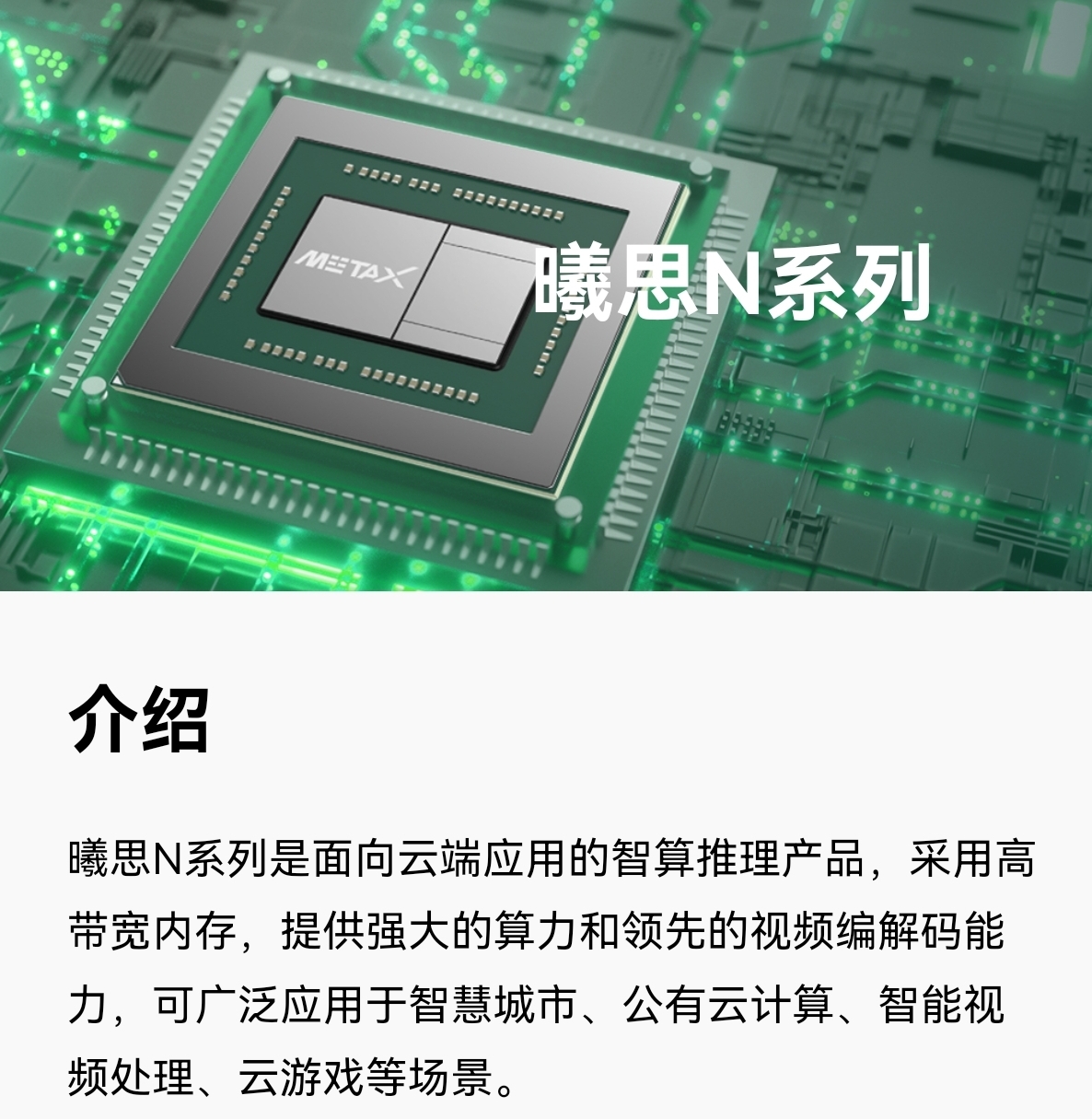
MetaX |
Vertical GPU | Government-enterprise intelligent computing center | ★★★★☆ | Stable strategy, stable cash flow, reasonable valuation | Limited market space, weak brand influence |
Swei Yuan |
Inference GPU | Cloud service binding | ★★★☆☆ | Fast commercialization speed, stable customers | High customer concentration risk, weak bargaining power |
-
Short-term (1-2 years): MetaX has the highest investment cost-effectiveness
- Stable strategy, stable cash flow in vertical markets
- Relatively reasonable valuation with less bubble
- Strong policy support, high order certainty in government-enterprise markets
-
Mid-term (3-5 years): Moore Threads is most worth paying attention to
- If MUSA ecosystem is successfully established, long-term competitive advantages will be obtained
- Raised 8 billion yuan to support continuous R&D
- Need to wait for valuation to return to rationality before entering
-
Long-term (over 5 years): Biren Technology has the greatest potential
- High-end training market is the commanding height of AI chips
- If successfully broken through, the highest return will be obtained
- Suitable for long-term investors with extremely high risk tolerance
-
Swei Yuan: Suitable for stable investors
- Deeply bind with Tencent Cloud to get stable orders
- But need to watch out for customer concentration risk
- It is recommended to observe the progress of customer structure diversification
| Company | Technical Route | Business Strategy | Investment Value Rating | Core Advantages | Main Risks |
|---|---|---|---|---|---|
Moore Threads |
Full-function GPU | Full-platform coverage | ★★★★☆ | Strongest ecological compatibility, highest market value, sufficient funds | Overvaluation, speculation risk, Entity List constraints |
Biren Technology |
High-end training ASIC | Large model training | ★★★☆☆ | Most advanced technology, largest market space | Highest commercialization difficulty, biggest process risk |
MetaX |
Vertical GPU | Government-enterprise intelligent computing center | ★★★★☆ | Stable strategy, stable cash flow, reasonable valuation | Limited market space, weak brand influence |
Swei Yuan |
Inference GPU | Cloud service binding | ★★★☆☆ | Fast commercialization speed, stable customers | High customer concentration risk, weak bargaining power |
-
Short-term (1-2 years): MetaX has the highest investment cost-effectiveness
- Stable strategy, stable cash flow in vertical markets
- Relatively reasonable valuation with less bubble
- Strong policy support, high order certainty in government-enterprise markets
-
Mid-term (3-5 years): Moore Threads is most worth paying attention to
- If MUSA ecosystem is successfully established, long-term competitive advantages will be obtained
- Raised 8 billion yuan to support continuous R&D
- Need to wait for valuation to return to rationality before entering
-
Long-term (over 5 years): Biren Technology has the greatest potential
- High-end training market is the commanding height of AI chips
- If successfully broken through, the highest return will be obtained
- Suitable for long-term investors with extremely high risk tolerance
-
Swei Yuan: Suitable for stable investors
- Deeply bind with Tencent Cloud to get stable orders
- But need to watch out for customer concentration risk
- It is recommended to observe the progress of customer structure diversification
-
Technical Route Risk: ASIC route has insufficient flexibility; if the model architecture changes significantly, it may face redesign risks; GPU route has difficult-to-break ecological barriers [4].
-
Geopolitical Risk: U.S. semiconductor controls on China continue to tighten, with limited access to advanced processes, EDA tools, IP and key equipment, affecting product iteration and mass production rhythm.
-
Market Competition Risk: Although NVIDIA is affected by export controls, it can still compete in China through castrated products (such as H20), and local players (Huawei Ascend, Hygon, Loongson, etc.) are also iterating rapidly.
-
Profit Risk: All four companies are in loss state, with uncertain profit timeline, requiring continuous huge R&D investment.
-
Valuation Risk: Companies like Moore Threads have reached historical high valuations, with large correction risks.
Overall, the four leading domestic GPU companies are expected to achieve a certain degree of commercial breakthrough under NVIDIA’s CUDA ecosystem barriers, but we need to clearly recognize:
- Moore Threads: Compatible with CUDA ecosystem through MUSA architecture, with the most substitution potential in the general GPU market, but need to digest high valuation and deal with supply chain and process constraints brought by the “Entity List”.
- Biren Technology: Most cutting-edge technology, but faces the most difficult high-end training market breakthrough.
- MetaX: Pragmatic strategy, easier to implement in vertical markets, with high investment cost-effectiveness.
- Swei Yuan: Cloud service binding strategy provides stable orders, but with high customer concentration.
From an investment perspective, it is recommended to focus on MetaX’s stable opportunities in the short term, track Moore Threads’ ecological construction and profit process in the medium and long term, Biren Technology is suitable for long-term investors with high risk preference, and Swei Yuan needs to observe the progress of customer structure diversification.
In general, domestic GPU commercialization is in a critical window period. Driven by policy support and market demand, it is expected to achieve a certain degree of domestic substitution in 3-5 years. However, investors need to be alert to valuation bubbles and risks of commercialization falling short of expectations, and rationally evaluate the sustainability of each company’s technical route and business strategy.
[0] Jinling API Data (Results of company overview, financial and technical analysis related tools)
[1] Bloomberg - “Chinese GPU Newcomer Moore Threads: Retail Subscription Multiple Hits Three-Year High” (https://www.bloomberg.com/news/articles/2025-12-04/chinese-chipmaker-race-to-ipo)
[2] Huajin Securities Research Institute - “AI Industrialization Accelerates Again, Intelligent Era Has Begun” (https://pdf.dfcfw.com/pdf/H3_AP202303261584562898_1.pdf)
[3] WSJ - “Biren Technology Plans to Raise Up to $623 Million Through Hong Kong IPO” (https://cn.wsj.com/articles/壁仞科技计划通过香港ipo筹资至多6-23亿美元-4b717986)
[4] Cnblogs - “Domestic AI Chip Architecture Dispute: GPGPU vs ASIC” (https://www.cnblogs.com/wujianming-110117/p/19039357)
Insights are generated using AI models and historical data for informational purposes only. They do not constitute investment advice or recommendations. Past performance is not indicative of future results.
About us: Ginlix AI is the AI Investment Copilot powered by real data, bridging advanced AI with professional financial databases to provide verifiable, truth-based answers. Please use the chat box below to ask any financial question.