Analysis of the Impact of the Improvement of the 'Eight Vertical and Eight Horizontal' High-Speed Rail Network on the Revenue Structure of Beijing-Shanghai High-Speed Rail's Network Services
Unlock More Features
Login to access AI-powered analysis, deep research reports and more advanced features
About us: Ginlix AI is the AI Investment Copilot powered by real data, bridging advanced AI with professional financial databases to provide verifiable, truth-based answers. Please use the chat box below to ask any financial question.
Related Stocks
Based on the above data and analysis, I will provide you with an in-depth analysis report on the impact of the improvement of the ‘Eight Vertical and Eight Horizontal’ high-speed rail network on the revenue structure of Beijing-Shanghai High-Speed Rail’s network services.
Beijing-Shanghai High-Speed Rail, as the core trunk line connecting China’s two most developed economic circles, has unique investment value in the capital market. As of December 2025, the company’s closing price was $5.21, with a market capitalization of $25.49 billion, a P/E ratio of 19.52 times, and a P/B ratio of 1.25 times [0]. From the perspective of financial indicators, the company achieved operating revenue of over 21 billion yuan in the first half of 2025, with a net profit of up to 6.316 billion yuan, a net profit margin of 30%, and an operating profit margin maintaining a high level of 41.88% [0].
Beijing-Shanghai High-Speed Rail is known as the “most profitable high-speed rail line” and its profitability is second to none in China’s high-speed rail network. The company’s long-term loan scale has dropped significantly to 5.28 billion yuan, which is expected to be fully repaid within the year. After that, about 17 billion yuan of operating cash flow per year will enter the free distribution stage [1]. This financial situation provides sufficient space for the company’s future capital allocation and business expansion.
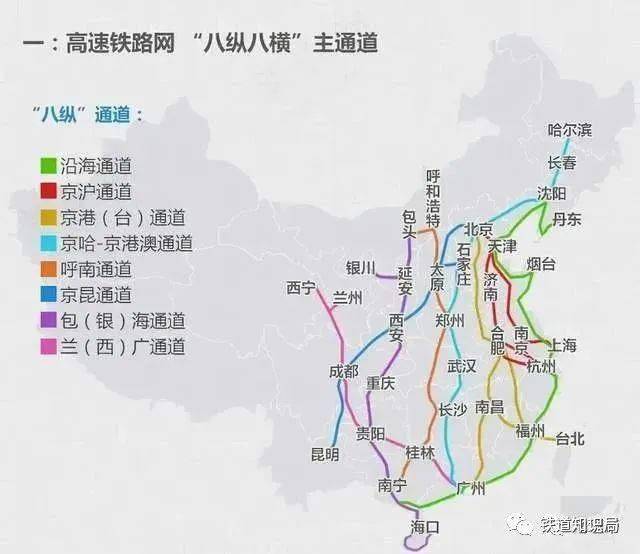
According to the latest data, as of July 2025, 81.5% of the main corridors of China’s “Eight Vertical and Eight Horizontal” high-speed rail network have been completed and put into operation, with the high-speed rail operating mileage reaching 48,000 kilometers, accounting for more than 70% of the world’s total high-speed rail mileage, covering 97% of cities with a population of over 500,000 nationwide [2]. Since 2025, multiple important lines have been opened intensively, including key node projects such as the Chongqing section of the Chongqing-Xiamen High-Speed Rail, Baotou-Yinchuan High-Speed Rail, Shenyang-Baihe High-Speed Rail, and Hefei-Xuzhou High-Speed Rail [2].
From the perspective of planning progress, as of September 2024, about 80% of the main corridors of the “Eight Vertical and Eight Horizontal” have been completed and put into operation, and about 15% are under construction [2]. The Beijing-Shanghai Corridor, Beijing-Hong Kong (Taiwan) Corridor, and Yangtze River Corridor (Chongqing-Shanghai-Chengdu High-Speed Rail) have been connected. It is expected that by 2035, China’s high-speed rail operating mileage will reach about 70,000 kilometers, forming a complete network covering large and medium-sized cities with an urban population of over 500,000, major urban agglomerations, and important economic sectors [2].
The network service revenue of Beijing-Shanghai High-Speed Rail is mainly composed of cross-line train passage fees, and its growth depends on the opening and operation of other lines in the “Eight Vertical and Eight Horizontal” network. From historical data, during 2016-2019, the opening of Zhengzhou-Xuzhou High-Speed Rail, Shijiazhuang-Jinan Passenger Railway, and Jinan-Qingdao High-Speed Rail drove the rapid growth of Beijing-Shanghai High-Speed Rail’s network revenue [1]. This pattern will be more evident during the “15th Five-Year Plan” period.
From the network structure analysis, Beijing-Shanghai High-Speed Rail is in the core hub position of the “Eight Vertical and Eight Horizontal”. The Beijing-Shanghai Corridor, Beijing-Hong Kong (Taiwan) Corridor, and Yangtze River Corridor (Chongqing-Shanghai-Chengdu High-Speed Rail) are the three trunk lines with the highest economic value, connecting the most developed cities in the Beijing-Tianjin-Hebei, Yangtze River Delta, Guangdong-Hong Kong-Macao Greater Bay Area, and Chengdu-Chongqing Economic Zone [1]. The Shangqiu-Hefei-Hangzhou High-Speed Rail and Hefei-Fuzhou High-Speed Rail are important components of the Beijing-Hong Kong (Taiwan) Corridor, while the Beijing-Fuzhou Anhui assets are located at the central connection point of the three corridors, and their strategic value is self-evident.
According to public information, multiple key high-speed rail lines will be opened in the next three years, bringing considerable incremental revenue to Beijing-Shanghai High-Speed Rail:
| Opening Time | Line Name | Mileage | Impact on Beijing-Shanghai High-Speed Rail |
|---|---|---|---|
| End of 2025 | Hefei-Xuzhou High-Speed Rail (Hefei-Sixian East) | 208 km | Brings moderate revenue growth |
| September 2026 | Xiongan-Shangqiu High-Speed Rail (Xiongan New Area-Shangqiu) | 552 km | Connects with Shangqiu-Hefei-Hangzhou High-Speed Rail, bringing high-speed revenue growth |
| March 2027 | Nanchang-Jiujiang High-Speed Rail (Nanchang-Jiujiang) | 138 km | Connects the main axis of Beijing-Hong Kong (Taiwan) High-Speed Rail |
Conservatively estimated, the opening of the above lines will directly increase Beijing-Shanghai High-Speed Rail’s revenue by more than 3 billion yuan [1]. Considering that there are 4 other connecting high-speed rails with a total length of about 660 km that will be opened one after another, the actual revenue increase may be significantly higher than this expectation. More importantly, the main costs of these incremental revenues are relatively rigid, and most of the incremental part will be converted into profits.
The improvement of the “Eight Vertical and Eight Horizontal” network will promote the diversification of Beijing-Shanghai High-Speed Rail’s network service revenue sources. As more cross-line trains access the Beijing-Shanghai High-Speed Rail line, the company will obtain ticket revenue sharing and service fees from passenger flows in different directions. This diversified structure helps reduce operational risks caused by fluctuations in a single line.
From the perspective of passenger volume, the national railway passenger volume reached 2.24 billion person-times in the first half of 2025, a record high for the same period in history [3]. As a core trunk line, Beijing-Shanghai High-Speed Rail’s passenger volume will continue to grow with the improvement of the network. The company’s multi-tier fare floating mechanism implemented during peak passenger flow periods also helps to further increase revenue when demand is strong.
The completion of the “Eight Vertical and Eight Horizontal” network will significantly amplify regional synergy effects. Taking Beijing-Fuzhou Anhui as an example, after the Yangtze River Corridor is connected in 2030, the travel time from Hefei to Beijing, Shanghai, Guangdong-Hong Kong-Macao Greater Bay Area, Taiwan, and Chongqing will be shortened to 3-4 hours, and cross-line passenger flows and train flows will converge here [1]. This network effect will greatly increase the passenger volume and turnover of Beijing-Shanghai High-Speed Rail, thereby promoting the continuous growth of network service revenue.
From a more macro perspective, the improvement of the “Eight Vertical and Eight Horizontal” network will promote the free flow of production factors and drive regional economic development. According to the plan, the high-speed rail network will cover major urban agglomerations and economic sectors nationwide, which creates a broad incremental market space for Beijing-Shanghai High-Speed Rail [2].
Beijing-Shanghai High-Speed Rail’s cost structure has relatively rigid characteristics, mainly including depreciation expenses, energy expenses, and entrusted transportation management fees [1]. Among them, the depreciation period is shorter than the actual service life, the electricity cost has room to decrease under the trend of electricity marketization, and the entrusted transportation management fee increases by about 5.4% annually according to the contract agreement. This cost structure means that when revenue grows significantly, the incremental revenue will be mainly converted into profits.
Specific calculations show that based on 2024 as the base, every 5% decrease in electricity price can offset about 200 million yuan of energy expenses; the entrusted transportation management fee increases by about 330 million yuan annually; under the downward trend of LPR, financial expenses decrease by about 400 million yuan annually [1]. These cost optimization factors resonate with revenue growth, which will significantly improve the company’s profitability.
After Beijing-Shanghai High-Speed Rail repays its long-term loans, how to allocate the annual operating cash flow of about 17 billion yuan will become a key factor affecting the company’s long-term value. The company clearly stated in its prospectus that it will continue to promote同业并购扩张, explore connections with other key lines in the Beijing-Shanghai corridor, and further enhance network synergy effects [1].
From an investment perspective, management faces three capital allocation options: first, increase the dividend ratio to increase shareholders’ immediate returns; second, acquire other railway assets to expand the network scale; third, use it to repay debts to reduce financial leverage. Different capital allocation plans will have completely different impacts on enterprise value, and investors need to pay close attention to the management’s subsequent decisions.
Although the improvement of the “Eight Vertical and Eight Horizontal” network brings broad development opportunities for Beijing-Shanghai High-Speed Rail, investors still need to pay attention to the following risk factors:
Based on the above analysis, the improvement of the “Eight Vertical and Eight Horizontal” high-speed rail network will fundamentally change the structure of Beijing-Shanghai High-Speed Rail’s network service revenue, which is specifically reflected in the following aspects:
From a valuation perspective, the company’s current P/E ratio is 19.52 times, which has certain valuation attractiveness relative to its stable profitability and good growth prospects. Combined with the continuous improvement of the company’s financial situation and the growth opportunities brought by the improvement of the “Eight Vertical and Eight Horizontal” network, Beijing-Shanghai High-Speed Rail has long-term investment value.
[0] Jinling API Market Data - Beijing-Shanghai High-Speed Rail Financial and Market Data (601816.SS)
[1] East Money Network - “Beijing-Shanghai High-Speed Rail: A Complex Arithmetic Problem” (https://caifuhao.eastmoney.com/news/20251229110742908774890)
[2] Baidu Encyclopedia - “China’s ‘Eight Vertical and Eight Horizontal’ High-Speed Rail Network” (https://baike.baidu.com/item/中国"八纵八横"高速铁路网/23742590)
[3] Economic Daily - “[High-Quality Development Industry Research] High-Speed Rail Leads” (https://www.cs.com.cn/cj2020/202512/t20251223_6529742.html)
[4] Economic Observer Network - “After High-Speed Rail Operating Mileage Exceeds 50,000 Kilometers, It Will Shift to ‘Precise Cultivation’” (http://www.eeo.com.cn/2025/1226/775482.shtml)
鹏鼎控股泰国扩产项目与客户集中度分析
Insights are generated using AI models and historical data for informational purposes only. They do not constitute investment advice or recommendations. Past performance is not indicative of future results.
About us: Ginlix AI is the AI Investment Copilot powered by real data, bridging advanced AI with professional financial databases to provide verifiable, truth-based answers. Please use the chat box below to ask any financial question.