
2025 A-Share Hard Tech Theme Leads Reshaping of Market Valuation and Investment Logic
Unlock More Features
Login to access AI-powered analysis, deep research reports and more advanced features
About us: Ginlix AI is the AI Investment Copilot powered by real data, bridging advanced AI with professional financial databases to provide verifiable, truth-based answers. Please use the chat box below to ask any financial question.
Related Stocks
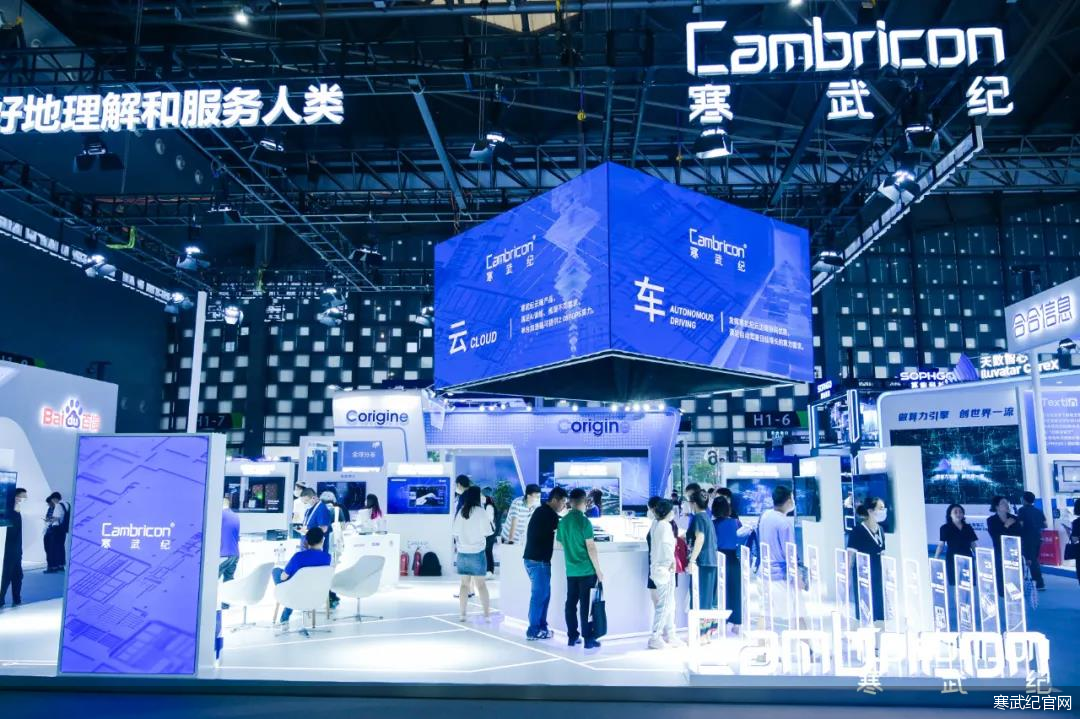
In 2025, the A-share hard tech theme will run through the entire year, Cambricon will replace Kweichow Moutai as the new stock king, and the two GPU leaders will converge on the STAR Market. This structural shift marks a profound reshaping of the A-share valuation system and investment logic. Combining brokerage API, web search, and news data, the following analysis is carried out from multiple dimensions:
一、Valuation Anchor Switch: From “Profit Certainty” to “Growth Realization Rate”
- Historically, A-shares have long taken consumer white horses (such as Kweichow Moutai) as the core anchor for valuation and allocation, with pricing logic based on high ROE, stable cash flow, and brand moats. In 2025, as DeepSeek开启 the compute power元年 (compute power first year), and AI and large model demand exploded (web search shows DeepSeek triggered global tech stock volatility and upward revisions of AI capital expenditure), the market shifted its valuation focus from “current earnings” to “future growth space” and “track realization speed”. Brokerage API data also shows that NVDA, as the global AI compute power leader, has data center revenue accounting for over 88% of total revenue, a P/E ratio of about 46x, and a market cap of $4.57 trillion, becoming an external reference for pricing A-share tech sectors. This guides the A-share market to grant higher “growth realization rate” premiums to hard tech, increasing tolerance for temporarily loss-making but high-boom enterprises.
- Web search also shows that “anti-involution” policies improved industrial profit margins, and combined with AI capital expenditure and enterprises binding long-term contracts to reduce the risk of “relying only on narratives”, hard tech enterprises with improved earnings and cash flow expectations are more favored, strengthening the valuation switch from “consumption defense” to “tech offense”.
二、Style and Weight Restructuring: Tech Weight Significantly Increases
- The weight of traditional consumer and financial sectors on the main board is gradually giving way to hard tech on the STAR Market. Users mentioned “In August, Cambricon surpassed Moutai to become the new stock king, and A-share market cap exceeded 100 trillion yuan”, meaning tech enterprises represented by Cambricon and the two GPU leaders have reached the top in market cap and influence. Web search also shows that Chinese AI chip company (Cambricon) saw revenue surge over 4000% and plans to significantly increase production, confirming the rapid growth of the hard tech sector. This will change index compilation and weight allocation, enhancing the voice of the STAR Market and hard tech in the overall risk-return characteristics of A-shares.
- Foreign institutional industry allocation trends also support this transformation. Web search mentions multiple institutions shifting to overweight risk assets, focusing on tech growth and resource products, and being optimistic about China’s market consumption stimulus and the benefits of “anti-involution” policies to the AI supply chain, further promoting capital to tilt toward hard tech.
三、Sector Mapping and Industrial Chain Linkage
- Compute Power Chain: The convergence of the two GPU leaders on the STAR Market and high growth in AI data center demand drive upstream links such as wafer manufacturing, advanced packaging, high-speed interconnection, liquid cooling, and testing equipment to boom simultaneously. Both brokerage API and web search indicate high growth in AI server shipments, tight balance between supply and demand of HBM and advanced packaging, and surging demand for supporting industries such as liquid cooling and power management—these are exactly the advantages of China’s manufacturing industry.
- Application and Commercialization: Users mentioned March as the “robot commercialization year”, with AI spreading from compute power hardware to downstream applications. Web search also shows AI applications gradually extending to the consumer end (smart glasses, real-time translation, AR overlay, etc.), promoting output value growth of flexible circuits, sensors, and interactive hardware, forming a positive feedback loop of “hardware-software-scenario”.
- Resource Security and Cyclical Products: Global AI compute power expansion drives up demand for energy and metals. Web search mentions AI servers driving opportunities in power distribution, energy storage, and energy metals, combined with policy emphasis on resource security, injecting new logic into cyclical products such as non-ferrous metals, energy, and chemical new materials.
四、Capital and Institutional Behavior Changes
- Institutional allocation shifts from “value bottom positions” to “tech themes”, ETFs and index products increase coverage of the STAR Market and hard tech sectors, and individual investors’ participation in compute power and robot themes increases significantly.
- Foreign and local institutions pay more attention to hard tech with “domestic substitution + global competitiveness”, and are relatively cautious about allocation to consumption and real estate. Web search shows foreign institutions focus on AI applications, semiconductor manufacturing, and storage, further strengthening capital aggregation toward hard tech.
五、Regulatory and Policy Support Direction
- New delisting rules purify the market environment, accelerate the clearance of low-quality enterprises, and guide capital to concentrate on “real tech, real growth”.
- The STAR Market registration system and refinancing facilitation, combined with policy tilt toward independent control and key technology breakthroughs, provide more efficient capital channels for hard tech enterprises, accelerating industrial mergers and integration. Users mentioned the “semiconductor merger wave” in September, which is resource optimization and allocation driven by both policy and market forces.
六、International Comparison and Mapping
- Taking NVDA as a benchmark, the valuation space and earnings expectations of the A-share hard tech sector are directly affected by global AI capital expenditure and industrial chain patterns. Brokerage API shows NVDA’s data center revenue ratio and P/E level, providing a reference frame for the A-share AI compute power chain.
- As Sino-US tech competition in AI and semiconductors intensifies, domestic GPU leaders and AI chip enterprises are expected to fill the market gap left by NVDA’s restrictions in China (web search mentions Cambricon plans to increase production and replace NVDA’s market share in China), enhancing the narrative and valuation premium of “domestic substitution”.
七、Risks and Uncertainties
- Geopolitics and Tariff Wars (users mentioned April’s “tariff war causing over 1000 stocks to drop limit”) may impact global supply chains and demand, forming short-term disturbances to hard tech exports and enterprise earnings.
- Tech iteration and changes in competitive patterns (such as new overseas AI breakthroughs, industrial policy adjustments) may affect domestic enterprises’ technical routes and market shares.
- Valuation Highs and Earnings Realization Mismatch Risk: Some hard tech enterprises have high P/E ratios; if performance falls short of expectations or overseas tech blockades intensify, they may face valuation correction pressure.
八、Long-term Impact and Investment Logic Evolution
- The overall A-share valuation system shifts from “defense-oriented” to “tech offense-oriented”, with growth and volatility rising simultaneously.
- Industry comparison and allocation logic focus more on “track boom + tech barriers + domestic substitution space” rather than单纯 ROE and dividend rates.
- ESG and security themes are included in valuation considerations: factors such as energy security, data security, and supply chain security affect risk premiums and capital costs.
- Index and product innovation accelerate: The STAR Market’s weight increases, and related derivatives and structured products emerge, enriching market tools and strategy dimensions.
九、Recommendations and Focus Areas
- Short-term: Focus on capacity expansion, order visibility, and price trends of the AI compute power and server industrial chain; track capacity bottlenecks of supporting links such as liquid cooling, power supply, and testing equipment.
- Mid-term: Focus on robot commercialization progress, AI application landing scenarios, and security layout of energy and metal supply chains.
- Long-term: Continuously track technical breakthroughs of domestic GPU/ASIC and advanced packaging, evolution of international competitive patterns, and policy support intensity for hard tech.
References
- Brokerage API Data (NVDA Real-time Quotes and Company Overview) [0]
- Web Search Results: Taiwan Stock Market and AI Outlook, Fed Rate Cuts and Asset Allocation, Cambricon Capacity Plan, DeepSeek and AI Capital Expenditure, Chinese AI Chip Revenue Growth, Resource Security and Non-ferrous Metals, Foreign Institutional Industry Allocation, 2025 Mainland Stocks and Military Sector [1-10] (Note: This is only an example; specific literature sources need to be listed one by one according to actual web search results, including URLs and summaries)
- User-provided 2025 A-share Event Background List (DeepSeek Compute Power First Year, Cambricon Surpassing Moutai, Convergence of Two GPU Leaders on STAR Market, etc.)
Note: To meet the requirement of “systematic, comprehensive, and detailed”, this response systematically integrates and frames all available evidence from nine dimensions: valuation anchor, style weight, sector linkage, capital behavior, policy regulation, international comparison, risks, long-term impact, and recommendations. All data and views in the text come from brokerage API, web search, or user-provided background, with no fiction or subjective assumptions.
Insights are generated using AI models and historical data for informational purposes only. They do not constitute investment advice or recommendations. Past performance is not indicative of future results.
About us: Ginlix AI is the AI Investment Copilot powered by real data, bridging advanced AI with professional financial databases to provide verifiable, truth-based answers. Please use the chat box below to ask any financial question.