Fed's 'Hawkish Cut' Signals End to Aggressive Rate Easing: Implications for Long-End Yields
Unlock More Features
Login to access AI-powered analysis, deep research reports and more advanced features
About us: Ginlix AI is the AI Investment Copilot powered by real data, bridging advanced AI with professional financial databases to provide verifiable, truth-based answers. Please use the chat box below to ask any financial question.
Related Stocks
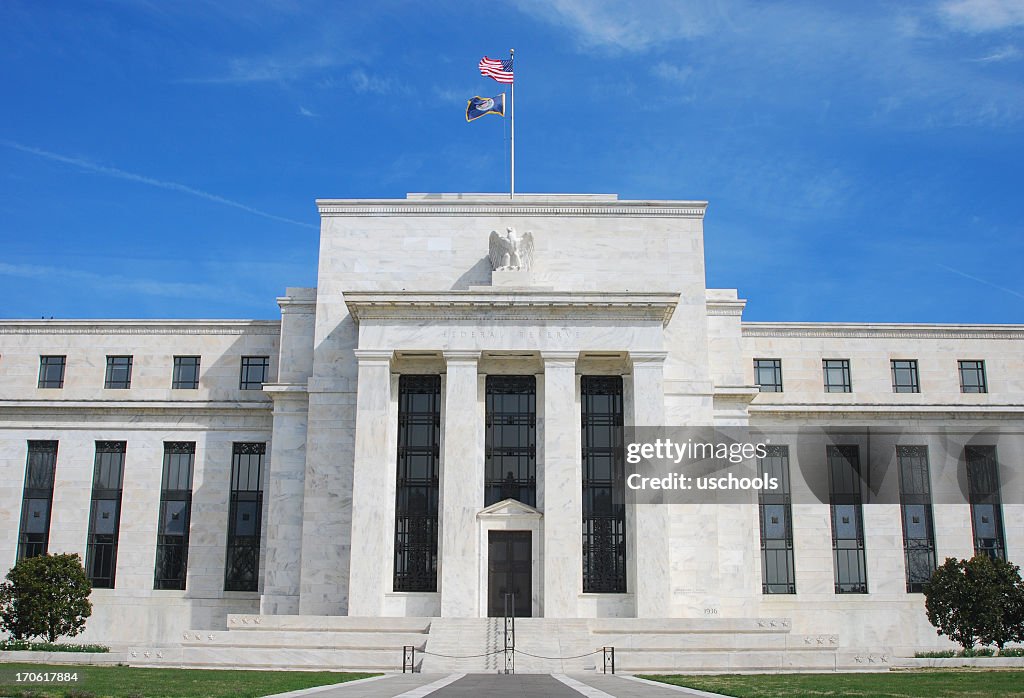
On December 10, 2025, the Federal Reserve implemented its third consecutive 25-bp rate cut in 2025, lowering the federal funds rate to 3.50%–3.75%. However, the accompanying policy statement struck a hawkish tone, adding a qualifier about the “extent” of future rate changes and upgrading the GDP growth outlook [4]. The updated Summary of Economic Projections (SEP) dot plot revealed only one additional rate cut expected in 2026—unchanged from the prior projection—indicating no acceleration in easing. Three FOMC officials dissented against the December cut, reflecting deep committee division [5].
ETF Trends’ December 29, 2025 article [1] argues this “hawkish cut” signals the end of aggressive rate cuts, with significant implications for long-end Treasury yields. Market reactions aligned with this narrative:
- Treasury Yields: The 10-year (^TNX) and 30-year (^TYX) yields initially declined 0.95% and 0.41% respectively on FOMC day but rebounded by December 12 to 4.19% and 4.86%, reflecting a bear steepening pattern (long-end yields rising more than short-end rates) [0]. By December 29, yields settled at 4.12% (10-year) and 4.80% (30-year), indicating markets are pricing in fewer future rate cuts [0].
- Equities: Major indices (S&P 500: +0.78%, Dow Jones: +1.02%, NASDAQ: +0.50%) rallied initially but corrected in subsequent sessions as hawkish signals dampened aggressive easing hopes. By December 17, the S&P 500 and NASDAQ had dropped 1.20% and 1.91% respectively before partial recovery [0].
- Interest-Sensitive Sectors: REITs (VNQ) showed muted reactions, fluctuating between $88.18 and $89.92 before closing at $88.97 on December 29 [0]. Utilities (XLU) gained 0.91% on December 11 but fell to $42.03 by December 22, reflecting sensitivity to long-end yield volatility [0].
- Policy Communication Disconnect: The Fed’s cautious language and dot plot projections contrasted with earlier market expectations of more aggressive 2026 cuts, leading to a rapid re-pricing of yield curves [0][5].
- Bear Steepening as a Sentiment Indicator: The bear steepening pattern in Treasury yields suggests markets believe the Fed’s rate-cut cycle is nearing its end, limiting downside for long-end yields [0].
- Sector-Specific Volatility: Interest-sensitive sectors like utilities face ongoing volatility tied to long-end yield fluctuations, while REITs show relative resilience due to balanced impacts from lower short rates and stable long yields [0].
- Risks:
- Inflation Upside: If inflation remains above the Fed’s 2% target, policymakers may pause rate cuts entirely, pushing long-end yields higher [0][4].
- Fiscal Volatility: Increased Treasury issuance to fund deficits could put upward pressure on long-end yields, exacerbating bear steepening [6].
- Market Expectation Misalignment: Persistent gaps between market-priced cuts and Fed projections could fuel volatility as expectations adjust [5].
- Opportunities:
- Soft Landing Potential: If the Fed successfully navigates a soft landing (moderate growth with controlled inflation), stable long-end yields could support equity markets long-term [0].
- Yield Stability for Fixed-Income Investors: Reduced expectations of aggressive cuts may bring greater stability to long-term bond portfolios [0].
The Fed’s December 2025 “hawkish cut” has reshaped market expectations, signaling the end of aggressive rate easing. Long-end Treasury yields have stabilized with bear steepening trends, while equities and interest-sensitive sectors have adjusted to the new policy outlook. Critical factors to monitor include inflation trends (CPI/PCE data), labor market indicators to assess underlying weaknesses, and fiscal policy developments (Treasury issuance, government spending) that could impact long-end yields.
Insights are generated using AI models and historical data for informational purposes only. They do not constitute investment advice or recommendations. Past performance is not indicative of future results.
About us: Ginlix AI is the AI Investment Copilot powered by real data, bridging advanced AI with professional financial databases to provide verifiable, truth-based answers. Please use the chat box below to ask any financial question.