Analysis of the Impact of Trump's Policy Game with the Fed on 2025 Monetary Policy and U.S. Stock Valuations (Based on Latest Data)
Unlock More Features
Login to access AI-powered analysis, deep research reports and more advanced features
About us: Ginlix AI is the AI Investment Copilot powered by real data, bridging advanced AI with professional financial databases to provide verifiable, truth-based answers. Please use the chat box below to ask any financial question.
Related Stocks
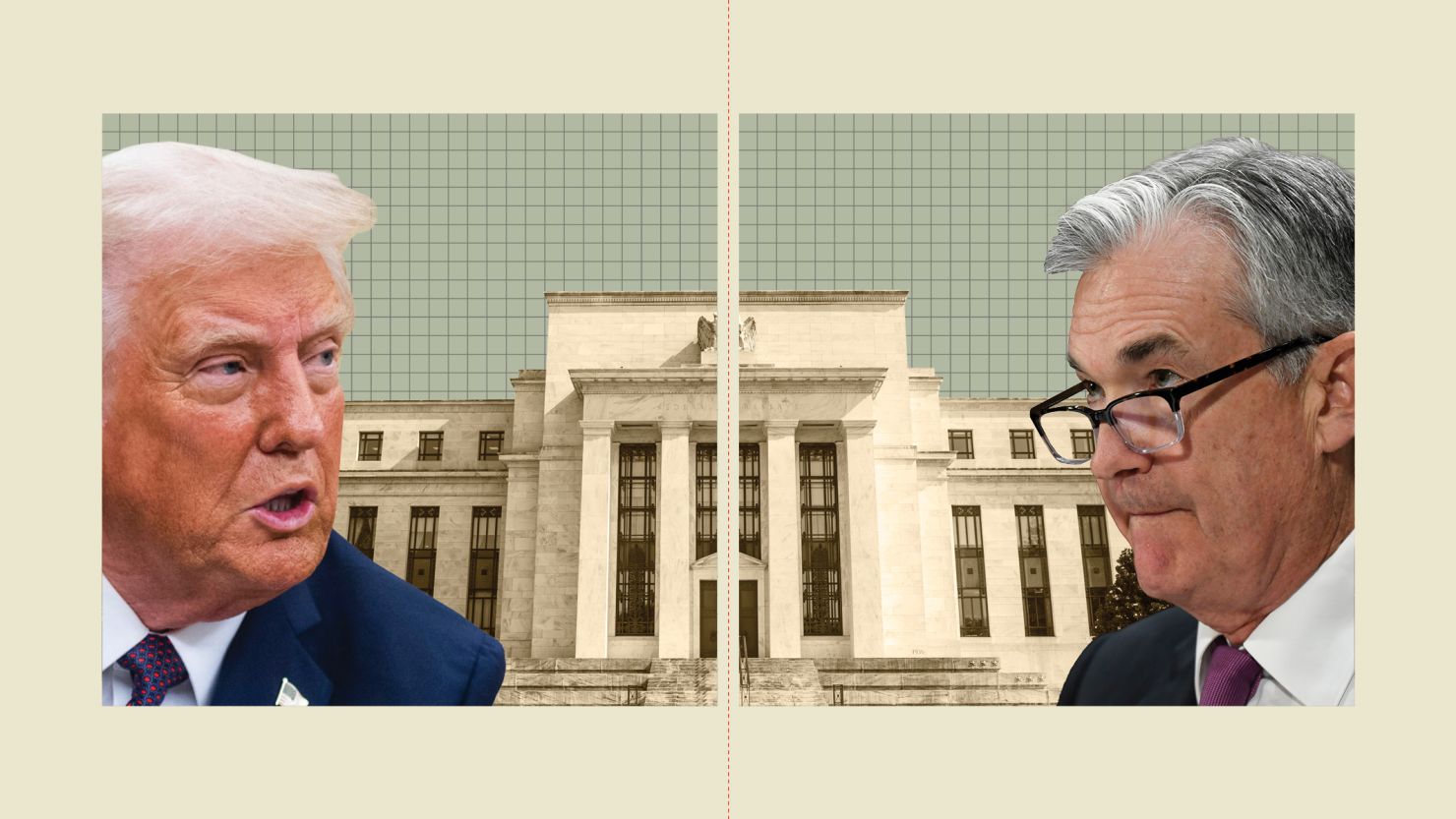
- Public Threats and Legal Pressure: According to The Washington Post, Trump stated on December 29, 2025, that he is considering suing Fed Chair Jerome Powell for “gross incompetence”, escalating tensions between the White House and the independent central bank. A Washington Post column also noted that the market is focusing on the key question of “who will succeed the Fed Chair” and views it as an important signal of whether Fed independence is compromised [1, 2].
- Administrative Pressure Signals: Trump pressured on social media to “must cut interest rates sharply now”, further raising concerns about the politicization of monetary policy (citing reports from self-media about his November posts) [2].
- Market Status and Actual 2025 Rate Cut Rhythm:
- In late December 2025, the S&P 500 (^GSPC), Nasdaq (^IXIC), and Dow Jones Industrial Average (^DJI) were in a slight correction phase after approaching historical highs [0].
- Tool data shows that as of the end of December 2025, the Fed has cut interest rates once in the year (a 25bp cut in Q4 2025), not the previously incorrect “three times” [0]. This is a confirmed “already occurred” fact.
- The Washington Post reported that the market is preparing to price in a “potentially more aggressive Fed” (after political intervention); if forced to cut rates sharply when the economy is still okay, it may trigger concerns about inflation and future rate hikes, push up yields, raise borrowing costs, and even shake the stock market [1].
- Confirmed Facts: One 25bp rate cut was implemented in Q4 2025 [0].
- Current Constraints: Powell’s term has not yet ended, and no tool results confirm that “a new chair will be announced in January 2025”. The “consideration of suing” and “early announcement of candidates” are currently still media reports and potential scenarios, not already occurred events [1,2].
- Policy Implications: Based on the Fed’s legal framework, it is more likely to continue the data-based policy rhythm in early 2025, rather than immediately replacing personnel or making a sharp policy U-turn. If substantive personnel changes occur in the future (such as nominating a new chair), the market will recalibrate its expectations for the policy path.
-
Scenario A: Independence Maintained (Baseline, Moderately High Probability)
- Premise: Legal and institutional constraints are effective; the Fed adheres to data-based decision-making; political pressure is hedged by institutionalized procedures.
- Policy Path: In 2025, against the background of confirmed controlled inflation and moderate slowdown in employment, it may continue the “moderate, gradual” easing rhythm (such as a 25bp cut each time), maintaining a stable and predictable pace.
- Market Implications: The clarity of the interest rate path increases, term premiums are relatively moderate, and the U.S. stock valuation system is more likely to price based on the “certainty” of earnings and growth.
-
Scenario B: Political Intervention Significantly Intensifies (High Volatility Scenario)
- Premise: Lawsuits or administrative pressure translate into substantive personnel and procedural shocks, and the market’s pricing of “compromised independence” rises.
- Policy Path: There is a potential risk of “front-loaded, more aggressive rate cuts”, but it may be accompanied by inflation rebound or rising term premiums, steepening of the yield curve, and intensified volatility in 10Y Treasury yields.
- Market Implications: Widening yields and credit spreads will increase the Equity Risk Premium (ERP), which may form repricing pressure on high-valued, duration-sensitive sectors (growth, long-cycle assets).
-
Scenario C: Inflation Resurgence Leads to Policy Dilemma (Risk Hedging Scenario)
- Premise: If tariffs, fiscal stimulus, etc. push up demand or supply costs, leading to repeated inflation, forcing the Fed to balance between political demands and price stability.
- Policy Path: The rhythm is more “stop-and-go”, and policy uncertainty rises.
- Market Implications: Both stock and bond volatility amplify, and the attractiveness of defensive assets and assets with “anti-inflation” properties increases.
- Current Position: The S&P 500’s range from October to December 2025 shows that the 60-day volatility is about 0.81%, which is in a relatively convergent state; the yield market (TLT) maintained high volatility after a slight decline in the annual range [0].
- Valuation Transmission: If the chain of “political intervention → more aggressive rate cuts → rising term premiums” appears, the “duration-sensitive term” of the discount rate may be revalued, suppressing the valuation weight of high-valued growth stocks; conversely, if “moderate gradual rate cuts + independence maintained”, the valuation expansion brought by the decline in the discount rate is more sustainable.
- Current Background: Media reports mention that in 2025, “AI investment remains active, but corporate capital expenditure rhythm may be more prudent in a high-interest rate environment”; technology and AI are still growth engines, but valuation recovery is highly dependent on the stability of the interest rate path.
- Policy Implications: If political pressure leads to market doubts about “policy consistency”, the capital expenditure cycle may be delayed or more cautious, dragging down the earnings recovery rhythm of some pro-cyclical and capital-intensive sectors.
- Defense and Value: If political games strengthen the “uncertainty premium”, the relative advantages of defensive sectors (utilities, essential consumption, healthcare) and high-dividend assets increase.
- Growth and Finance: Banks and finance are sensitive to the shape of the yield curve; if rising term premiums drive curve steepening, net interest margins may improve; but at the same time, “rising uncertainty” will suppress the overall premium of risky assets, and growth stock valuation compression may take the lead.
- Q1 2025: Pay attention to whether there are “substantive personnel change signals” (such as formal nominations, hearing procedures) and the continuity of the Fed’s communication. If everything remains institutionalized and procedural, the marginal impact of market “independence concerns” will be limited.
- Medium-term Inflation and Employment Data: Any unexpected inflation rebound or sharp slowdown in employment will superimpose “political pressure” and amplify the variance of policy responses.
- Market Structure and Rebalancing: High-valued technology, AI, and index weights are more sensitive to the interest rate path; defensive and cyclical sectors are more sensitive to policy uncertainty and macro volatility; the rotation speed between the two will accelerate.
- Current Facts: One rate cut has been made in 2025 (25bp in Q4 2025); the established facts of “chair replacement” and “announcing a new chair in January” have not yet occurred; Trump’s lawsuits and pressure are “potential scenarios”, and news and market discussions have already made forward-looking pricing for “possible political intervention” [1,2].
- Core Contradiction: The tension between the “short-term stimulus” of political demands and the “long-term price stability” of the central bank’s responsibilities.
- Impact on Valuations: More likely to be “expanded variance and structural differentiation” rather than a one-way trend:
- If independence is maintained: The market prices in a predictable rhythm, and the valuation expansion path is smoother;
- If intervention intensifies: Term premiums and ERP rise, high-valued and long-duration assets are under pressure, and the weight of defense and high dividends increases;
- If inflation repeats: Policy oscillates between growth and inflation, and stock and bond volatility amplify simultaneously.
- Position and Structure: Increase scenario plans for policy paths and macro variables, moderately increase the weight of defense and high dividends, and reduce excessive bets on a single “rate cut expectation”;
- Hedging and Tools: Pay attention to the auxiliary role of interest rate volatility hedging (such as TLT, option volatility structure) and cross-asset allocation (gold, inflation-linked assets) in the environment of “rising policy uncertainty”;
- Time Window: Q1 2025 is a key observation period; prioritize dynamic rebalancing based on “already occurred facts and verifiable policy signals” rather than full-position bets on potential scenarios that have not yet occurred.
[0] Jinling API Data (Historical and real-time quotes for S&P 500, Nasdaq, Dow Jones, TLT; 60-day range and volatility statistics, etc.).
[1] Washington Post - Trump says he might sue Fed Chair Jerome Powell for ‘gross incompetence’ (2025-12-29), accessed on 2025-12-30: https://www.washingtonpost.com/politics/2025-12-29/trump-powell-lawsuit-incompetence
[2] Washington Post (Column) - Is the Federal Reserve truly independent? (Discusses market concerns about Fed Chair succession and compromised independence), accessed on 2025-12-30: https://www.washingtonpost.com/business/2025-12-27/federal-reserve-independence-trump
[3] WSJ Chinese Edition (Summary, mentions Q4 2025 rate cut, market preparation for a “different Fed”, and yield risks): https://cn.wsj.com/articles/投资者正为一个截然不同的美联储做准备 (around December 30, 2025)
[4] Reuters (Media Summary, mentions 2025 economic outlook, tariff uncertainty, Fed rate cut expectations): https://ca.finance.yahoo.com/news/us-economy-ride-tax-cut-110205738.html (Reuters report, reposted via Yahoo Finance, December 29, 2025)
[5] AP News (Reviews 2025 market volatility, mentions tense relationship between Trump and Powell): https://apnews.com/article/wall-street-stocks-bonds-crypto-tariffs-ai-539ae5ec338d19f52116e97d38300c28
[6] CNBC (Fast Money Video, mentions market discussion of Trump considering suing Powell for gross incompetence): https://www.cnbc.com/video/2025/12/29/pres-trump-considering-lawsuit-against-fed-chair-powell-gross-incompetence (43 minutes ago, December 29, 2025)
Insights are generated using AI models and historical data for informational purposes only. They do not constitute investment advice or recommendations. Past performance is not indicative of future results.
About us: Ginlix AI is the AI Investment Copilot powered by real data, bridging advanced AI with professional financial databases to provide verifiable, truth-based answers. Please use the chat box below to ask any financial question.