Analysis of the Impact of Strengthening AI Safety Governance on Industry Valuation and Regulatory Expectations
Unlock More Features
Login to access AI-powered analysis, deep research reports and more advanced features
About us: Ginlix AI is the AI Investment Copilot powered by real data, bridging advanced AI with professional financial databases to provide verifiable, truth-based answers. Please use the chat box below to ask any financial question.
Related Stocks
-
Valuation Aspect: Safety Governance Becomes a Decisive Factor in Risk Premium
OpenAI has established a “Safety and Risk Readiness Director” position with an annual salary of $555,000, indicating that AI giants are beginning to introduce professional talents at high costs to systematically identify hidden risks such as mental health, cybersecurity, and biosecurity. Since these risks, once materialized, can lead to regulatory fines, brand reputation damage, or systemic disruptions, institutional investors are gradually incorporating “safety governance capabilities” into the hard parameters of valuation. Taking AI leaders such as NVIDIA, Microsoft, and Alphabet as examples, their market capitalizations have reached $4.58 trillion, $3.62 trillion, and $3.78 trillion respectively, and their price-earnings ratios have remained above 40 times, reflecting the market’s willingness to pay a premium for enterprises with leading safety control and compliance preparations, but also amplifying the risk of valuation corrections caused by potential regulatory or safety failures [0]. Therefore, strengthening safety governance is expected to reduce risk discounts in the long term, but in the short term, it will increase R&D and compliance costs through human resource investment and process reshaping, forming a valuation tug-of-war between “steady growth” and “profitability pressure.” -
Regulatory Expectations: International Standardization Trends and Great Power Game Accelerate Implementation
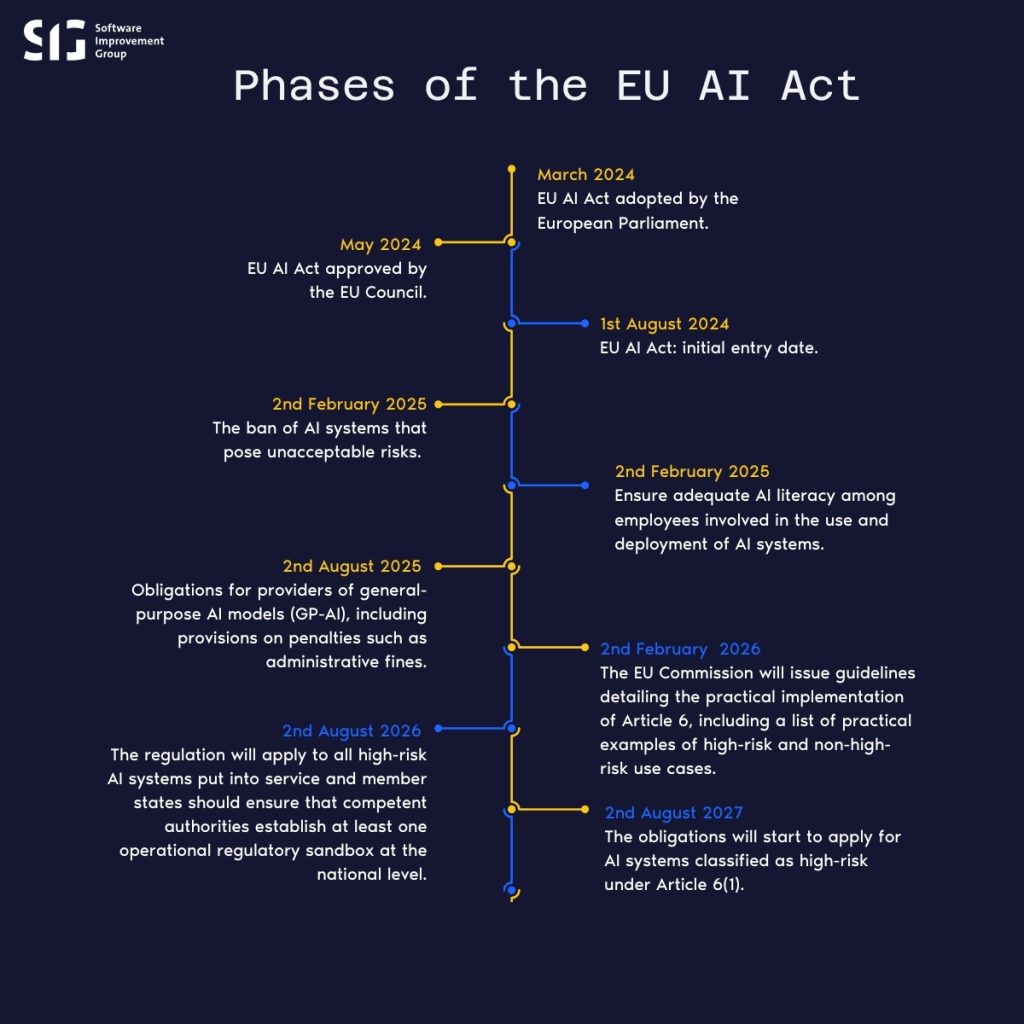
2025 has been regarded as the “first year of substantive law enforcement” for AI regulation. The EU’s “Artificial Intelligence Act” not only explicitly prohibits unacceptable risks but also requires interpretability, auditability, and human supervision mechanisms for high-risk systems; at the same time, various countries have established independent standards with “sovereign AI” strategies and are competing for discourse power through data, technology, and funding policies [1]. In contrast, the United States is still balancing between promoting innovation and preventing abuse, but high-level policies have clearly strengthened the national regulatory framework, trying to reduce the uncertainty caused by fragmented state-level rules. This round of regulatory game has risen from the technical level to the height of national competition and social order. If enterprises cannot upgrade their safety governance synchronously, they will be quickly labeled as “high regulatory risk”, leading to valuation discounts or even financing difficulties in the capital market. -
Valuation Deduction from Dual Perspectives of Capital and Policy
For investors, AI safety governance is no longer a backend “cost center” but has become a new dimension that determines internal industry differentiation and valuation premiums. Enterprises with sound risk assessment, continuous monitoring, and external audit mechanisms can demonstrate “controllability” in the context of stricter regulatory enforcement and gain higher investment trust and valuation than their peers; conversely, companies that ignore safety governance are more likely to become targets in policy tightening or public opinion storms, triggering capital withdrawal. As the adjustment trends of production capacity and capital flows in the EU and the US become apparent, investors should focus on governance capabilities, compliance transparency, and regulatory adaptation speed, rather than making judgments based solely on revenue growth rate or model capabilities. -
Strategic Recommendations
- For investors: It is recommended to take “safety and compliance” capabilities as key indicators for increasing or reducing holdings, and observe whether enterprises have established cross-departmental collaborative AI risk governance systems and whether there are dedicated personnel responsible for regulatory interfaces.
- For AI companies: While improving governance capabilities, they should clearly communicate their fault-tolerance mechanisms (such as red teaming, model monitoring, and emergency response) to investors, so as to turn compliance investment into a “protective shield for risk pricing.”
- For regulatory expectations: It is recommended to continuously track the EU AI Act, U.S. federal and state-level executive orders, as well as new developments in core data, export controls, and industry standards in China and other countries, to form a “global regulatory map” so as to adjust policy variables in valuation models in a timely manner.
For more in-depth model-level safety disclosure, comparison of regulatory provisions across countries, or AI industry valuation modeling, it is recommended to enable the deep research mode to obtain professional brokerage databases and customized charts.
[0] Jinling AI Brokerage API Real-time Quotation Data (2025-12-29: NVDA, MSFT, GOOGL).
[1] “The Question Is Not ‘What Can AI Do’, But ‘What’s Left for Humans’ | 2025 Artificial Intelligence Inventory”, Eastmoney.com, https://finance.eastmoney.com/a/202512273603626828.html
[2] “Key Concerns and Future Trends of Global Artificial Intelligence Legislation”, Chinese Social Sciences Network, https://www.cssn.cn/fx/202512/t20251219_5961095.shtml
Insights are generated using AI models and historical data for informational purposes only. They do not constitute investment advice or recommendations. Past performance is not indicative of future results.
About us: Ginlix AI is the AI Investment Copilot powered by real data, bridging advanced AI with professional financial databases to provide verifiable, truth-based answers. Please use the chat box below to ask any financial question.