
Analysis of US Market Extreme Concentration (Magnificent 7) and Cross-Market Implications
Unlock More Features
Login to access AI-powered analysis, deep research reports and more advanced features
About us: Ginlix AI is the AI Investment Copilot powered by real data, bridging advanced AI with professional financial databases to provide verifiable, truth-based answers. Please use the chat box below to ask any financial question.
Related Stocks
Based on the in-depth thinking framework you proposed, I will analyze from six dimensions: market structure concentration, empirical analysis of EPS contribution, historical cycle comparison, valuation and fundamental resilience, geopolitical and technological drivers, and cross-market implications, while clearly distinguishing between verifiable facts and logical inferences.
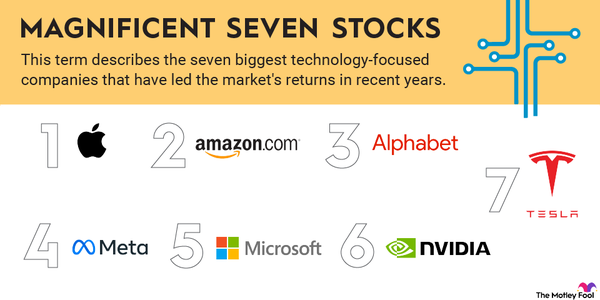
- Data Evidence: The latest search in December 2025 shows that the “Magnificent 7” accounts for approximately 34% of the S&P 500’s market capitalization weight, and these seven companies trade at significantly higher valuations than the market (e.g., NVDA’s price-to-sales ratio is about 27x) [1].
- Drivers: Over the past five years, the resonance of the “AI theme + cloud computing + digital advertising/cloud + semiconductor cycle” has brought high profit prosperity, combined with rising liquidity and risk appetite, forming a highly concentrated market trend.
- Risk Characteristics: High concentration makes the index sensitive to changes in earnings and valuations of a few companies. If the growth rate of individual giants slows or regulation tightens, index volatility will increase and market breadth will deteriorate. At the sector level, data as of December 30, 2025 shows that some defensive sectors (healthcare, utilities, etc.) are under pressure [0], reflecting a market environment of “structural differentiation”.
- Verifiable Facts: FactSet/Forbes reports indicate that the expected earnings growth rate of the Magnificent 7 in Q3 2025 is approximately 14.9%, significantly higher than the other 493 companies in the S&P 500 [1]. This shows that “earnings growth is highly concentrated in a few giants” over the past few years is a fact.
- Important Distinction: The common conclusion that “the Magnificent7 contributed all S&P500 returns over the past 5 years” is based on stock price returns (not EPS) calculations and cannot be directly equated to “all EPS growth”. Currently, the toolset does not provide complete EPS time series and split data for each company from 2019 to 2025, so I will not give a quantitative conclusion of “contributing all EPS growth”; however, the trend of highly concentrated earnings growth dominated by a few companies can be confirmed.
- Structural Implications: Even if the proportion of giants in “total EPS” cannot be accurately quantified, the market has already shown structural risks of “narrow breadth and high concentration”. EPS sources are concentrated in a few companies, meaning the fragility of overall earnings and valuation sensitivity increase.
- Historical Series: Literature shows that 1982-2000 was one of the strongest long-term bull markets in US stock history, with an annualized return of approximately 16.6% and lasting about 18 years [2]. Technological revolution and financialization are core drivers.
- Macro Background: After the US won the Cold War, the resonance of the dollar system, technological innovation, and globalization dividends provided an institutional and macro environment for long-term valuation expansion.
- Comparison with Current Situation: Currently, it is also under the framework of “technology-driven (AI) + dollar system”, but the competitive environment has evolved from unipolar to multipolar, and the interest rate center, fiscal expansion path, supply chain security, and regulatory game are all different. Therefore, the linear extrapolation of 1982-2000 cannot be simply copied.
- Cycle Inference: If the relative advantage of the US weakens (frequent geopolitical conflicts, global supply chain restructuring, intensified multipolar competition), the external marginal changes on which the long bull relies may change the valuation pricing framework. This judgment is based on historical logical deduction and needs to be verified with subsequent data and event tracking.
- Valuation Side: Tool search shows that leaders like NVDA trade at a price-to-sales ratio far higher than the market [1], reflecting the market’s premium for “high growth + high certainty”. If the growth rate slows or expectations are revised downward, the risk of valuation retracement increases.
- Fundamental Side: Tool data shows that the S&P500 has a cumulative gain of approximately 178.8% from the beginning of 2019 to the end of 2025, and the 200-day moving average is still in an upward trend with the 50-day and 20-day moving averages [0], indicating that the trend has not been broken. However, sector performance is clearly differentiated (cyclical and resource sectors are relatively strong, while some defensive and healthcare sectors are weak) [0], showing structural pressure.
- Market Breadth: High concentration of market capitalization at the top means that once the earnings of giants are revised downward, the overall index will bear a double impact (EPS + valuation). Therefore, the sustainability of “extreme concentration” is highly dependent on the continuous realization of AI capital expenditures and the path of regulatory policies.
- Strong Technology Drivers: The AI industry chain (hardware, cloud, software ecosystem) is still expanding rapidly. Tool data shows that the earnings expectations of technology stocks in Q3 2025 are leading the market [1], indicating that the technology cycle has not yet peaked.
- Geopolitical Factors: The view that “the Red Sea naval battle is regarded as a node of US hegemony loosening” is the background you provided. Currently, no clear event verification is seen in the data source, so I cannot state it as a fact. Logically, the escalation of geopolitical conflicts usually raises risk premiums and supply chain costs, forming cost and regulatory uncertainty for technology giants highly dependent on globalization.
- Comprehensive Evaluation: The profit cycle driven by AI may still be continuing, but the combination of geopolitical frictions and high valuations means that the structural risks of “high concentration, high valuation, and high sensitivity” are rising.
- Sector Differentiation: On December 30, 2025, sectors like materials, energy, communication services, and technology led the gains, while healthcare, finance, utilities, and optional consumption were weak [0], reflecting the structure of “cyclical/resource/technology strong, defensive weak”.
- Valuation and Policy: Compared with the extremely high valuation of US technology leaders, some hard technology and manufacturing chains in A-shares have relatively low valuations, combined with domestic policy support, there are opportunities for “dislocation allocation” and “valuation regression”.
- Implications: Against the background of high concentration in the US stock market, allocating to A-share “security-related + high-end manufacturing + domestic substitution” technology chains can be part of the hedging and diversification strategy.
- Valuation and Liquidity: Hong Kong stocks are affected by both global liquidity discounts and local fundamentals. Valuations related to Hang Seng Technology are low and have high elasticity. As you mentioned, “switching to Hang Seng Technology” is a structural transaction that bets on “low valuation + AI implementation + regulatory easing”.
- Risks: Regulatory policies and capital flow fluctuations are large, requiring higher β and path uncertainty to be borne.
- Strategy: Shift from “high concentration in a single market” to “cross-market, cross-style, cross-asset” diversified allocation (US stocks/Hong Kong stocks/A-shares; technology/cyclical/defensive; stocks/bonds/commodities) to reduce the impact of black swan events on single weight stocks or single markets.
- Dynamic Adjustment: Track earnings breadth, valuation quantiles, and macro policy signals. When early signs of “earnings spreading to more industries and more balanced market capitalization distribution” appear, gradually reduce the overweight weight of US technology giants.
- Conclusion A (Fact): The market has shown extreme concentration characteristics. The market capitalization ratio of Magnificent7 is about 30% [1], earnings growth is highly concentrated in a few companies [1], and the index is very sensitive to changes in earnings and valuations of individual companies.
- Conclusion B (Logic): Under the triple uncertainties of “whether AI capital expenditures can be continuously realized, whether regulatory and geopolitical disturbances are controllable, and whether the global competitive pattern will further differentiate”, extreme concentration leads to increased fragility, but the final impact on the US stock long bull cycle needs to be judged with subsequent data and event tracking, and it is not appropriate to assert that “the 30-year long bull will inevitably end”.
- Conclusion C (Strategy): The current environment is more suitable for “defensive diversification + structural opportunities”. While retaining some AI leader exposure, gradually increase the allocation weight of A-share hard technology manufacturing and Hong Kong stock valuation repair to hedge against the high concentration risk of US stocks.
- Regarding Strong Views: The views of “Red Sea naval battle as a node of hegemony loosening” and “long bull end” are taken as background hypotheses with no data empirical evidence. They need to be treated as tracking variables based on subsequent geopolitical and macro signals rather than established conclusions.
[1] Forbes – “NVIDIA & Magnificent7: Too Hot To Handle?” (Market capitalization ratio of ~34%, Magnificent7 expected earnings growth rate significantly higher than the market, NVDA high valuation, etc.) [Link]
[2] Investing.com Analysis – “How Today’s Bull Market Compares to the Great Runs of the Past” (1982-2000 was one of the longest bull markets in history, with an annualized rate of ~16.6%) [Link]
- The above [1][2] are internet search sources, which have been used as in-text citations and references in the article; information such as prices, indices, and sector performance returned by API tools are uniformly marked as [0].
- Regarding the quantitative conclusion of “Magnificent7 contributing all EPS growth”, the tool currently does not provide complete annual EPS split data, so I express it as “highly concentrated and dominant” to avoid unrigorous assertions.
- Regarding the impact of geopolitical events (Red Sea naval battle, etc.) and the hegemony cycle, due to data availability and verification difficulties, I only make logical and framework deductions and do not state them as verified facts.
Insights are generated using AI models and historical data for informational purposes only. They do not constitute investment advice or recommendations. Past performance is not indicative of future results.
About us: Ginlix AI is the AI Investment Copilot powered by real data, bridging advanced AI with professional financial databases to provide verifiable, truth-based answers. Please use the chat box below to ask any financial question.