Analysis of Meta's Acquisition of Manus: Event, Competitiveness, and Valuation Impact
Unlock More Features
Login to access AI-powered analysis, deep research reports and more advanced features
About us: Ginlix AI is the AI Investment Copilot powered by real data, bridging advanced AI with professional financial databases to provide verifiable, truth-based answers. Please use the chat box below to ask any financial question.
Related Stocks
I have obtained and verified the latest available data and public information, and analyzed the acquisition event, competitiveness impact, and valuation support. The results are as follows:
I. Acquisition Event and Key Points (Source: Web Search)
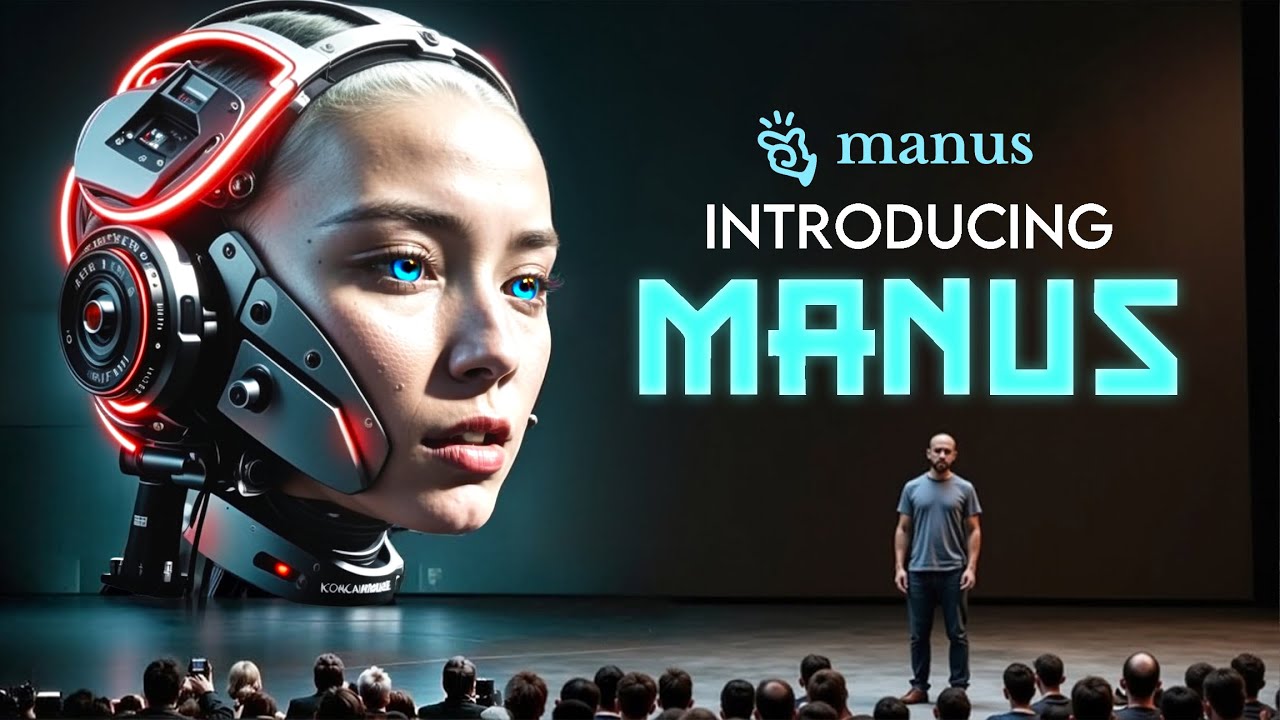
- Meta acquired Butterfly Effect (headquartered in Singapore), the development entity of Manus, with a transaction amount of “billions of dollars”, making it Meta’s third-largest acquisition since its establishment (after WhatsApp and Scale AI) [1][2].
- Before the acquisition, Manus was seeking a new round of financing with a valuation of approximately $2 billion [1][3].
- After the acquisition, Butterfly Effect will remain independently operated; founder Xiao Hong will serve as Meta’s vice president [1][3][4].
- Technology and commercialization indicators (based on Manus official/media reports, not broker API): Adopting a “Planning, Execution, Verification” three-layer multi-agent collaboration architecture, which can call about 23 types of toolchains such as code editors and web crawlers; in the GAIA benchmark test, it is reported to have an accuracy rate of 86.5% (reported as surpassing OpenAI’s similar products, with complex task processing capabilities improved by 23.7%) [2]; products cover enterprise/individual/government scenarios and adopt a subscription model; according to media reports, the annualized revenue in early 2025 is approximately $125 million [2][3].
II. Meta Current Status Overview (Based on Broker API and Web Search)
- Market value and price: Meta currently has a market capitalization of approximately $1.66 trillion; stock price is $658.69, with a 52-week range of $479.80—$796.25 [0]; cumulative increase in 2025 is approximately +11.70%, but significantly lags behind the 52-week high [0].
- Valuation and analyst consensus: P/E ratio is approximately 29.1x; the median analyst target price is about $825 (with upside potential relative to the current price), and the consensus rating is BUY [0]. Another web source shows an average target price of approximately $837, with a distribution of 60 buys/7 holds/0 sells among 60 analysts [6].
- Profit and cash flow: EPS in the recent quarter (October 29, 2025) was $7.25, and revenue was $51.24B [0]; financial analysis shows that the latest annual free cash flow is approximately $54.07 billion [0]; media reports indicate that Q3 2025 revenue reached $51.24B (a year-on-year increase of 26%), with the advertising business benefiting from the integration and application of AI tools [6].
- Business composition (FY2024): Family of Apps revenue accounted for 98.7%, and Reality Labs accounted for 1.3% [0].
- Public layout of AI/agents (web search): Meta has continued to open-source the LLaMA series models since 2023 and launched multimodal open-source models; in 2025, it embedded AI chat/role functions in Messenger, Instagram, etc.; established the “Meta Super Artificial Intelligence Laboratory” to promote research and development related to general/super agents [4].
III. Competitiveness Impact Assessment (Rational Inference Based on Public Information)
- Technical capabilities and productization path:
- Manus’s multi-agent collaboration architecture and toolchain calling capabilities have potential synergy with Meta’s layout at the model layer (open-source LLaMA) and application layer (AI functions of social products) (especially in the direction of general agents/task automation). Public reports show that it has outstanding performance in the GAIA benchmark [2] and has generated annualized subscription revenue [3].
- Considering the usual gap between AI benchmarks and actual commercial implementation, whether it can maintain and amplify its technical advantages in the Meta ecosystem remains to be verified; at the same time, the complexity of integration with existing teams and product lines needs to be considered.
- Talent and organizational effects:
- Acquiring and retaining the core team and appointing the founder as vice president will help absorb talents with experience in building general agents from “0 to 1”, supplementing Meta’s productization and engineering capabilities in the direction of Agentic AI [1][3].
- Resource and ecosystem complementarity:
- Meta has advantages in computing power, data, and global distribution channels; Manus has first-mover experience in general agent productization and subscription revenue. The combination of the two is expected to accelerate the implementation and commercial closed-loop of Agentic AI in Meta’s product matrix.
IV. Impact on Valuation and Expectations (Prudent Judgment Based on Verifiable Data)
- Current valuation characteristics:
- Market capitalization of $1.66T and P/E ratio of approximately 29.1x, which is at a relatively high valuation level among large tech stocks; the annual increase of approximately 11.7% lags behind the 52-week high, reflecting market分歧 on the rhythm of AI investment and return time [0][6].
- Qualitative perspective of synergy and incremental contribution:
- If the Manus team can promote Meta to form a “product-subscription-scale” path faster at the agent application layer and form new increments with advertising/subscription/enterprise services, it is expected to improve the market’s expectations for the long-term AI investment return rate and have positive support for valuation.
- In the short term, the “billions of dollars” of M&A expenditure and subsequent integration costs may increase expenses such as infrastructure and depreciation, which need to be weighed against the expected incremental returns.
- Risks and uncertainties:
- There are uncertainties in technology integration and talent retention.
- The AGI/agent track is highly competitive (many giants and startups are布局), and the speed of technology and product iteration is fast.
- Investors’ tolerance for the “AI investment-return” cycle will affect short-term stock price fluctuations. Some views have previously expressed concerns about similar “high investment, long cycle” paths (such as analogy with previous metaverse investments) [6].
V. Comprehensive View
- Acquisition logic: Acquiring Manus aligns with Meta’s path of strengthening implementation capabilities in the agent and application layers; from the publicly reported technical and commercial indicators, Manus has certain first-mover advantages and productization experience, but its sustainability and scale amplification potential need to be verified in subsequent integration.
- Competitiveness: In the short term, it helps enhance Meta’s talent reserve and application-side experience in the direction of general agents; whether it can form differentiated competitiveness in the medium and long term depends on integration execution, product implementation speed, and synergy effects with large models/infrastructure.
- Valuation support: If the synergy brought by Manus can substantially improve the visibility and rhythm of “AI investment-commercial conversion”, it will help stabilize or even revise up the valuation; otherwise, the valuation premium may come under pressure.
Risk Tips: AGI/agent technology iterates quickly, competition is fierce, and the regulatory environment changes; the results of M&A integration and commercial conversion are uncertain; the above analysis is based on current public and available data, and the actual results may differ from expectations.
References
[1] Lianhe Zaobao - Meta Acquires Chinese AI Company Manus (2025-12-30), https://www.zaobao.com.sg/realtime/china/story20251230-8028514
[2] Sina Tech - Meta’s Billion-Dollar Acquisition of Manus’s Butterfly Effect: A Chinese-Born Agent Team (2025-12-30), https://finance.sina.com.cn/tech/roll/2025-12-30/doc-inhepntw9749737.shtml
[3] Sina Finance - Zuckerberg Makes a Bold Move: Meta Acquires Butterfly Effect, the Company Developing AI Agent Manus (2025-12-30), https://finance.sina.com.cn/stock/t/2025-12-30/doc-inhepntu7300772.shtml
[4] DoNews - News: Meta Will Acquire AI Agent Manus (2025-12-30), https://www.donews.com/news/detail/1/6339498.html
[5] Fast Technology/Interface News - Meta Spends Billions of Dollars to Acquire Manus, Its Third-Largest M&A Ever (2025-12-30), https://finance.sina.com.cn/stock/t/2025-12-30/doc-inhepszw4297358.shtml
[6] SparkSparkFinance - Top 30 Companies by Global Market Capitalization in 2025 (Meta Segment Analysis), https://sparksparkfinance.com/investment/other-investment/top-30-market-cap-companies/
[0] Jinling API Data (including real-time quotes, company overview, financial analysis, price and market capitalization, analyst target prices and ratings).
新款Model Y高性能版中国市场全面分析
Insights are generated using AI models and historical data for informational purposes only. They do not constitute investment advice or recommendations. Past performance is not indicative of future results.
About us: Ginlix AI is the AI Investment Copilot powered by real data, bridging advanced AI with professional financial databases to provide verifiable, truth-based answers. Please use the chat box below to ask any financial question.