In-depth Analysis of Synergy Between Fenglong Co., Ltd. and UBTECH: Aluminum Die Casting Technology Empowers Cost Reduction for Humanoid Robot Joint Components
Unlock More Features
Login to access AI-powered analysis, deep research reports and more advanced features
About us: Ginlix AI is the AI Investment Copilot powered by real data, bridging advanced AI with professional financial databases to provide verifiable, truth-based answers. Please use the chat box below to ask any financial question.
Related Stocks
On December 24, 2025, UBTECH (9880.HK) announced the acquisition of approximately 43% of the shares of Shenzhen Stock Exchange-listed Fenglong Co., Ltd. (002931.SZ) for a total consideration of about RMB 1.665 billion through a combination of “agreement transfer + tender offer”. After the completion of this transaction, UBTECH will become the controlling shareholder of Fenglong, and the actual controller will change from Dong Jiangang to Zhou Jian, founder of UBTECH [0][1].
From the perspective of industrial chain integration, UBTECH, as the “first stock of humanoid robots”, has leading technology R&D capabilities and algorithm advantages, but its core shortcoming lies in the lack of large-scale, low-cost high-end manufacturing capabilities. Fenglong, as a “specialized, sophisticated, unique and new” enterprise deeply engaged in the precision manufacturing field for more than 20 years, just makes up this key gap [4]. Pan Helin, a member of the Information and Communication Economic Expert Committee of the Ministry of Industry and Information Technology, pointed out that the purpose of this acquisition is, on the one hand, to extend to the upstream of the industrial chain through mergers and acquisitions, and on the other hand, to enrich the listed company’s assets by injecting merged assets to flatten the listed company’s P/E ratio [2].
Founded in 2003 and listed in 2018, Fenglong’s main business covers the R&D and manufacturing of garden machinery and engines, hydraulic control systems and auto parts. Financial report data shows that the company’s revenue in 2023, 2024 and the first three quarters of 2025 was RMB 433 million, RMB 479 million and RMB 373 million respectively; net profit turned from a net loss of RMB 7.04 million in 2023 to a profit of RMB 4.59 million in 2024, and reached RMB 21.52 million in the first 9 months of 2025, a significant year-on-year increase [1][3].
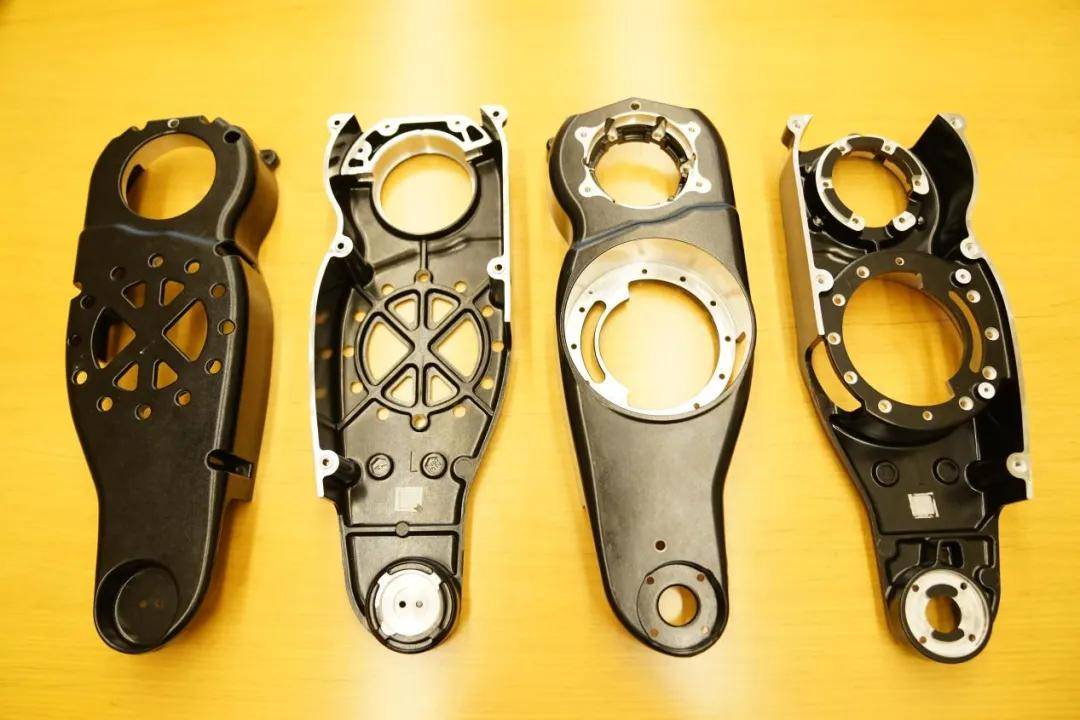
From the revenue structure, the garden machinery industry contributes 37% of revenue, the hydraulic parts industry accounts for 29%, and the auto parts industry accounts for 23%, with gross margins of 25%, 24% and 16% respectively [3]. The company’s core process capabilities lie in the large-scale production of precision aluminum die-casting and iron auto parts, including precision die-cast parts such as igniters, flywheels and cylinders [4].
According to industry research data, the cost distribution of core components of humanoid robots shows obvious structural characteristics. Lead screws (linear joints) account for 20% of the total value of the robot, which is the largest link in a single component; motors (40 units) account for about 14%; reducers (rotary joints) account for 12%; structural parts (joint housings, etc.) account for 10%; dexterous hands account for 8%; sensors account for 8%; software systems account for 10%; batteries and power management account for 8% [1][2].
From the perspective of process applicability, aluminum die casting technology is mainly applied to structural parts (joint housings, trunk structural parts), dexterous hand structural parts, battery and power management shells and other components, which account for about 26% of the overall cost. Although aluminum die casting is not directly applied to core transmission components such as lead screws and reducers, as a key process for bearing and connecting structures, its cost reduction space has important strategic significance for overall cost control.
Humanoid robot joint components have significantly higher requirements for material systems and processing technologies than traditional industrial robots. On the one hand, leading manufacturers have strict standards for product performance, manufacturing precision and mass production stability, as well as cost under the background of global supply chains; on the other hand, the material system of humanoid robots is undergoing a structural upgrade from “single material functionalization” to “multi-material systematic integration”.
Taking Xusheng Group’s practical experience as an example, the robot joint housings and other components produced by its semi-solid die casting technology have increased the strength of magnesium alloys by 30%, compressed the production cycle from 72 hours of traditional processes to 8 hours, and the yield rate is as high as 98.7%, which has greatly reduced costs and improved production efficiency [0]. This technological advantage gives it differentiated competitiveness in the field of humanoid robot components and successfully binds global leading enterprises such as Tesla and Figure AI.
By comparing the cost-effectiveness of different manufacturing processes, the cost reduction potential of aluminum die casting technology can be clearly seen. The cost coefficient of traditional casting technology is 1.0, production cycle is 48 hours, yield rate is 85%; machining technology cost coefficient is 1.5, production cycle is 24 hours, yield rate is 92%; traditional aluminum die casting technology cost coefficient is 0.7, production cycle is 8 hours, yield rate is 95%, weight reduction is 15%; semi-solid die casting technology cost coefficient is only 0.5, production cycle is 8 hours, yield rate is as high as 98.7%, weight reduction is 25% [0].
Taking the cost of structural parts of a single humanoid robot as RMB 10,000, using semi-solid die casting technology can reduce the cost by RMB 2,000 compared with traditional aluminum die casting, with a cost reduction rate of 20%. If UBTECH achieves an annual production capacity of 10,000 units, only structural parts can achieve an annual cost reduction of RMB 20 million.
In addition to process upgrades, the supply chain synergy effect brought by the acquisition can further compress costs. Scale effect can bring 15% cost reduction contribution, which comes from the improvement of bargaining power for bulk raw material procurement and optimization of equipment utilization; process reuse brings 10% cost reduction contribution, which comes from the migration of garden machinery and auto parts manufacturing experience to the robot field; supply chain integration brings 8% cost reduction contribution, which comes from the compression of logistics costs and optimization of inventory management; technology iteration brings 12% cost reduction contribution, which comes from R&D synergy accelerating the application of new materials and processes; quality control brings 5% cost reduction contribution, which comes from the improvement of quality consistency reducing rework and scrap rates [0].
Comprehensive calculation shows that the supply chain synergy effect can bring about 50% comprehensive cost reduction space. Although this data has theoretical deduction components, it fully illustrates the significant role of vertical integration strategy in cost control.
From the perspective of technical capabilities, UBTECH has deep accumulation in software aspects such as artificial intelligence, motion control and perception algorithms, while Fenglong has formed core competitiveness in hardware aspects such as precision manufacturing, quality control and supply chain management. The combination of the two realizes the organic integration of “soft power” and “hard power”.
UBTECH’s industrial humanoid robot Walker S2 has achieved mass production and delivery, with annual orders reaching RMB 1.3 billion and monthly production capacity exceeding 300 units [0]. Through the acquisition of Fenglong, UBTECH can obtain manufacturing capabilities highly matching its technical needs, realizing the full-chain integration from “design-R&D-manufacturing”. This integration can not only reduce manufacturing costs, but also shorten product iteration cycles and accelerate the industrialization of technological achievements.
According to the acquisition announcement, UBTECH plans to increase Fenglong’s robot component production capacity to 10,000 units by 2026 [3]. This production capacity plan is highly consistent with the industry judgment that 2025 is generally regarded as the “first year of commercialization of humanoid robots”. As leading enterprises such as Tesla, UBTECH and Unitree Robotics accelerate mass production, the demand for high-quality and cost-effective components in the industry is rapidly releasing.
The humanoid robot track is ushering in a period of capital-intensive layout. In addition to UBTECH, Zhiyuan Robot has controlled Shangwei New Materials through the “agreement transfer + partial tender offer” model in July 2025, with a total consideration of about RMB 2.1 billion [2]; Unitree Robotics has completed A-share listing counseling, and CloudMinds has started the IPO process [0]. This dual game of capital and technology is reshaping the industrial pattern of humanoid robots.
In the component supply link, Xusheng Group has established in-depth cooperation with global leading enterprises such as Tesla and Figure AI by virtue of its integration capabilities of three aluminum alloy forming processes: die casting, forging and extrusion [0]. Whether Fenglong can occupy a favorable position in this competitive pattern depends on its technical migration ability of aluminum die casting technology to the robot field and the speed of production capacity climbing.
It is worth noting that UBTECH has made commitments to Fenglong’s future three-year performance in the acquisition agreement: the net profit and non-recurring profit and loss attributable to the parent company’s shareholders in 2026, 2027 and 2028 will be no less than RMB 10 million, RMB 15 million and RMB 20 million respectively [2][3]. This performance commitment not only reflects UBTECH’s confidence in the synergy effect, but also sets clear goals for Fenglong’s transformation and development.
From the financial data, Fenglong’s net profit in the first three quarters of 2025 has reached RMB 21.52 million, which has exceeded the 2026 commitment target of RMB 10 million [3]. With the volume of robot component business, the company is expected to achieve sustained and rapid growth in performance.
As of the close of trading on December 25, 2025, Fenglong closed at RMB 21.65 per share with a market value of RMB 4.73 billion [2]. After the acquisition, the company’s stock price rose by the daily limit for two consecutive trading days, closing at US$28.82 on December 30 (about RMB 28 in RMB terms), with a market value of about US$6.3 billion and a P/E ratio of 252.64 times [5]. The high valuation level reflects the market’s optimistic expectations for the company’s transformation into the humanoid robot track, but it also means that the stock price has fully incorporated the acquisition利好 (positive news).
Fenglong’s core competitive advantages lie in its more than 20 years of precision manufacturing experience accumulation and stable customer relationships. The company has established long-term cooperative relationships with many well-known garden machinery and automobile enterprises, and has full-chain manufacturing capabilities from mold development, die casting forming to precision processing. Once this manufacturing capability is connected with UBTECH’s technical needs, it is expected to quickly form large-scale mass production capabilities.
First, the humanoid robot industry is still in the early stage of commercialization, and market demand is uncertain. If the mass production progress is not as expected, Fenglong’s production capacity utilization may be affected. Second, the migration of aluminum die casting technology to the robot field needs to solve multiple technical challenges such as lightweight, precision and strength, and there is a risk of R&D failure or process adjustment. Third, intensified industry competition may compress profit margins, and competitors such as Xusheng Group have occupied first-mover advantages.
UBTECH’s acquisition of Fenglong is a typical case of vertical integration of the humanoid robot industry chain. Through this transaction, UBTECH has obtained key large-scale manufacturing capabilities, and Fenglong has obtained a ticket to enter the humanoid robot track, forming a significant synergy effect between the two.
From the perspective of cost reduction paths, the empowerment of aluminum die casting technology to humanoid robot joint components is mainly reflected in three levels: first, direct cost reduction from advanced processes such as semi-solid die casting, which can reduce structural parts costs by 20%-50%; second, indirect cost reduction from supply chain synergy, with a comprehensive effect of about 50%; third, accelerated product upgrading through technology iteration, improving overall competitiveness.
Looking forward to the future, with the acceleration of the mass production process of humanoid robots, Fenglong’s robot component business is expected to become a new growth engine for the company. If production capacity climbs smoothly and technology migration is successful, the company is expected to transform from a traditional manufacturing enterprise to a key supplier in the robot industry chain, realizing a fundamental reshaping of the valuation logic.
For investors, they need to focus on Fenglong’s order acquisition in the robot field, changes in production capacity utilization and progress in gross profit margin improvement. In the current context of market sentiment excitement, it is recommended to maintain rational judgment and pay attention to fundamental verification signals.
[0] 财富号 - 锋龙股份|优必选入主,会成为跨年妖股!(https://caifuhao.eastmoney.com/news/20251228144339339072340)
[1] 证券时报 - 2连板!002931,火速发公告:优必选3年内不借壳上市 (https://www.stcn.com/article/detail/3561418.html)
[2] 新浪财经 - 优必选16.65亿元收购锋龙股份明年产能目标达万台 (https://finance.sina.com.cn/jjxw/2025-12-26/doc-inhczxpx2994988.shtml)
[3] 新浪财经 - 优必选16.65亿元收购锋龙股份明年产能目标达万台 (https://cj.sina.cn/articles/view/6248544856/174713a5802002h3xq)
[4] TMT观察网 - 优必选被友商们逼急了 (http://www.looktmt.com/0028/457/66347982783.html)
[5] 金灵API数据 - 锋龙股份公司概况
[6] OFweek人工智能网 - 万亿赛道从零起,人形机器人才是AI全村的希望? (https://m.ofweek.com/ai/2025-12/ART-201700-8110-30677467.html)
丽人丽妆战略转型分析:从天猫依赖到抖音多渠道布局
Insights are generated using AI models and historical data for informational purposes only. They do not constitute investment advice or recommendations. Past performance is not indicative of future results.
About us: Ginlix AI is the AI Investment Copilot powered by real data, bridging advanced AI with professional financial databases to provide verifiable, truth-based answers. Please use the chat box below to ask any financial question.