Analysis of the Impact of UBTECH Walker S2 Mass Production Acceleration and 587Ah Cell Cost Reduction on Industry Landscape
Unlock More Features
Login to access AI-powered analysis, deep research reports and more advanced features
About us: Ginlix AI is the AI Investment Copilot powered by real data, bridging advanced AI with professional financial databases to provide verifiable, truth-based answers. Please use the chat box below to ask any financial question.
Related Stocks
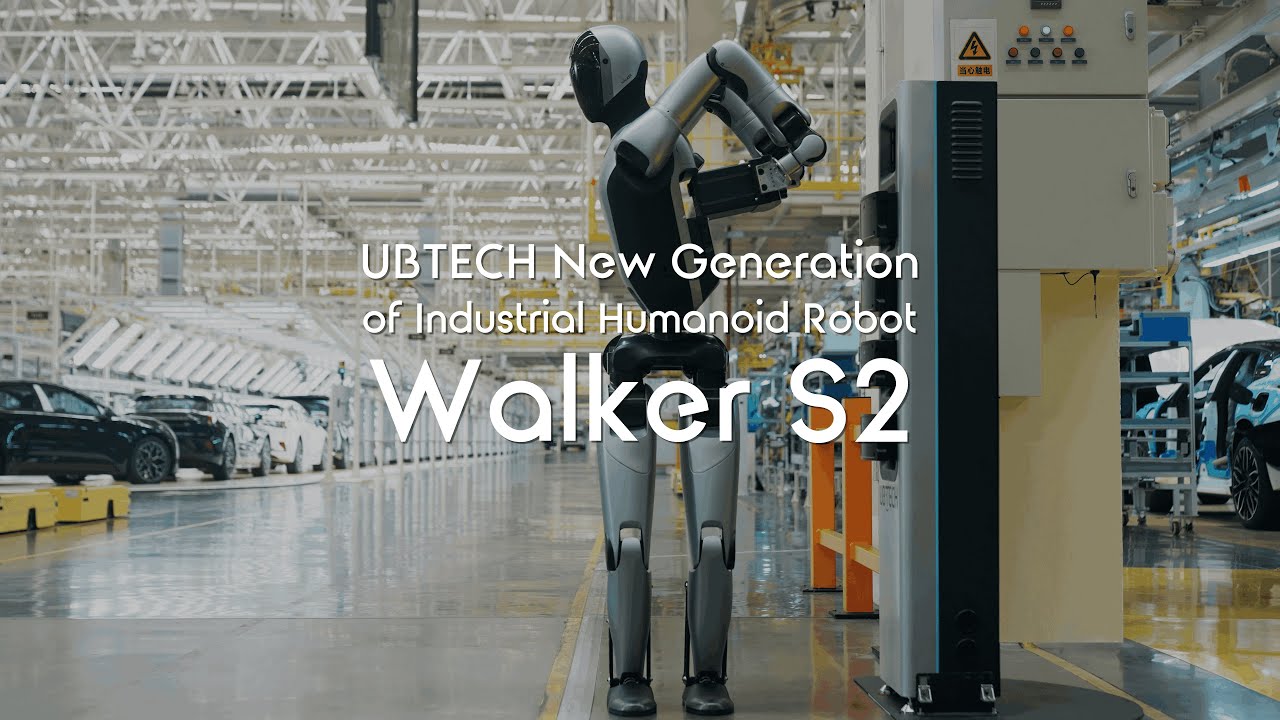
Based on the latest collected information, I systematically analyze the impact of the acceleration of UBTECH Walker S2’s mass production and delivery and the cost reduction path of 587Ah cells on the industry landscape.
UBTECH’s industrial humanoid robot Walker S2 is experiencing significant mass production acceleration. The Walker S2, launched in July 2025, reached an important milestone in just a few months—the 1000th industrial humanoid robot rolled off the production line at the Liuzhou factory [1]. As of now, UBTECH’s 2025 industrial humanoid robot capacity has exceeded 1000 units, with deliveries exceeding 500 units, and it plans to increase annual capacity to 10,000 units by 2026 [1].
In terms of orders, UBTECH’s humanoid robot business shows explosive growth:
- 2025 full-year order total reaches 1.3 billion yuan [2]
- Cumulative orders for the Walker series exceed 800 million yuan [3]
- Won the world’s largest humanoid robot contract, worth 250 million yuan [4]
- Repeatedly set new records for humanoid robot order amounts [5]
Walker S2 has realized the world’s first hot-swappable autonomous battery swapping system for humanoid robots, with three core technological innovations [6]:
CATL announced on June 10, 2025, that it has taken the lead in mass-producing and delivering the next-generation large-capacity energy storage-specific cell—the 587Ah cell [7]. This technological breakthrough has a profound impact on the cost structure of the humanoid robot industry:
According to industry analysis, the power battery cost of humanoid robots accounts for about 0.8%, with a single unit cost of about 170 yuan [9]. However, this is an estimate based on traditional cells. With the application of next-generation large-capacity cells such as 587Ah:
- Extended Battery Life: Higher energy density cells can prolong the single-charge working time of humanoid robots
- Simplified Battery System: Large-capacity cells reduce the number of cells required in the battery pack, lowering system complexity
- Reduced Thermal Management Costs: Fewer large cells help simplify the thermal management system and reduce BOM costs
The acceleration of UBTECH Walker S2’s mass production and delivery and the cost reduction path of 587Ah cells form dual driving forces for industrial development. Technological breakthroughs lead to cost reductions, cost reductions promote large-scale applications, and large-scale applications in turn feed back technological iteration—this positive cycle is reshaping the competitive landscape of the humanoid robot industry.
Looking forward, with continuous investment from leading enterprises such as CATL in the field of large-capacity cells, and capacity expansion and order gains from整机 manufacturers such as UBTECH, the humanoid robot industry is expected to迎来 a critical industrialization breakthrough period between 2025 and 2027. The industry is currently equivalent to the stage of the electric vehicle industry in 2014, and a ten-year industrial cycle is about to爆发 [10].
[1] IT之家 - 优必选第1000台工业人形机器人Walker S2在柳州下线 (https://www.ithome.com/0/908/238.htm)
[2] 电子工程专辑 - 优必选人形机器人订单已近14亿!明年产能将达万台 (https://www.eet-china.com/mp/a463525.html)
[3] 东吴证券研究报告 - AIDC&机器人趋势不改,继续看好第二增长曲线 (https://pdf.dfcfw.com/pdf/H301_AP202507091705925825_1.pdf)
[4] 深圳市发改委 - 2.5亿元,优必选再次斩获全球人形机器人最大合同 (https://fgw.sz.gov.cn/ztzl/qtztzl/szscjmyjjfzzhfwpt/mqfc/myqyfzdt/content/post_12390072.html)
[5] IT之家 - 优必选人形机器人再获1.43亿元订单,2025全年订单总额达13亿元 (https://www.ithome.com/)
[6] 北京科学技术委员会 - 全球首创!优必选工业人形机器人Walker S2实现自主换电 (https://www.ncsti.gov.cn/kjdt/scyq/bjjjjskfq/jkdt/202507/t20250721_210973.html)
[7] 电力设备行业跟踪周报 - 固态电池产业化进展加快 (https://www.etelux.com/upfile/2025/1752661033548.pdf)
[8] 东吴证券研究报告 - 电力设备行业跟踪周报储能锂电需求旺盛 (https://pdf.dfcfw.com/pdf/H3_AP202511171782833356_1.pdf)
[9] 东吴证券研究报告 - 人形机器人产业链纵析,寻找供应链"隐形冠军" (https://pdf.dfcfw.com/pdf/H3_AP202307011591984222_1.pdf)
[10] 中航证券 - 宇树发布第三款人形机器人,优必选Walker S2正式亮相 (https://pdf.dfcfw.com/pdf/H3_AP202507281717170215_1.pdf)
[11] IT之家 - 优必选焦继超:人形机器人进入家庭场景至少还要8-10年左右 (https://www.ithome.com/)
[12] CNBC - Elon Musk envisions humanoid robots everywhere. China may be the first to make it a reality (https://www.cnbc.com/2025/12/30/elon-musk-wants-robots-everywhere-china-is-making-that-a-reality.html)
Insights are generated using AI models and historical data for informational purposes only. They do not constitute investment advice or recommendations. Past performance is not indicative of future results.
About us: Ginlix AI is the AI Investment Copilot powered by real data, bridging advanced AI with professional financial databases to provide verifiable, truth-based answers. Please use the chat box below to ask any financial question.