In-depth Analysis of TCL's Black Appliance Business: Assessment of the Sustainability of Mini LED Technology-Driven Premiumization Strategy
Unlock More Features
Login to access AI-powered analysis, deep research reports and more advanced features
About us: Ginlix AI is the AI Investment Copilot powered by real data, bridging advanced AI with professional financial databases to provide verifiable, truth-based answers. Please use the chat box below to ask any financial question.
Related Stocks
According to the latest data from Sigmaintell (群智咨询), the global TV shipment volume is expected to reach 221 million units in 2025, a year-on-year decrease of 0.7%. Amid this overall market pressure, TCL’s TV shipment volume is projected to reach 30.41 million units, an opposite growth of 5.4% year-on-year, with its market share climbing to 13.8%, an increase of 0.8 percentage points [1]. The gap between TCL and Samsung (expected share of 16%), the top player, has narrowed significantly from 2.9 percentage points last year to 2.2 percentage points, indicating its strong catch-up momentum [1].
In terms of industry rankings, among the top 10 global TV shipment companies in 2025, Chinese brands occupy five seats: TCL ranks second, Hisense third, Xiaomi fifth, Skyworth sixth, and Haier ninth [1]. Notably, except for Xiaomi’s TV shipments which decreased by 7.9% year-on-year, other leading Chinese companies achieved flat or growth, while LG Electronics and Sony’s shares decreased by 0.5 and 0.3 percentage points respectively [1]. This pattern change indicates that Chinese TV brands are continuing to rise in the global market, and TCL’s market share growth is representative.
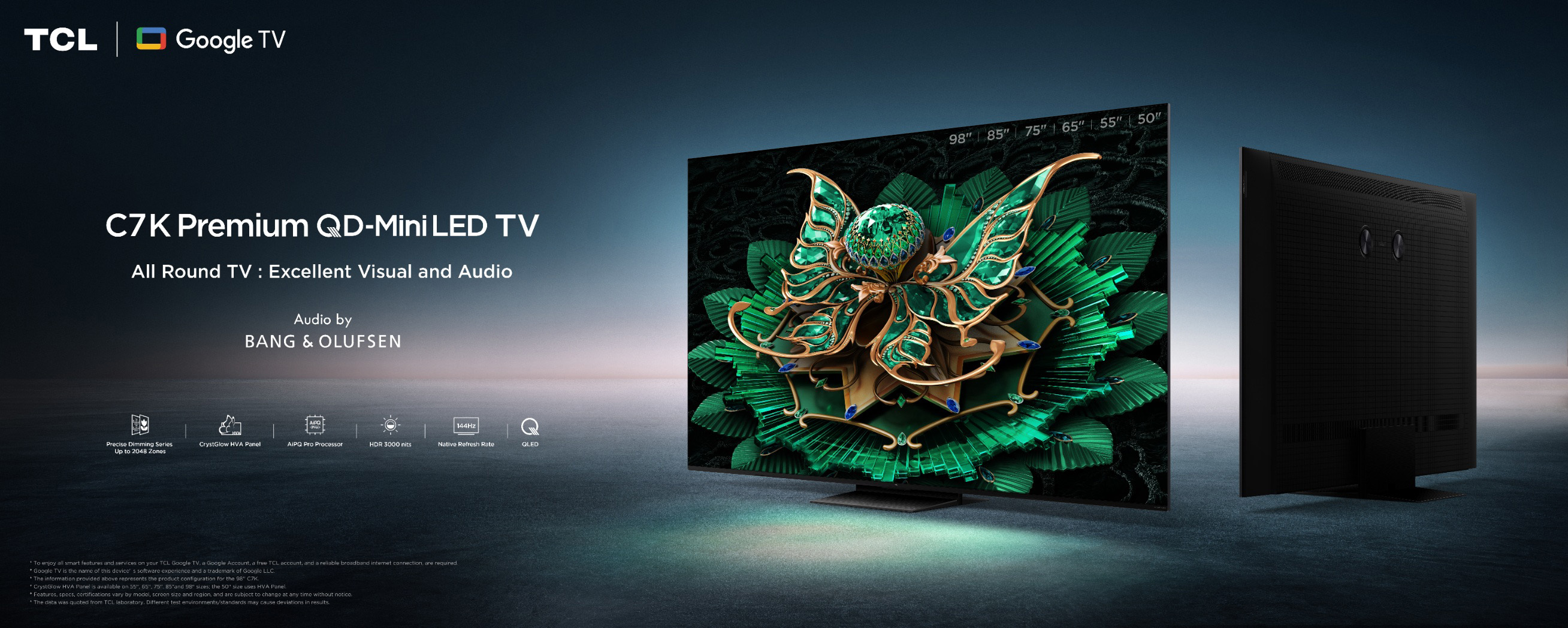
TCL’s performance in the Mini LED TV sector is even more outstanding. In the first three quarters of 2025, TCL’s global Mini LED TV shipments increased by 153.3% year-on-year to 2.24 million units [1]. From the first half of the year, TCL’s global Mini LED TV shipments grew by more than 170% to 1.37 million units, ranking first in the world in scale [2]. This leading position is due to TCL’s continuous investment in technological R&D and industry chain integration.
Data from Lotoo Technology (洛图科技) shows that the global shipment volume of Mini LED TVs is expected to increase by 57.8% year-on-year to 12.39 million units in 2025, with a market share of 6% [1]. Among them, the shipment volume of Mini LED TVs in the Chinese market will increase by 92.7% year-on-year to 8.02 million units, with a market share of up to 23.9% [1]. Mini LED TVs have become mainstream products in the mid-to-high-end TV market, and TCL is the main driver and beneficiary of this trend.
In March 2025, TCL Huaxing announced the official mass production of the world’s first G8.6 glass-based MLED production line in Wuhan [3]. This production line can produce 300,000 panels per month, directly reducing the cost of Mini LED TV panels above 65 inches by one-third [3]. Compared with traditional PCB substrates, glass substrates have significant advantages: they solve the flatness and precision issues of large-size panels, eliminate the technical defect of dark corners in 100-inch TVs, and provide consumers with a better viewing experience [3].
This technological breakthrough marks TCL’s transformation from following to leading in the Mini LED sector. The successful mass production of glass substrate technology not only improves product performance but also effectively reduces production costs, further enhancing the competitiveness of Mini LED TVs in the high-end market. This technological leading edge provides a solid underlying support for TCL’s premiumization strategy.
On December 26, 2025, TCL Huaxing Optoelectronics Technology Co., Ltd., a subsidiary of TCL Technology Group, successfully acquired 80% equity and related claims of Fujian Zhaoyuan Optoelectronics Co., Ltd. for 490 million yuan [4]. This transaction marks TCL’s official expansion into the upstream LED chip sector, realizing full-industry-chain vertical integration from LED chips to display modules [4].
The core significance of this strategic move is reflected in three aspects: First, as the core basic material of display and lighting technology, the performance of LED chips directly determines the image quality, energy efficiency, and reliability of terminal products. By independently mastering the chip design and manufacturing links, TCL Huaxing can break through the supply barriers in key links; Second, BOE Technology Group acquired HC Semitek in 2023, and Hisense first launched RGB three-color Mini LED TVs based on Qianzhao Optoelectronics’ chip technology. The先行布局 of competitors prompted TCL to accelerate strategic positioning [4]; Third, the current LED lighting market is relatively weak, and the industry is in a trough, providing a window period for TCL to conduct strategic mergers and acquisitions at a reasonable cost [4].
After completing the acquisition, TCL Huaxing can accelerate the industrialization process of Mini/Micro LED high-end display technology based on the existing complete production lines and business foundation of Zhaoyuan Optoelectronics, and expand its application to high-value scenarios such as high-end TVs, commercial large screens, and automotive displays [4]. This layout lays the foundation for TCL to grasp the initiative in the competition of next-generation display technologies.
In terms of product technology iteration, TCL has clearly defined the next-generation development direction. Zhang Shaoyong, Director and CEO of TCL Electronics, stated that TCL’s SQD-Mini LED products will meet global users in 2026, which is expected to continue to drive rapid business growth [1]. At the same time, Hisense has first launched RGB-Mini LED TVs, and Japanese and Korean brands such as Samsung and Sony are following this technology route [1].
Ovirevo predicts that the brand阵营 of RGB-Mini LED TVs will further expand in 2026. In addition to Hisense, Samsung, TCL, and Sony, LG Electronics may also join this field, and the global shipment volume of RGB-Mini LED TVs is expected to reach 500,000 units [1]. TCL’s technical accumulation and industry chain integration capabilities in the Mini LED sector will enable it to maintain a competitive advantage in the next round of technical competition.
From the financial data perspective, TCL Technology Group (000100.SZ) currently has a market capitalization of approximately 94.44 billion US dollars, a price-earnings ratio of 29.01 times, and a price-to-book ratio of 1.47 times [5]. The latest quarterly results (as of October 31, 2025) show that the company’s revenue was 50.4 billion US dollars, exceeding market expectations by 4.62%, and earnings per share were 0.06 US dollars [5].
In the first half of 2025, TCL Electronics’ overall revenue reached 54.78 billion yuan, an increase of 20.4% compared with the same period in 2024 [2]. Among them, the display business, Internet business, and innovative business recorded revenues of 33.42 billion yuan, 1.46 billion yuan, and 19.88 billion yuan respectively, increasing by 10.9%, 20.3%, and 42.4% year-on-year, accounting for 61%, 2.7%, and 36.3% of the total revenue respectively [2]. The company’s overall gross profit margin was 15.3%, and the net profit attributable to the parent company was 1.09 billion yuan, a year-on-year increase of 67.8% [2].
Notably, TCL Electronics’ profitability continued to improve. Adjusted profit was 1.06 billion yuan, an increase of 62% [2]. The total ratio of the three main expenses was about 13.7%, a decrease of 1.3 percentage points compared with the previous year, showing that the company has effectively controlled cost expenses while expanding its scale [2].
From the perspective of regional markets, TCL has achieved volume and price growth in major overseas markets. In the North American market, the average selling price of TVs increased by more than 15% year-on-year in the first three quarters of 2025, and the shipment volume of TVs above 65 inches and 75 inches increased by 29.1% and 34.1% year-on-year respectively, while the shipment volume of Mini LED TVs increased by 384.5% year-on-year [1]. In the European market, TV shipment volume increased by 20% year-on-year in the first three quarters, and the shipment volume of TVs above 65 inches and 75 inches increased by 76.2% and 138% year-on-year respectively, while the shipment volume of Mini LED TVs increased by 124.1% year-on-year [1].
Zhang Shaoyong, Director and CEO of TCL Electronics, pointed out that before 2020, TCL’s products globally were behind Japanese and Korean manufacturers, and only maintained cost advantages to sell low-priced products; after 2021, the company adjusted its strategy from scale growth driven by supply chain efficiency to scale growth led by brand value, from pursuing absolute cost advantages to pursuing product leadership and technological leadership while maintaining relative cost advantages [1]. This strategic adjustment is the engine of TCL’s growth and the key factor for the success of its premiumization strategy.
While consolidating its traditional TV business, TCL actively expands innovative businesses. In the first half of 2025, the revenue of innovative businesses reached 19.88 billion yuan, an increase of 42.4% year-on-year, accounting for 36.3% of the total revenue [2]. Among them, the distributed photovoltaic business achieved quality and healthy development; breakthroughs were made in the fields of AR/XR smart glasses and companion robots. During the 2025 “618” shopping festival, Thunderbird Glasses’ sales market share in the Chinese market exceeded 52%, 3.4 times the sales volume of the same period last year [2].
TCL also launched the world’s first split-type smart home companion robot TCL AiMe, marking an important step in the company’s innovative exploration in the smart home field [2]. This collaborative development of innovative businesses not only diversifies operational risks but also lays the foundation for the company to build a full-category layout of the smart IoT ecosystem.
The advantages established by TCL in the Mini LED sector have strong sustainability. From the technical level, TCL Huaxing has realized full-industry-chain vertical integration from LED chips to display modules. This full-industry-chain capability covering chips, modules, and terminals will become a long-term competitive barrier [4]. The mass production of glass-based MLED production lines and the acquisition of Zhaoyuan Optoelectronics’ chip assets have enabled TCL to achieve independent control in key technical links.
From the market level, TCL has established scale advantages in the Mini LED TV sector. The 153.3% year-on-year growth in global Mini LED TV shipments in the first three quarters of 2025 far exceeds the industry average [1]. This first-mover advantage is expected to be converted into continuous accumulation of brand awareness and channel resources. At the same time, the company’s in-depth cooperation with international Internet giants such as Google, Roku, and Netflix provides strong support for commercial operation in overseas markets [2].
Despite obvious advantages, TCL still faces multiple challenges. First, the uncertainty of tariff policies constitutes an important risk factor. Since August 2025, the US reciprocal tariffs have caused a sharp increase in export costs from Southeast Asian manufacturing bases. Although TV exports from Mexico to the US still maintain zero tariffs and become a key area for capacity expansion, policy changes still need continuous attention [1].
Second, competitive pressure continues to increase. As a direct competitor, Hisense is also making efforts in the Mini LED sector. Its global Mini LED TV shipments increased by more than 76% year-on-year in the first three quarters, and the sales volume of 100-inch TVs increased sharply [1]. Samsung, on the one hand, expands OLED TV shipments to stabilize high-end share, and on the other hand, strengthens the competitiveness of Mini LED TVs through Micro-RGB technology [1]. Although LG Electronics’ TV business is in loss, it still has technical and brand heritage [1].
In addition, the overall market demand is under pressure is another challenge. The global TV shipment volume is expected to decrease by 0.7% year-on-year in 2025, and the retail volume of the Chinese TV market is expected to decrease by 9.7% year-on-year [1]. In the stock competition environment, how to achieve structural upgrading and value growth is a key issue.
2026 is a big year for sports, and the World Cup and Milan Winter Olympics will drive TV demand. As a sponsor of the 2026 Milan Winter Olympics, TCL is expected to enhance its brand influence through event marketing [1]. From the product level, upgraded products such as SQD-Mini LED and RGB-Mini LED will expand the company’s influence in the high-end market.
From the industry trend, the Mini LED TV market will continue to grow at a high speed. Lotoo Technology predicts that the global Mini LED TV shipment volume will increase by 57.8% year-on-year in 2025 [1], and this growth trend is expected to continue in 2026. Ovirevo predicts that as leading Chinese companies continue to rise in the industry, they are expected to challenge the global TV sales champion position within three years [1].
From the valuation perspective, the 5-year median price-earnings ratio of TCL Electronics is 8.5 times. Referring to EJFQ.com FA+ data, the forecast price-earnings ratio is 10.3 times, 0.5 standard deviations higher than the median, and the forecast PEG ratio is 0.4 times, with valuation in a reasonable range [2]. The current stock price has decreased by 8.28% compared with the beginning of 2024, but considering TCL’s technological leading position in the Mini LED sector and continuous improvement in market share, the valuation is attractive.
From the catalyst perspective, the following factors may drive the stock price up: continuous improvement in market share exceeding expectations, high-speed growth in Mini LED TV shipments, release of cost advantages brought by vertical integration, and enhancement of brand power through sports event marketing. At the same time, attention should be paid to risk factors such as changes in tariff policies, rising raw material costs, and intensified industry price competition.
Comprehensive analysis shows that against the background of TCL’s black appliance business reaching 13.8% global market share, Mini LED technology breakthroughs are effectively supporting the implementation of its premiumization strategy. From the technical level, the mass production of glass-based MLED production lines and the acquisition of upstream chip assets have built a full-industry-chain competitive advantage from chips to modules; from the market level, the 153.3% year-on-year growth in Mini LED TV shipments proves that technical advantages are being converted into market results; from the financial level, the dual growth of revenue and profit verifies the commercial feasibility of the premiumization strategy.
Although facing challenges such as uncertainty in tariff policies, competition from Japanese and Korean brands, and market demand pressure, TCL’s first-mover advantage in the Mini LED sector, full-industry-chain integration capability, and brand upgrade strategy strongly support the sustainability of its premiumization strategy. It is expected that in the next 2-3 years, TCL will further narrow the gap with Samsung and even challenge the global TV sales champion position.
[1] Eastmoney.com - Year-end Review | 2025 Global Color TV Market Slightly Declines, Chinese Twins Further Approach Samsung (https://finance.eastmoney.com/a/202512283603672962.html)
[2] Yahoo Finance - [Smart Stock Selection] TCL Electronics’ Mid-to-High-End Strategy Works, Waiting for Opportunity to Buy (https://hk.finance.yahoo.com/news/智識選股-中高端戰略奏效-tcl-電子伺機吸納-182100684.html)
[3] Electronic Engineering Album - 2025, China Lights Up the “Micron Era”: MLED Display Industry Tops the World (https://www.eet-china.com/mp/a463756.html)
[4] Eastmoney.com - Grasping Chips with Both Hands! TCL Huaxing Acquires LED Chip Factory for 490 Million Yuan, Holding MiniLED Advantage? (https://caifuhao.eastmoney.com/news/20251228110731485678640)
[5] Jinling API Data - TCL Technology Group (000100.SZ) Company Overview and Market Data
米奥会展净利腰斩仍大额分红,现金流压力如何化解
Insights are generated using AI models and historical data for informational purposes only. They do not constitute investment advice or recommendations. Past performance is not indicative of future results.
About us: Ginlix AI is the AI Investment Copilot powered by real data, bridging advanced AI with professional financial databases to provide verifiable, truth-based answers. Please use the chat box below to ask any financial question.