Analysis of the Price Halving Event of Yikang Pharmaceutical's Ginkgo Leaf Injection
Unlock More Features
Login to access AI-powered analysis, deep research reports and more advanced features
About us: Ginlix AI is the AI Investment Copilot powered by real data, bridging advanced AI with professional financial databases to provide verifiable, truth-based answers. Please use the chat box below to ask any financial question.
Related Stocks
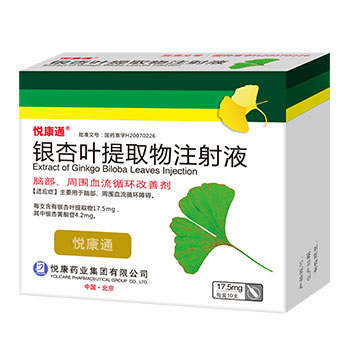
Yikang Pharmaceutical’s core product, Ginkgo Leaf Extract Injection, underwent a sharp price adjustment after being involved in the “one drug, two prices” controversy at the end of 2024. Previously, the product had multiple price systems, including a national listed price of 24.1 yuan per vial and a centralized procurement winning price of 18.14 yuan per vial in some provinces. After price rectification, the national listed price was uniformly adjusted to 11.2 yuan per vial, a decrease of about 53%, and about 38% lower than the centralized procurement winning price [1].
As a traditional Chinese medicine injection, Ginkgo Leaf Extract Injection is mainly used for adjuvant treatment of ischemic stroke, cerebral blood supply insufficiency, and other cardiovascular and cerebrovascular-related diseases. It has long been Yikang Pharmaceutical’s top blockbuster product, with sales approaching 150 million vials in 2021 and a market share of nearly 80% [1]. The price halving of this product directly led to a plunge in the company’s performance.
| Time Node | Operating Revenue | YoY Change | Net Profit | YoY Change |
|---|---|---|---|---|
| 2021 | 4.966 billion yuan | Peak | 544 million yuan | Peak |
| 2023 | 4.197 billion yuan | - | 187 million yuan | -40% |
| First three quarters of 2025 | 1.759 billion yuan | -41.2% | -148 million yuan | -170.6% |
The company fell into its first loss since listing, and brokers generally expect the full-year net profit attributable to shareholders to expand to about 180 million yuan in 2025 [1].
The current traditional Chinese medicine injection industry faces multiple regulatory pressures:
-
Safety Re-evaluation Requirements: The National Medical Products Administration and other departments issued a draft for comments, requiring all traditional Chinese medicine injections listed before the implementation of the Drug Administration Law in 2019 to complete post-marketing safety and efficacy re-evaluation [1].
-
“No Injection Unless Necessary” Principle: Policies require enterprises to prove the irreplaceability of their products, which compresses the market space for traditional Chinese medicine injections.
-
Normalization of Centralized Procurement: The centralized volume-based procurement policy for drugs continues to advance, generic drug prices remain under pressure, and traditional Chinese medicine injections also face downward price pressure.
Facing the impact of centralized procurement, the transformation paths of generic pharmaceutical enterprises show diversified characteristics:
Represented by Yikang Pharmaceutical, the company is actively laying out small nucleic acid innovative drug pipelines and is rated by brokers as “one of the most noteworthy companies in the siRNA field” [1]. In early December, the company announced plans to issue H-shares and list on the main board of the Hong Kong Stock Exchange, trying to open a new financing channel to support innovative drug R&D.
Hengrui Medicine’s transformation path is representative. In July 2025, it reached an authorization agreement with GlaxoSmithKline with a potential total transaction value of 12.5 billion US dollars, setting a record for the single largest BD transaction value of Chinese innovative drugs. From 2023 to the first half of 2025, Hengrui completed multiple blockbuster transactions with global top pharmaceutical companies such as Merck and GSK, and BD revenue has become the second engine of performance growth [2].
For traditional enterprises undergoing transformation, the “dual-platform strategy” may be more realistic:
- Generics as cash flow base: Retain the generic drug business to maintain basic operations and stay at the market table as much as possible
- Innovative drug platform construction: Exchange time for space and seek a new story of “valuation repricing” through the capital market [2]
Fosun Pharma accelerated its innovative drug layout through capital mergers and acquisitions. By 2025, it had completed six external authorization transactions with a potential total amount of about 4 billion US dollars, including an initial payment of 261 million US dollars, demonstrating the international competitiveness of its innovative pipeline [3].
- Long R&D cycle, high investment, and high risk for innovative drugs
- Insufficient internationalization depth, independent commercialization capability remains a shortcoming
- R&D originality bottleneck needs to be broken
- Medical insurance support for the innovative drug industry is unprecedented. As of the end of October 2025, the medical insurance fund has accumulated payments of over 460 billion yuan for negotiated drugs during the agreement period [2]
- Chinese innovative drugs have obvious efficiency advantages in the global industrial chain, with R&D costs only 1/3 of those in the US and R&D cycles that can be shortened by half
- The industrial ecosystem is evolving towards “decentralized R&D, centralized distribution and commercialization”, providing differentiated development space for enterprises with different advantages
The price halving event of Yikang Pharmaceutical’s Ginkgo Leaf Injection is a typical epitome of the survival dilemma of generic pharmaceutical enterprises under the impact of centralized procurement policies. Facing drastic changes in the industry, transforming to innovative drug R&D has become an inevitable choice, but this path is full of challenges. Enterprises need to choose suitable transformation paths based on their own resource endowments: either focus on independent R&D of innovative drugs, quickly acquire mature pipelines through BD transactions, or adopt the “dual-platform strategy” to achieve a smooth transition. In the strategic competition of the “dual catalog” era, only by taking global clinical value as the orientation can enterprises stand out in this value knockout competition.
[1] Sina Finance - “The dividend of traditional Chinese medicine injections fades, Yikang Pharmaceutical ‘transforms’ into a small nucleic acid innovative drug company and plans to list in Hong Kong” (https://finance.sina.com.cn/jjxw/2025-12-27/doc-inhefzec1491602.shtml)
[2] Sina Finance - “The ultimate test of medical insurance dual catalogs: three answers from three 100-billion-yuan pharmaceutical enterprises” (https://finance.sina.com.cn/stock/relnews/hk/2025-12-26/doc-inhecfiq1045630.shtml)
[3] CNFOLLINE - “Can Fosun Pharma with a 160x premium turn stones into gold?” (http://mp.cnfol.com/28928/article/1767060080-142190763.html)
Insights are generated using AI models and historical data for informational purposes only. They do not constitute investment advice or recommendations. Past performance is not indicative of future results.
About us: Ginlix AI is the AI Investment Copilot powered by real data, bridging advanced AI with professional financial databases to provide verifiable, truth-based answers. Please use the chat box below to ask any financial question.