Fed Liquidity Operations Stabilize Year-End U.S. Short-Term Funding Markets
Unlock More Features
Login to access AI-powered analysis, deep research reports and more advanced features
About us: Ginlix AI is the AI Investment Copilot powered by real data, bridging advanced AI with professional financial databases to provide verifiable, truth-based answers. Please use the chat box below to ask any financial question.
Related Stocks
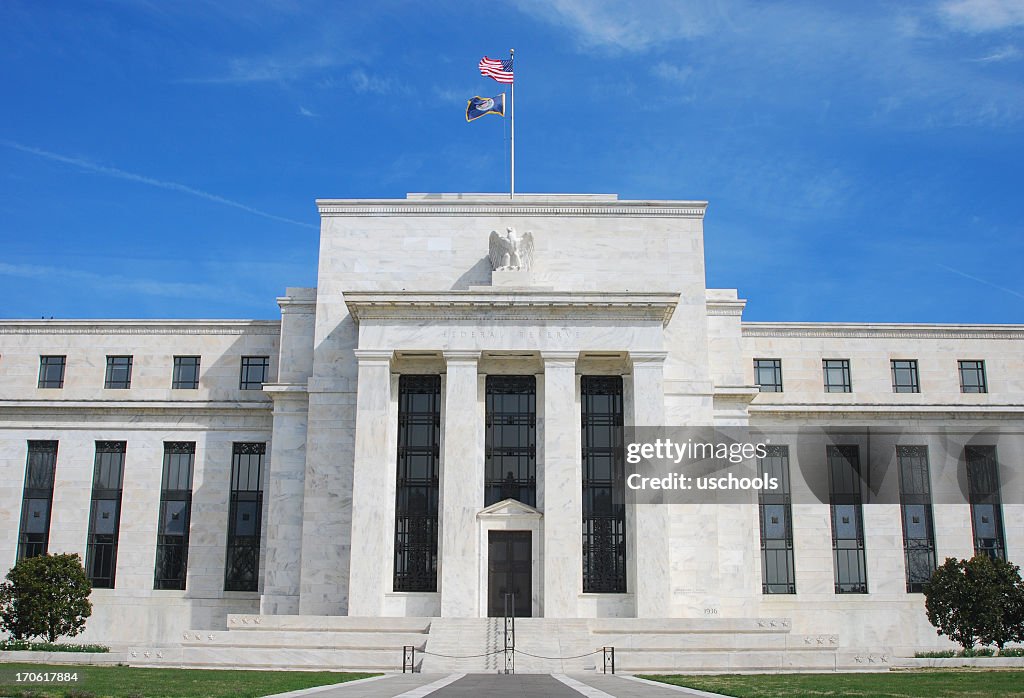
On December 31, 2025, the U.S. Federal Reserve’s liquidity operations—including renewed purchases of short-term government debt and record usage of its Standing Repo Facility (SRF)—helped stabilize year-end short-term funding markets, which experienced typical year-end tension but avoided a more severe liquidity squeeze [1].
Analysis of market data for major U.S. indices shows the event occurred amid low year-end trading volumes and marginal price movements: the S&P 500 (^GSPC) closed down 0.30% at 6,878.38 with 824.99M shares traded (vs. 3.31B the previous day), the NASDAQ Composite (^IXIC) down 0.27% at 23,358.24 with 3.43B shares traded (vs. 6.02B), and the Dow Jones Industrial Average (^DJI) down 0.27% at 48,240.47 with 180.66M shares traded (vs. 282.57M) [0]. Given the low volume and year-end holiday conditions, it is challenging to directly attribute these index declines to the repo facility news, but the Fed’s actions likely prevented broader disruptions that could have spilled over to risk assets.
Supporting reports include a Yahoo Finance article noting the Fed injected $16 billion into the U.S. banking system on December 30, 2025—its second-largest intervention since the COVID-19 crisis [2]. Additionally, Fed December meeting minutes indicated survey respondents expected the central bank to purchase approximately $220 billion in short-term government debt over 12 months to ease money market pressures [3].
- Low Volume Dampens Observable Equity Market Impact: The slight declines in major indices were likely influenced more by year-end holiday trading conditions (low volume) than the Fed’s funding market interventions. This suggests the liquidity actions effectively contained stress to short-term funding markets without significant spillover to broader equity markets.
- Scale of Intervention Signals Persistent Market Needs: The $16 billion injection and record SRF usage—coupled with survey expectations of $220 billion in planned short-term debt purchases—highlight ongoing liquidity demands in U.S. money markets, reigniting debate over hidden underlying stress [2].
- Fed Communication Balances Short-Term Stability and Long-Term Planning: The central bank’s simultaneous year-end liquidity interventions and longer-term debt purchase plans demonstrate a dual focus on immediate funding market stability and addressing structural liquidity constraints.
- Hidden Funding Market Stress: The scale of the Fed’s intervention has renewed debate over unobserved stress in short-term funding markets, potentially indicating underlying issues with bank balance sheet management or regulatory constraints [2].
- Monetary Policy Expectation Shifts: The Fed’s liquidity actions may influence market expectations about future interest rate cuts, creating uncertainty around the central bank’s policy stance.
- Liquidity Withdrawal Risk: Reducing Fed liquidity support in the future could reignite funding market stress, especially during period-end reporting cycles.
- Elevated Asset Volatility Risk: Sustained liquidity injections may encourage excess risk-taking and inflated asset prices, increasing the potential for future volatility.
The Fed’s timely interventions averted a larger liquidity squeeze, maintaining stability in short-term funding markets which underpin critical financial and economic activities, including corporate cash management and interbank lending.
This analysis summarizes the following critical points:
- On December 31, 2025, the Fed used short-term debt purchases and record SRF usage to stabilize year-end short-term funding markets [1].
- Major U.S. indices had slight declines on low trading volume, likely driven by year-end conditions rather than the funding market news [0].
- A $16 billion liquidity injection on December 30 was the Fed’s second-largest since the COVID-19 crisis [2], with planned purchases of $220 billion over 12 months expected [3].
- Risks include hidden funding market stress, policy expectation shifts, liquidity withdrawal concerns, and potential asset volatility [2].
Insights are generated using AI models and historical data for informational purposes only. They do not constitute investment advice or recommendations. Past performance is not indicative of future results.
About us: Ginlix AI is the AI Investment Copilot powered by real data, bridging advanced AI with professional financial databases to provide verifiable, truth-based answers. Please use the chat box below to ask any financial question.