Box Office Recovery Drives Valuation Repair of China's Film and Television Sector
Unlock More Features
Login to access AI-powered analysis, deep research reports and more advanced features
About us: Ginlix AI is the AI Investment Copilot powered by real data, bridging advanced AI with professional financial databases to provide verifiable, truth-based answers. Please use the chat box below to ask any financial question.
Related Stocks
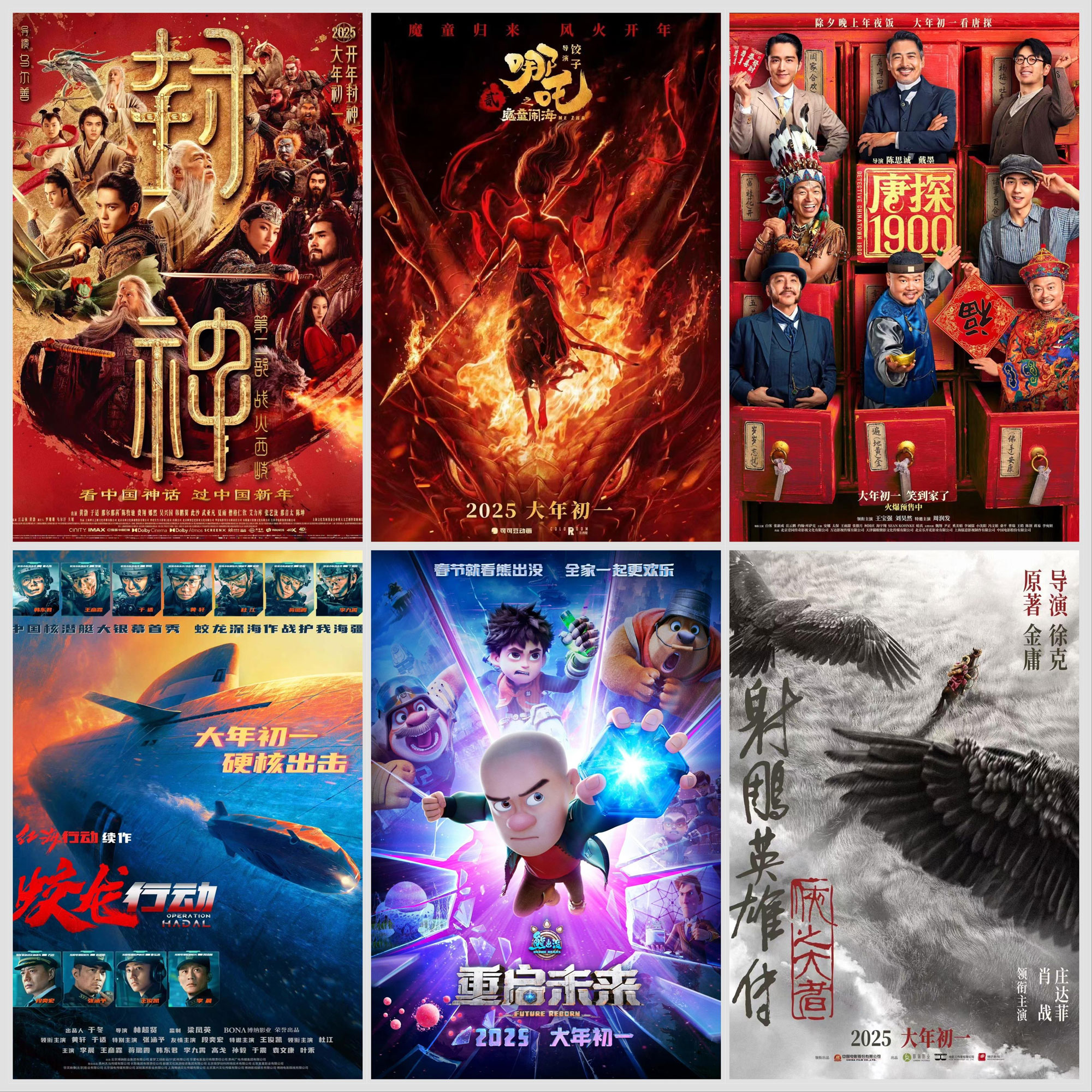
Since the 2025 Lunar New Year box office period, Chinese cinemas have seen a significant recovery: According to statistics, the cumulative box office in the first few weeks of 2025 is 23.1% higher than that of 2024. Avatar 3 (2025 Version) has been the weekend box office champion in the Chinese market for several consecutive weeks, driving the weekly box office to exceed 166 million yuan, with cumulative box office exceeding about 700 million yuan (still growing rapidly), reflecting the pulling power of top IPs on movie-going momentum [1]. The high-frequency traffic brought by top blockbusters has a multiplier effect on supporting cinema seats, increasing movie-going人次 and per-hall revenue, and also allows operators to摊薄 fixed costs with higher average ticket prices + premium screenings like IMAX/4DX. This positive feedback of “the strong get stronger” directly lifts cash flow forecasts for the next few quarters.
Against the backdrop of this recovery, the capital market has begun to repair the valuation of film and television enterprises. Taking Beijing Culture system representatives with high发行与院线联动度 (e.g., Beijing Culture/Enlight Media/Huayi Brothers) as examples, their current P/E ratios are generally low: Beijing Enlight Media (300251.SZ) has a P/E ratio of around 22x, while the company maintains a net profit margin of over 40% and a current ratio of nearly 4x, reflecting its good cash flow turnover and ability to “act quickly” from the box office upturn [0]. On the cinema side, Wanda Film (002739.SZ) is still in the negative profit zone, but its operating cash flow continues to be positive and free cash flow is close to 1.1 billion yuan. If ticket bookings continue to rise, marginal profit expectations will bring high valuation elasticity, especially since its current book-to-market ratio is about 3.1x and historical valuation level is lower than pre-pandemic levels, which is expected to become an off-domain target for valuation repair [0].
The cash flow brought by top blockbusters like Avatar 3 is not only reflected in direct box office but also transmitted to the entire film and television ecosystem through the following channels:
- Cinema Scheduling and Seat Utilization Improvement: An IP-level film usually occupies screen resources during the golden period of the Lunar New Year档, enabling cinemas to achieve profit leverage during the period of high ticket prices and high attendance, further guiding the capital market to reprice cinema stocks;
- Derivative Content and Distribution Revenue: Distributors and theme film producers can obtain higher proportions of scheduling revenue sharing, adaptation rights sales, etc., relying on strong traffic. Represented by companies with full industry chain capabilities like Beijing Enlight Media, their content production, copyright output, and “film + schedule” synergy are expected to receive additional valuation;
- Driving Upstream and Downstream Capital Investment: When several blockbusters form a “serial rhythm”, the operating leverage of suppliers such as ticketing platforms, promotional marketing, and special effects production is also activated, and the profit expectations of the entire sector rise.
Under this framework, investors can focus on the following directions: ① Content supply companies with strong IP reserves, cost control capabilities, and internal and external distribution channels (e.g., Beijing Enlight Media, Huayi Brothers); ② Cinema operators with high-margin scheduling capabilities, ticket revenue sharing model advantages, and stable cash flow (e.g., Wanda Film); ③ Cinema assets that are more dependent on overseas markets or high-end formats (IMAX/4DX) and can absorb premiums. If the recovery path continues, valuation will gradually shift from “profit recovery” to “growth expectation”.
- Verify Whether Growth Is Sustainable: Continuously track the scheduling share and box office contribution of mainstream blockbusters (e.g., Avatar 3, The Wandering Earth 4) across the country to determine whether they can drive two-way improvement of “ticket price + 人次”;
- Marginal Profit and Cash Flow: Focus on the recovery of cinema gross profit margins and the positive cash flow after 摊薄 fixed costs, while paying attention to whether content companies avoid over-reliance on low-quality projects—capital efficiency can only be guaranteed after systematic content review;
- Key Indicators for Valuation Premium: For example, Enlight Media’s net profit margin is 61% and ROE is 21%. If the box office is stable, the current 22x PE level has room for further compression; in contrast, although Wanda Film’s current P/E is -60x, as long as it returns to positive profit for several consecutive quarters, its valuation reversal space is large.
For more in-depth cross-comparisons (e.g., profit models of cinemas and online video platforms, national scheduling concentration, etc.), you can consider enabling the
Insights are generated using AI models and historical data for informational purposes only. They do not constitute investment advice or recommendations. Past performance is not indicative of future results.
About us: Ginlix AI is the AI Investment Copilot powered by real data, bridging advanced AI with professional financial databases to provide verifiable, truth-based answers. Please use the chat box below to ask any financial question.