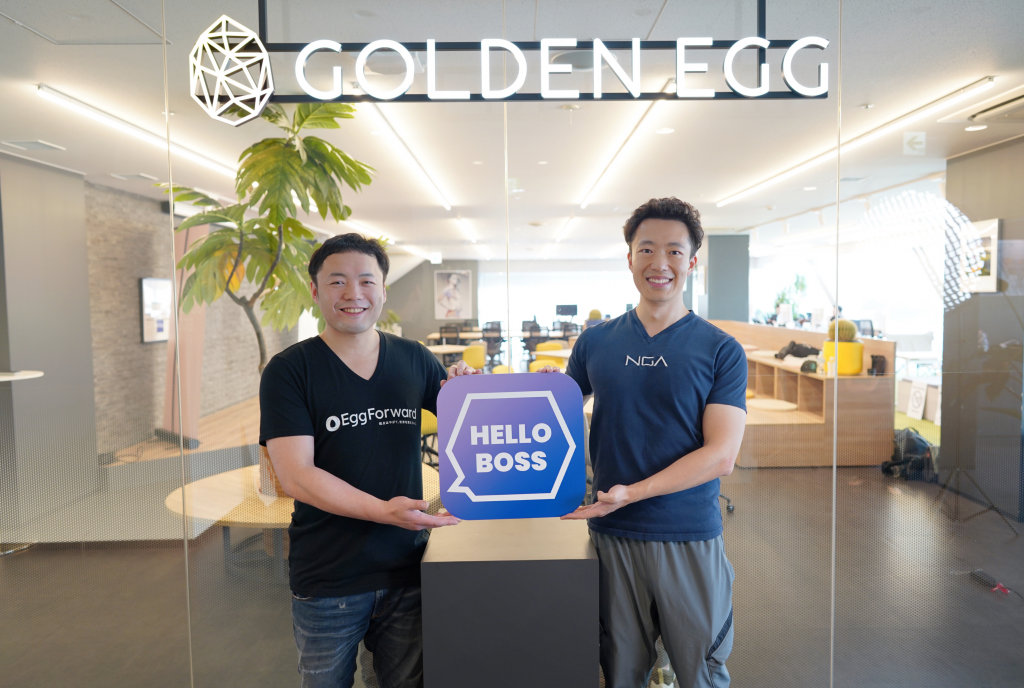
Strategic In-Depth Analysis of Bertelsmann's Investment in HelloBoss
Unlock More Features
Login to access AI-powered analysis, deep research reports and more advanced features
About us: Ginlix AI is the AI Investment Copilot powered by real data, bridging advanced AI with professional financial databases to provide verifiable, truth-based answers. Please use the chat box below to ask any financial question.
As a large German European enterprise with
BAI Capital, established by Bertelsmann as an investment arm for the Asian market (now operating as an independent VC), has an impressive investment track record:
- Invested in over 200 enterprises
- Nurtured 17+ IPO enterprises
- Cultivated 40+ unicorn enterprises[2]
This investment took place at the end of 2025, at the intersection of two major trends:
- Third-generation AI Agent technology matured
- Patent technology forms competitive barriers
- Platform revenue grew 10x in two years since launch [1]
- Japan’s average effective job opening-to-application ratio is 1.31 (1.3 positions per job seeker)
- Effective job opening-to-application ratio for fresh graduates is as high as 6x
- Labor shortage is “more severe than before the COVID-19 pandemic” [3]
HelloBoss founder Wang Qin proposed a classic analytical framework:
“Use a coordinate axis to measure the commercial prospects of AI Agents: the horizontal axis is market size, the vertical axis is the gap between AI capabilities and current market technology status” [3]
- Prepaid recruitment advertising market: 10 billion USD
- Success fee (headhunting) market: 12 billion USD[1]
- Annual growth rate over 7%, making it the world’s “most expensive” human resources market
- Traditional Japanese headhunters still rely on spreadsheets and CRM tools
- 30,000 headhunting companies, 65,000 practitioners [3]
- Average recruitment cycle of 2-3 months, insufficient informatization
Japan’s average headhunting fee rate of
Traditional recruitment platforms mostly use subscription or prepaid models, while HelloBoss launched a “success fee” (pay-for-results) model:
Model Comparison |
Traditional Subscription |
Pay-for-Results (HelloBoss) |
|---|---|---|
| Enterprise Risk | Prepaid, no result guarantee | Pay only when recruitment succeeds |
| Recruitment Cycle | 2-3 months | 30 minutes to publish [1] |
| Process Automation | <30% | 90% of processes done by AI [3] |
| SMB Entry Barrier | High (fixed cost) | Low (pay-per-effect) |
This model greatly reduces enterprise trial-and-error costs, especially attractive to small and medium-sized enterprises—
HelloBoss’s core competitiveness lies in
- 5.5 million Japanese enterprise database (largest in the industry)
- AI automatically generates compliant job descriptions
- Learns unstructured preference needs of enterprises
- Intelligent matching evaluation + reason explanation
- Full-process chat assistance + interview record sharing [1]
- Resume AI analysis + modification
- Intelligent recommendation from 500,000+ positions
- Map interface drag-and-drop application
- Complete resume creation and application in 1 minute[1]
- Patented matching algorithm (Patent No. 7299663) [2]
- Former BOSS直聘 Chief Scientist Xue Yanbo serves as technical advisor
- Development team from ByteDance, Tencent, Alibaba, Indeed, etc. [3]
HelloBoss’s customer matrix is highly convincing:
- Chinese Overseas Giants:Alibaba, SHEIN
- International Luxury Brands:DIOR
- Global Service Industry:Hilton
- Tech Giants:Google
- Japanese Local:Hitachi, Lawson, Suntory [1]
This customer mix indicates:
- Platform capabilities meet complex needs of multinational enterprises
- Has a foundation for global expansion
- Has passed PMF (Product-Market Fit) verification stage
- Achieved commercialization in the first year of launch
- 2024 revenue grew 10x YoY [3]
- Plans to achieve profitability in 2026[1]
- AI Agent and front-end/back-end product R&D
- Global market expansion (focus: Europe, high-aging regions)
- Team expansion (recruit senior headhunters to empower model training) [1]
- About 10 million people have job-changing intentions annually
- 3.3 million successfully change jobs
- 800,000 use headhunting channels [1]
- Blue-collar jobs also rely on headhunters(e.g., taxi drivers) [3]
- Enterprise manpower shortage continues to worsen
- Long recruitment cycle (2-3 months)
- High traditional headhunting costs (35% fee rate)
- Insufficient informatization [3]
- Current population over 60: about 310 million
- Expected to reach 390 million by 2030[4]
- Silver Economy scale: trillion-level market
- Japan: 29% of population over 65
- Italy, Germany, France follow closely
- Employment market supply-demand imbalance will become a global phenomenon
According to market research data:
- 2024 global AI recruitment market size: 690 million USD
- Expected to reach 1.07 billion USD by 2033
- CAGR: 4.89%[5]
- About 66% of enterprises shift from traditional recruitment to AI tools [5]
- 74% of companies use AI to reduce recruitment cycles
- 68% of recruiters use AI video interviews
- 63% of companies report improved workforce diversity [5]
Against the background of aging, this model is more attractive:
- Reduce recruitment costs (from 35% fee rate)
- Shorten recruitment cycle (from 2-3 months to weeks)
- Improve matching quality (AI precise recommendation)
- Simplify job application process (1-minute application)
- Discover more opportunities (500,000+ position library)
- Improve matching degree (AI analysis of personal abilities) [1]
- Reduce customer acquisition costs (natural spread due to good results)
- Improve customer stickiness (trust from pay-per-effect)
- Sustainable revenue model (charge only when successful)
As the value of AI recruitment platforms is recognized, competitors are accelerating entry:
- Liepin has launched “AI Headhunting” service
- 51job has built a four major intelligent agent product system
- OpenAI plans to launch an AI-native recruitment platform in 2026 [5]
Obstacles to international expansion:
- Strict Japanese labor laws (high dismissal costs)
- Strong European trade unions
- Recruitment cultural differences across countries [6]
AI recruitment faces potential regulation:
- Algorithm bias and discrimination issues
- Data privacy protection
- AI decision transparency requirements [5]
- Penetration rate improvement (current 500,000 positions / 10 million job-changing intentions in Japan)
- Customer structure optimization (penetration from tech enterprises to traditional industries)
- Profitability timeline verification (2026 target)
- Continuous worsening of Japanese labor shortage
- Increasing cost reduction pressure on enterprises
- Continuous iteration of AI capabilities
- South Korea (similar aging level to Japan)
- Italy, Germany (European aging countries)
- China (rising silver economy, but need to adapt to local competition)
- Leverage Bertelsmann’s European resources
- Replicate Japanese success model
- Localization team + technical adaptation
- Become the “recruitment infrastructure” for global aging societies
- Cover all scenarios of blue-collar, white-collar, and gold-collar jobs
- Extend from recruitment to training and career planning
- Deep integration with enterprise HR systems
- Full-cycle career services
- Cross-border talent flow platform
When looking for investment opportunities in aging societies, refer to Wang Qin’s “Dual-Axis Model”:
- Horizontal Axis:Whether the market size is large enough (rigid demand × high-frequency scenarios)
- Vertical Axis:Whether technology can bring 10x efficiency improvement
Focus on:
- Enterprises with core data barriers(e.g., HelloBoss’s 5.5 million enterprise library)
- Business model innovation(pay-for-results vs subscription)
- Global vision(start from the most aging market)
- Clear profit path(not burning money for growth)
- Avoid pure technology companies (need deep industry understanding)
- Avoid platform models without barriers (easily copied by giants)
- Focus on localization capabilities (key to global expansion)
Bertelsmann’s investment in HelloBoss is a
- Precise Timing:AI technology maturity + aging intensification
- Market Selection:Start from Japan (most aging, highest recruitment cost)
- Model Innovation:Pay-for-results reduces enterprise risk
- Technical Barriers:Patent + data + full-stack AI capabilities
- Global Layout:Leverage BAI’s global resource network
- Certainty:⭐⭐⭐⭐⭐ (labor shortage is a structural trend)
- Market Scale:⭐⭐⭐⭐⭐ (12 billion USD in Japan, hundreds of billions globally)
- Technical Feasibility:⭐⭐⭐⭐ (90% process automation verified)
- Profitability:⭐⭐⭐⭐ (pay-for-results model + low marginal cost)
- Global Potential:⭐⭐⭐⭐ (aging is a global trend)
This is an investment opportunity with both
[1] 36Kr - “Targeting Pain Points in Overseas Recruitment Market, This ‘AI Headhunting’ App Receives Investment from Media Giant Bertelsmann” (https://m.36kr.com/p/3619067392836613)
[2] HRTechChina - “AI-Driven Recruitment Platform HelloBoss Secures Series A Funding” (https://www.hrtechchina.com/tag/a轮融资)
[3] 36Kr - “This ‘AI Headhunting’ App Receives Investment from Media Giant Bertelsmann” (https://www.36kr.com/p/3619067392836613)
[4] Securities Times - “Policy Guidance Drives Silver Economy to a Trillion-Dollar Blue Ocean Market” (https://stcn.com/article/detail/3557106.html)
[5] Global Growth Insights - “AI Recruitment Market Trends and Report 2025–2033” (https://www.globalgrowthinsights.com/zh/market-reports/ai-recruitment-market-116973)
[6] NetEase News - “Limited Budget: How to Recruit on Xiaohongshu and Twitter for AI Teams?” (https://www.163.com/dy/article/KHPNBJUG05566TJ2.html)
中国网民热搜行为变化与消费情绪转变的深度分析及投资参考
Insights are generated using AI models and historical data for informational purposes only. They do not constitute investment advice or recommendations. Past performance is not indicative of future results.
About us: Ginlix AI is the AI Investment Copilot powered by real data, bridging advanced AI with professional financial databases to provide verifiable, truth-based answers. Please use the chat box below to ask any financial question.