Analysis of the Impact of CATL's Sodium-Ion Battery Mass Production on Industry Landscape
Unlock More Features
Login to access AI-powered analysis, deep research reports and more advanced features
About us: Ginlix AI is the AI Investment Copilot powered by real data, bridging advanced AI with professional financial databases to provide verifiable, truth-based answers. Please use the chat box below to ask any financial question.
Related Stocks
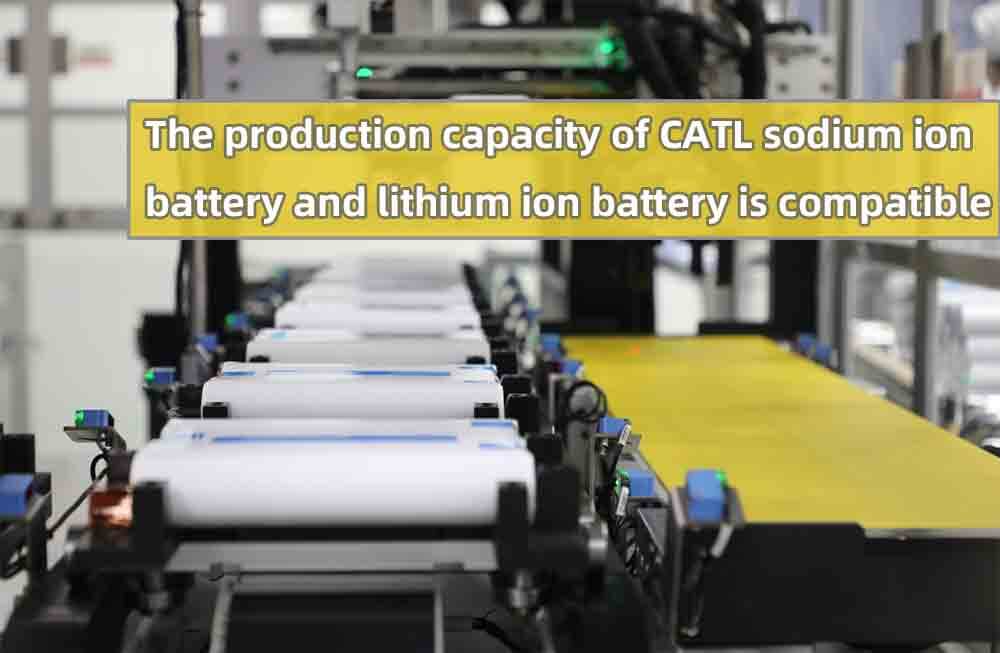
On December 28, 2025, CATL officially announced at its supplier conference that sodium-ion batteries will be widely applied in four major fields—battery swapping, passenger vehicles, commercial vehicles, and energy storage—in 2026, marking the first year of commercialization for sodium-ion batteries [1][2]. The company named its sodium-ion battery brand “Naxtra”, aiming to form a “dual-star shining” collaborative development pattern with lithium-ion batteries [3].
In terms of technological evolution, CATL has long had in-depth layout in the sodium-ion battery field. It launched its first-generation sodium-ion battery in July 2021, using Prussian blue (white) as the cathode material with an energy density of 160Wh/kg; in April 2025, at its “Super Technology Day”, it released the second-generation sodium-ion battery “Naxin”, which uses layered oxide cathode material and has an energy density of 175Wh/kg—claimed to be the highest level globally for sodium-ion batteries [1][2]. More importantly, this product has passed the new national standard certification, becoming the world’s first sodium-ion battery to do so, and is currently advancing development and implementation work with customers [1].
The sodium-ion battery market is in an explosive growth stage. Global sodium-ion battery shipments reached 6GWh in the first three quarters of 2025, an increase of 202% year-on-year [2]. According to Research Nester data, the global sodium-ion battery market size will exceed $434 million in 2025, and is expected to reach $2.41 billion by 2035, with a compound annual growth rate of 18.7% [4]. The Starting Point Research Institute (SPIR) predicts that the sodium-ion battery market size will exceed 1TWh (terawatt-hour) by 2030 [2].
In terms of cost, sodium-ion batteries show significant advantages. In 2025, the average prices of layered oxide and polyanion sodium-ion batteries were 0.6 CNY/Wh and 0.55 CNY/Wh respectively, and are expected to drop to 0.25 CNY/Wh and 0.15 CNY/Wh by 2035 [2]. Due to the abundant reserves and stable prices of sodium resources, sodium-ion batteries have natural advantages in raw material cost control.
The industry’s positioning of sodium-ion batteries has undergone a fundamental change. Unlike the “substitute” stance during the high lithium carbonate prices in 2022, the current industry consensus is that sodium-ion batteries are not a substitute for lithium-ion batteries, but an important supplement [2]. The two are highly similar in working principle and structure, both relying on ion movement between positive and negative electrodes to achieve charging and discharging, but each has its own focus in performance characteristics—sodium-ion batteries excel in safety, low-temperature performance, and overcharge/overdischarge tolerance, while lithium-ion batteries have more advantages in energy density and cycle life [2].
In 2025, lithium carbonate prices rose by 47.7% within the year, leading to disagreements between lithium salt producers and cathode material manufacturers on pricing benchmarks, and some enterprises suspended production due to profit pressure [5]. CATL’s promotion of sodium-ion battery mass production at this time is precisely to reduce dependence on lithium resources, control costs, and respond to supply chain fluctuations [5]. This has strategic significance for the entire new energy vehicle industry to address raw material price risks.
The unique performance advantages of sodium-ion batteries make them irreplaceable in specific scenarios. In low-temperature environments, sodium-ion batteries perform particularly well—tests show that in an environment of -30°C, it takes only 30 minutes to charge from 30% to 80%, with available power reaching 93%, and can maintain a high-speed drive of 120km/h in a 10% SOC low-power state; even in an extremely cold environment of -40°C, charging and discharging capabilities remain excellent [1]. This has important value for the promotion of new energy vehicles in northern markets and alpine regions.
In the energy storage field, data center energy storage allocation is considered one of the scenarios with the highest compound annual growth rate in the next decade. Due to the complex and strict requirements of data centers for energy storage batteries, some manufacturers have begun to adopt parallel solutions of sodium-ion and lithium-ion technology routes [2]. The world’s first lithium-sodium synergy AIDC full-duration energy storage solution released by Haichen Energy Storage is a typical case—sodium-ion batteries are responsible for high-frequency rapid response to millisecond-level instantaneous peak loads, while lithium-ion batteries provide continuous and stable long-term energy storage [2].
As a leader in the global power battery industry, CATL’s global market share reached 38.1% from January to October 2025, and even higher at 42.9% in the Chinese market (as of November) [5]. Its large-scale promotion of sodium-ion batteries will further consolidate its market position, and also force competitors to accelerate technology layout. Enterprises such as Zhongke Haina, Penghui Energy, and Chuanyi Technology are all actively promoting sodium-ion battery industrialization, and industry competition will enter a new stage.
The industry generally believes that 2026 is a key node for the real commercialization of sodium-ion batteries [2]. With the expansion of scale and improvement of energy density, the cost of sodium-ion batteries is expected to be reduced by half in the next two to three years [2]. CATL’s “dual-star strategy”—parallel development of sodium-ion and lithium-ion batteries—provides a development paradigm for the industry, and it is expected that more enterprises will follow suit and adopt similar strategies.
From an investment perspective, the sodium-ion battery industry chain (positive and negative electrode materials, separators, electrolytes) will usher in development opportunities, but it should be noted that it is still in the early stage of commercialization, and the technical route has not yet fully converged. Investors should pay attention to technical progress and order implementation. At the same time, the lithium-ion battery industry chain will still dominate the high-end market, and the two will form a differentiated competition pattern.
[1] Electronic Engineering Album - CATL: Sodium-ion Batteries Will Be Widely Applied Next Year (https://www.eet-china.com/mp/a463387.html)
[2] Era Energy Storage Network - CATL Will Widely Apply Sodium-ion Batteries (https://eraes.com.cn/newsinfo/8898797.html)
[3] S&P Global AutoTechInsight - CATL expects a wider uptake of sodium-ion batteries in 2026 (https://autotechinsight.spglobal.com/news/5285852/catl-expects-a-wider-uptake-of-sodium-ion-batteries-in-2026)
[4] Research Nester - Sodium-ion Battery Market Size and Share, Growth Forecast to 2035 (https://www.researchnester.com/cn/reports/sodium-ion-battery-market/6419)
[5] Caixin - CATL to Roll Out Sodium-Ion Batteries in 2026 to Cut Lithium Reliance (https://www.caixinglobal.com/2025-12-30/catl-to-roll-out-sodium-ion-batteries-in-2026-to-cut-lithium-reliance-102398736.html)
Insights are generated using AI models and historical data for informational purposes only. They do not constitute investment advice or recommendations. Past performance is not indicative of future results.
About us: Ginlix AI is the AI Investment Copilot powered by real data, bridging advanced AI with professional financial databases to provide verifiable, truth-based answers. Please use the chat box below to ask any financial question.