HBM4 Competitive Landscape: Samsung's Ambitions vs SK Hynix & Micron
Unlock More Features
Login to access AI-powered analysis, deep research reports and more advanced features
About us: Ginlix AI is the AI Investment Copilot powered by real data, bridging advanced AI with professional financial databases to provide verifiable, truth-based answers. Please use the chat box below to ask any financial question.
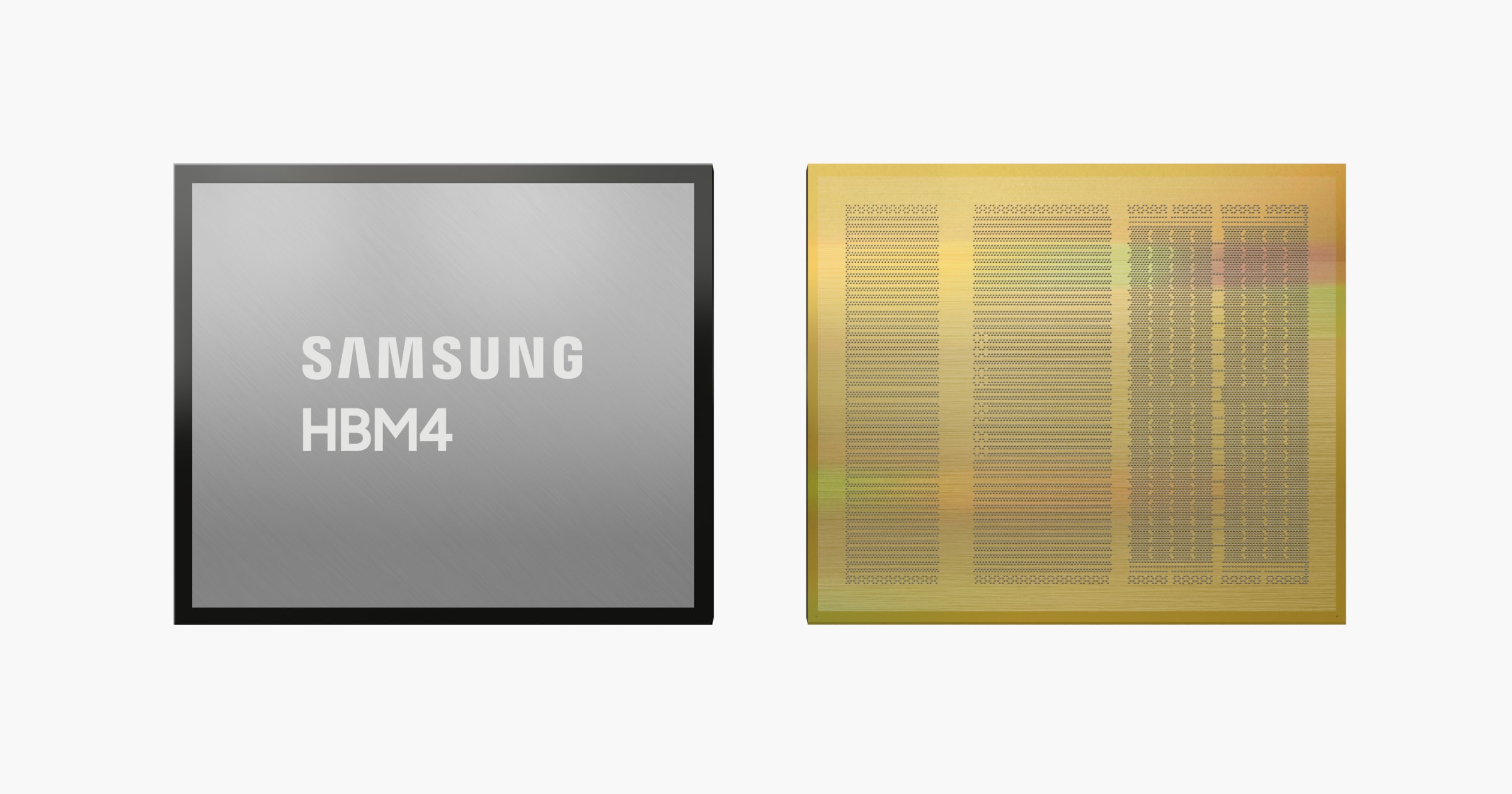
- Benefiting from customer approval of its HBM4 products, Samsung Electronics’ stock price rose consecutively at the start of the year and hit a new all-time high, with a market capitalization approaching 838 trillion KRW and a PE ratio of approximately 25.8x, indicating the market’s high expectations for the recovery of its AI storage business [0].
- Currently, the global HBM supply is still dominated by three oligopolies: Samsung, SK Hynix, and Micron. The first two hold approximately 57%-60% (SK Hynix) and 22%-30% (Samsung) of the market share respectively, with Micron closely following. Due to the surging demand for bandwidth in AI training/inference, HBM3E prices have even increased by about 20% compared to last year, and each GPU on the next “NVIDIA Rubin” platform is expected to require 8 HBM4 stacks, further widening the supply-demand gap [2][3].
- AI giants such as NVIDIA, Meta, and Google are putting forward higher requirements for customized HBM, expanding the emerging sub-track of “cHBM + LPDDR Direct Connection”. In the CEO’s New Year address, Samsung emphasized that “HBM4 has received customer approval” and proposed to seize the initiative in the supply chain by leveraging its “one-stop” IDM integration advantages [1].
- Capacity and Customer Orientation
- Samsung plans to increase HBM4 production by approximately 50% by the end of 2026, targeting direct supply to NVIDIA’s next Rubin platform and other AI accelerator manufacturers, and seizing the “early order pool” through a good delivery rhythm [1].
- “Acceleration” from IDM/Turnkey Integration
- Unlike SK Hynix, which relies on TSMC’s logic process, Samsung independently develops logic base chips, DRAM stacking, and packaging, forming a “turnkey” model covering design-manufacturing-packaging. This model can reduce adjustment time by more than 20% when customers need customized Base Die (e.g., integrating LPDDR, controllers, or part of PIM into the bottom layer), providing customers with “low-latency and fast verification” version iterations [6].
- Technology Stack and Ecosystem Support
- According to the HBM roadmap, HBM4 starts with 16-layer stacking, 2TB/s bandwidth, and a customizable Base Die that can be directly connected to LPDDR, suitable for mid-to-high-end AI training and inference scenarios that balance capacity and bandwidth. In addition, Samsung has simultaneously promoted liquid cooling (D2C), packaging thermal management, and “silicon + glass” interposers to improve yield and density [5].
- SK Hynix: In 2025, it announced the “Full-Line AI Storage Creator” strategy, covering three major paths: customized HBM, AI-DRAM, and AI-NAND, and has deep cooperation with seven tech giants in customized HBM (cHBM). SK has entrusted TSMC to manufacture the HBM4 logic layer and is building a packaging plant in the US to strengthen global delivery; its customized HBM capability is especially regarded as the software-hardware synergy of “logic + controller + protocol”, which helps to further lock in high-stickiness customers such as NVIDIA/Google [4].
- Micron: It has announced a gradual exit from the consumer-grade Crucial business and a full shift to high-value AI storage. It has invested approximately 96 billion USD in Japan to expand HBM capacity and promote customized HBM4E layout, indicating that it has completely shifted its capital and production line focus to AI [4][7]. This allows Micron to advance both DRAM and NAND lines while also having the synergistic ability to provide “full-stack” memory and SSDs for AI servers.
- Opportunities: Samsung’s IDM integration advantages and “turnkey” delivery give it a clear response speed in HBM4c scenarios that require rapid integration of logic, packaging, and DRAM (e.g., NVIDIA Rubin, customized GPU+HBM composite packaging); it recently converted part of its Pyeongtaek P3 and P4 lines to 1c DRAM HBM lines, with a monthly output of 170,000 wafers, leading SK in the short term [6], providing a foundation for mass production and yield.
- Challenges: SK Hynix has long dominated the NVIDIA supply chain, with deep cooperative relationships and customizable designs based on TSMC’s advanced logic process, and is jointly developing a “GPU+HBM core” hybrid solution with AI giants; Micron also maintains strong capital output in AI storage networks and under the rising HBM yield [2][3][4][7]. In addition, the technical complexity of the transition from HBM4 to HBM4E (thermal management, Base Die customization, packaging) requires Samsung to further improve its packaging/testing capabilities and customer engineering support in the short term.
- Time Window: During the window from early 2026 to the mass production of Rubin, if Samsung can accelerate penetration through capacity expansion and customized customer projects, it can strive for a market share balance with SK Hynix; however, to completely surpass, it still needs to continuously prove the stability of “high yield + high customization” in 2026-2027 and maintain strategic cooperation with core customers such as NVIDIA.
Samsung’s HBM4 “customer approval” signals its return to competition in the AI storage track, but to form a structural lead based on the customized, high-capacity, and customer relationship foundations that SK Hynix and Micron have already deeply cultivated, it needs:
- Stable capacity and yield(especially logic base + thermal management integration);
- Customization capabilities for Rubin and subsequent AI architectures(e.g., Base Die with built-in MC, LPDDR direct connection, etc.);
- Establish deeper joint R&D/pre-research projects with major AI customers(enhance the value of “turnkey delivery”).
If Samsung continues to deliver on the 50% capacity increase in 2026 and achieves the “customization + delivery” closed loop in multiple AI accelerator projects, it is indeed expected to gradually catch up and even form a two-polar competitive pattern with SK Hynix. However, considering the customer lock-in and technical expansion of SK and Micron, Samsung still needs to integrate capacity speed, yield, and customer customization in the next 18-24 months to achieve “complete reshaping”. If deeper details on capacity and customer cooperation are needed, consider enabling the deep research mode to further explore order and engineering data in brokerage databases.
[0] Jinling API Data (2026-01-02).
[1] AInvest - “Samsung Advances HBM4 Chip Supply for 2026 AI Expansion” (https://www.ainvest.com/news/samsung-advances-hbm4-chip-supply-2026-ai-expansion-2601/).
[2] FinancialContent - “SK Hynix and Samsung Clash Over Next-Gen HBM4 Dominance” (https://markets.financialcontent.com/wral/article/tokenring-2026-1-1-the-battle-for-ais-brain-sk-hynix-and-samsung-clash-over-next-gen-hbm4-dominance).
[3] TweakTown - “SK hynix, Samsung, and Micron fighting for NVIDIA supply contracts for new 16-Hi HBM4 orders” (https://www.tweaktown.com/news/109495/sk-hynix-samsung-and-micron-fighting-for-nvidia-supply-contracts-for-new-16-hi-hbm4-orders/index.html).
[4] OFweek - “Storage Giant Makes a Bold Move! SK Hynix’s New Killer Strategy” (https://mp.ofweek.com/ic/a056714479557).
[5] 36Kr - “10,000-Word Analysis of the 371-Page HBM Roadmap” (https://m.36kr.com/p/3598968891293959).
[6] 36Kr - “HBM, New Changes, Stirring Up the Storage Industry” (https://m.36kr.com/p/3583482446937225).
[7] International ESM China - “30-Year Consumer Storage Legend Ends, Micron Shifts to High-Value AI Track” (https://www.esmchina.com/news/13718.html).
Insights are generated using AI models and historical data for informational purposes only. They do not constitute investment advice or recommendations. Past performance is not indicative of future results.
About us: Ginlix AI is the AI Investment Copilot powered by real data, bridging advanced AI with professional financial databases to provide verifiable, truth-based answers. Please use the chat box below to ask any financial question.