Analysis of the Impact of Fujitsu's HBM Technology Breakthrough on the Memory Chip Industry Chain and Investment Opportunities
Unlock More Features
Login to access AI-powered analysis, deep research reports and more advanced features
About us: Ginlix AI is the AI Investment Copilot powered by real data, bridging advanced AI with professional financial databases to provide verifiable, truth-based answers. Please use the chat box below to ask any financial question.
Related Stocks
Based on the latest market dynamics and technological breakthroughs, Jinling AI provides an in-depth analysis of the impact of Fujitsu’s HBM technology breakthrough on the memory chip industry chain and investment opportunities for you.
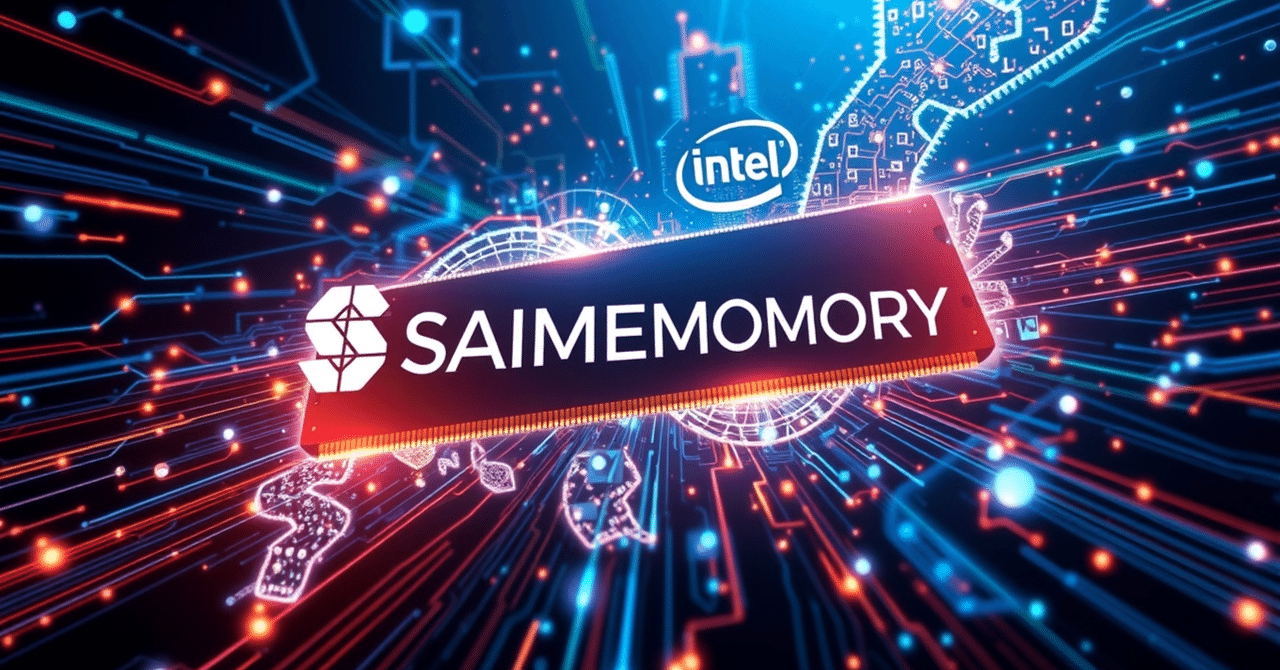
In December 2025, Fujitsu announced its participation in the SAIMEMORY new memory R&D cooperation project led by SoftBank Group and Intel [1]. The project aims to develop HBM memory alternatives, targeting to achieve prices equivalent to or lower than HBM, while providing 2-3 times the capacity and 50% lower power consumption. The project plans to reach a total investment of 8 billion yen by fiscal 2027, with SoftBank contributing 3 billion yen, and Fujitsu and RIKEN jointly contributing 1 billion yen [1].
This breakthrough marks a new competitive landscape in memory chip technology. The market positions of the traditional HBM three giants (SK Hynix, Samsung, Micron) are facing challenges, while also bringing new development opportunities to the entire industry chain.
The technological iteration of memory chips directly drives the continuous rise in demand for upstream materials and equipment [2]:
- Electroplating Solution and Photoresist:Iteration of HBM and 3D NAND technologies drives demand growth
- Etching Equipment:12-inch high-end etching equipment has achieved mass production applications from 65nm to 5nm and more advanced processes [3]
- Thin Film Deposition Equipment:Large-scale application in advanced 3D NAND and DRAM memory chip production lines
- North Huachuang (002371):Domestic semiconductor equipment leader, providing memory chip etching machines and thin film deposition equipment, has entered the supply chain of CXMT and Yangtze Memory, with memory equipment revenue growing 45% year-on-year in Q3 2025 [4]
- SMIC:In the HBM chip manufacturing field, it can provide multiple core equipment such as deep silicon etching, thin film deposition, heat treatment, wet cleaning, and electroplating [3]
- Jianghuai Micro (603078):Leading enterprise in semiconductor wet electronic chemicals, products used in memory chip cleaning and etching links, supplying CXMT and Hua Hong Semiconductor, with revenue growing 30% year-on-year in 2025 [4]
High-end memory technology iteration drives explosive growth in packaging and testing demand, with HBM and DDR5-related packaging and testing links benefiting deeply [2]:
- HBM requires 8-16 layers of chip stacking
- Dependent on 5-micron diameter micro-bump connections
- Extremely high technical thresholds
- Changdian Technology:The world’s third-largest packaging and testing enterprise, with a 25% market share in memory packaging and testing, and a 20% global share in HBM packaging [2]
- Shenzhen Technology (000021):Core partner of CXMT, undertaking DRAM packaging and testing business, while providing memory module OEM services for Micron, Samsung, etc. [4]
The global HBM supply-demand gap continues to expand, and prices continue to rise [2]:
- Global HBM demand has surged 300% year-on-year
- DDR5 memory penetration rate has soared from 20% to 45%
- The average selling price (ASP) of memory chips is several times that of ordinary DRAM
- Samsung plans to increase HBM monthly capacity to 250,000 wafers by the end of 2026, an increase of up to 47% [5]
- Micron has sold out all HBM capacity in 2025 and signed most supply agreements for 2026 [6]
- CXMT plans to launch HBM3E in 2026 and HBM4 in 2027, with its global DRAM share rising from 7% in 2025 to 10% in 2027 [6]
AI servers have far higher demand for memory chips than ordinary servers, forming a synergistic growth effect [2]:
- Procurement executives from tech giants such as Microsoft and Google have collectively stationed in South Korea to grab goods
- Google has fired relevant responsible persons due to HBM supply risks
- AI-driven “memory instead of computing” demand has exploded
HBM technology iterates rapidly, launching a new generation every 1-2 years [6]:
- HBM2E → HBM3E → HBM4 standard (released in 2025)
- Each generation requires redesign, verification, and packaging
- Yield challenges are huge, strengthening the advantages of leading players
The memory chip price increase wave ran through the whole year of 2025 [2]:
- Memory prices in Q3 rose sharply by 171.8% year-on-year
- HBM3E prices were jointly raised by Samsung Electronics and SK Hynix by nearly 20%
- Flash wafer transaction prices increased by more than 10% compared to November, and SSD finished product prices rose by 15-20%
International giants’ contraction of traditional production capacity brings substitution windows for domestic manufacturers [2]:
- The world’s three major memory chip giants have shifted their main production capacity to high-end chips such as HBM and DDR5
- Significantly reduced or even stopped production capacity of traditional memory chips such as DDR4
- Micron Technology announced the termination of its consumer brand Crucial’s memory and SSD business
- Taiwanese laptop manufacturers have begun to evaluate the purchase of Yangtze Memory and CXMT products
- Huatai Securities expects China’s semiconductor equipment localization rate to rise from 16% in 2024 to 25% in 2025 [3]
| Industry Chain Segment | Core Targets | Benefit Logic |
|---|---|---|
| Equipment | North Huachuang, SMIC | Growth in memory equipment orders, accelerated domestic substitution |
| Materials | Jianghuai Micro, Aisen股份 | Growth in wet electronic chemical demand |
| Packaging & Testing | Changdian Technology, Shenzhen Technology | Explosive demand for high-end memory packaging & testing |
| Manufacturing | Zhaoyi Innovation, Beijing Junzheng | Structural shortage of DDR4, benefit from price increases |
| Modules | Netac Technology | SSD modules directly benefit from terminal product price increases |
- Uncertainty in the progress of HBM technology yield improvement
- High concentration of downstream customers, limited price negotiation power
- Changes in international trade policies may affect equipment and material procurement
- Memory chip price fluctuations may affect the profitability stability of enterprises
Fujitsu’s entry into the SAIMEMORY project marks a new phase in memory chip technology competition. The rapid development of HBM and its alternative technologies will bring structural opportunities to the entire industry chain. Upstream equipment and materials links benefit from technological iteration and domestic substitution demand; packaging and testing links benefit from the increase in HBM packaging technical thresholds; memory chip manufacturers benefit from price increases and capacity expansion; AI server links benefit from the explosion of computing power demand. Under the current supply-demand pattern, it is recommended to focus on leading companies in segments with technological advantages and capacity guarantees.
[1] Sina Finance - “Targeting HBM Alternatives: Fujitsu to Join SoftBank, Intel Memory Cooperation Project” (https://finance.sina.com.cn/tech/digi/2025-12-29/doc-inheneyp0178940.shtml)
[2] JRJ.com - “Memory Chip Segment Oscillates and Strengthens, Shengyi Technology Hits New High, Prosperity Upgraded Again!” (https://news.qq.com/rain/a/20251224A04QQD00)
[3] Securities Market Weekly - “Net Capital Inflow Exceeds 2 Billion Yuan, Up 74%! Semiconductor Equipment Dividend Period is Here” (https://static.weeklyonstock.com/25/1229/qdy201516.html)
[4] Sina Finance - “Morgan Stanley’s In-depth Inventory of Domestic Beneficiary Targets of Memory Super Expectations” (https://finance.sina.com.cn/roll/2025-12-03/doc-infzpsmw1188438.shtml)
[5] EET-China - “Samsung Electronics Plans to Increase HBM Monthly Capacity to 250,000 Wafers by End of 2026” (https://www.eet-china.com)
[6] Wenxue City - “The Logic Behind MU’s Stock Price Surge” (https://www.wenxuecity.com/blog/202512/72453/18439.html)
燧原科技技术迁移成功率评估框架
Insights are generated using AI models and historical data for informational purposes only. They do not constitute investment advice or recommendations. Past performance is not indicative of future results.
About us: Ginlix AI is the AI Investment Copilot powered by real data, bridging advanced AI with professional financial databases to provide verifiable, truth-based answers. Please use the chat box below to ask any financial question.