Analysis of the Impact of Surging HDD Market Demand on Related Listed Companies
Unlock More Features
Login to access AI-powered analysis, deep research reports and more advanced features
About us: Ginlix AI is the AI Investment Copilot powered by real data, bridging advanced AI with professional financial databases to provide verifiable, truth-based answers. Please use the chat box below to ask any financial question.
Related Stocks
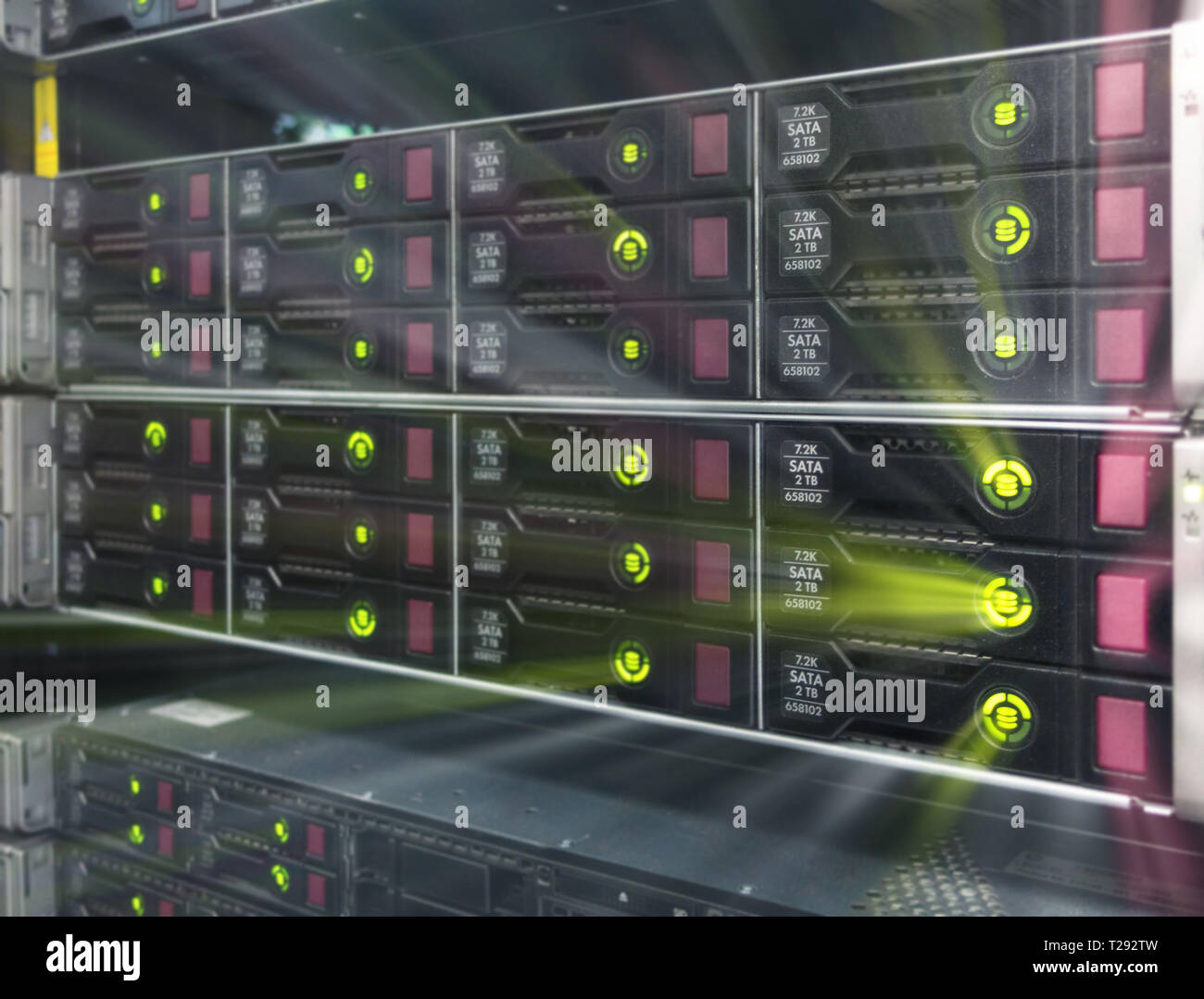
According to the latest market data, the global Hard Disk Drive (HDD) market experienced a significant price increase in Q4 2025, with contract prices rising by approximately 4% quarter-on-quarter, marking the largest increase in the past eight quarters [1]. This trend is mainly driven by the following multiple factors:
The rapid expansion of AI infrastructure in the U.S. is one of the primary factors driving the surge in HDD demand. AI data centers not only consume a large number of GPUs but also devour power, storage devices, and physical construction resources at an unprecedented rate [1]. The storage capacity demand of AI servers far exceeds that of ordinary servers: a single AI server has a storage configuration of 1.7TB, while traditional servers only have 0.5TB [3].
The procurement strategy of China’s PC market has undergone a major shift, with key government procurement projects accelerating the migration to domestic CPUs and operating systems. This policy change unexpectedly boosted the demand for HDD installations, mainly due to users’ considerations of data security and long-term storage reliability. The industry is concerned about the ‘Bit Rot’ phenomenon that may occur in Solid State Drives (SSDs) during long-term power-off storage [1].
In 2025, as global AI infrastructure construction enters an explosive phase, the storage industry ushered in a ‘super cycle’. The core logic is: on one hand, the demand for storage capacity and bandwidth from AI servers far exceeds that of ordinary servers; on the other hand, industry capacity is tilted towards high-end storage products (such as HBM), squeezing the capacity of traditional storage products, thus triggering a price increase wave across the entire storage industry [2].
Seagate Technology’s stock price performance in 2025 was extremely impressive, with a year-to-date increase of approximately 238%, a 222.54% increase over the past year, and a 454.24% increase over three years [4]. As of the close on January 3, 2026, the company’s stock price was $287.54, with a current market capitalization of $61.1 billion [4].
The company’s revenue in the first quarter of fiscal year 2026 reached $2.63 billion, a year-on-year increase of 21%, and the expected revenue for the second quarter is $2.7 billion [5]. More impressively, over the past 10 quarters, Seagate’s gross margin has roughly doubled to about 45%, and management expects that within the next 12 months, with the promotion of larger capacity products, the gross margin of hard disk sales will exceed 50% [5].
Seagate CFO Gianluca Romano revealed that over the past six months, the supply-demand gap has actually widened. The company’s nearline capacity is basically sold out until 2026, and long-term agreements will extend to 2027 or even early 2028 [5].
Seagate is accelerating the production of the next-generation HAMR (Heat-Assisted Magnetic Recording) technology. The company’s 30TB Mozaic 3 hard drive has been recognized by five major cloud computing customers, and it is currently migrating them to the 40TB Mozaic 4 hard drive [5].
Western Digital’s stock price rose by approximately 304% in 2025, with a 287.73% increase over the past year and a 690.98% increase over three years [4]. As of the close on January 3, 2026, the company’s stock price was $187.70, with a current market capitalization of $65.2 billion [4].
The company’s revenue in the second quarter of fiscal year 2025 reached $4.29 billion, with a net profit margin of 21.30% and an operating margin of 25.70% [4]. The company reported that cloud business revenue accounted for 87.6% of total revenue, reaching $8.34 billion [4].
As of the end of the second quarter of fiscal year 2025, Western Digital had $2.29 billion in cash and cash equivalents, with an operating cash flow of $403 million [6].
The company’s product offerings cover HDDs and SSDs, targeting markets including consumers, clients, and cloud/enterprise applications. In the second quarter of fiscal year 2025, cloud business revenue increased by 6% quarter-on-quarter to $2.3 billion, accounting for 55% of total revenue. This growth was driven by higher nearline HDD shipments and enterprise SSD bit shipments for data centers [6].
| Indicator | Seagate Technology (STX) | Western Digital (WDC) |
|---|---|---|
| Current Stock Price | $287.54 | $187.70 |
| Market Capitalization | $61.1B | $65.2B |
| 2025 YTD Growth | +238% | +304% |
| P/E Ratio (TTM) | 35.75x | 25.33x |
| Net Profit Margin | 17.92% | 21.30% |
| Operating Margin | 22.95% | 25.70% |
| Latest Free Cash Flow | $818M | $1.284B |
| Debt Risk Rating | Low Risk | Medium Risk |
| Cloud Business Share | ~55% | 87.6% |
| Analyst Consensus | Buy | Buy |
- Growth Elasticity: Western Digital had a higher growth rate in 2025, but Seagate has a leading edge in technological innovation (HAMR technology).
- Profitability: Western Digital’s net profit margin and operating margin are slightly higher than Seagate’s.
- Business Concentration: Western Digital is more focused on cloud business (87.6%), while Seagate’s business is more diversified.
- Valuation Level: Seagate has a higher valuation (P/E ratio of 35.75x), while Western Digital’s valuation is relatively reasonable (P/E ratio of 25.33x).
According to market research institutions, the global HDD market size is expected to grow from approximately $70 billion in 2024 to about $130 billion in 2028, with a CAGR of approximately 16% [7]. Another report predicts that the global HDD market will reach $111.2 billion by 2035, with a CAGR of 5.3% from 2025 to 2035 [8].
Suppliers warn that this upward trend is not a short-term fluctuation, and the market will continue to face upward price pressure for some time to come [1]. Unlike flash memory, which can quickly expand production through new wafer fabs, HDD production is limited by highly specialized physical components such as read-write heads and precision disks. This rigid constraint at the physical manufacturing level means that when demand explodes, the supply chain cannot respond quickly [1].
- AI Application Expansion: Video applications, autonomous driving data, and robotics technology are becoming large-scale consumers of storage products beyond traditional cloud workloads [5].
- Data Volume Explosion: The exponential growth of global data volume provides a solid foundation for long-term storage demand.
- Cost Advantage: HDD still has an obvious cost advantage per unit capacity in large-capacity storage scenarios.
Customers are increasingly turning to SSDs as alternatives. Although the cost per TB of HDD is much lower than that of SSD, SSD has advantages such as lower power consumption, smaller physical space occupation, and faster data access. As data centers prioritize energy efficiency, the total cost of ownership gap between HDD and SSD is narrowing [5].
The storage market has historically swung between supply tightness and oversupply, leading to sharp fluctuations in profits [5]. If long-term orders weaken in 2027 or customers shift more actively to SSDs, related stocks may face valuation pressure even if recent performance remains strong.
Some analysts worry that current profit expectations reflect overly optimistic assumptions about demand sustainability [5]. If NAND manufacturers expand capacity faster than the hard disk duopoly, it will put pressure on pricing power.
Seagate’s forward P/E ratio is 27x, which does not look cheap considering the cyclical nature of the hard disk business [5]. The current valuation levels of both companies have already reflected most of the optimistic expectations.
The HDD market is in a ‘super cycle’ driven by supply-demand tightness. The performance and stock prices of major manufacturers have been excellent, but valuations are already at a high level.
- Western Digital (WDC): Relatively reasonable valuation, high cloud business share, and more directly benefited from current AI-driven demand growth.
- Seagate Technology (STX): Leading in technological innovation (HAMR technology), with greater long-term growth potential, but need to pay attention to valuation risks.
Considering that the stock prices of both companies have risen sharply recently, it is recommended that investors wait for a pullback before building positions in batches and should not chase high prices.
It is recommended to set a reasonable stop-loss level and pay close attention to:
- Progress of AI infrastructure construction.
- SSD technology development and price trends.
- Quarterly financial report performance of both companies.
- Capacity expansion plans and execution status.
The surge in HDD market demand has formed a significant positive impact on related listed companies, especially the two industry leaders Seagate Technology and Western Digital. AI data center construction, demand from China’s Xinchuang industry, and the ‘super cycle’ in the storage industry have jointly driven this trend. Both companies achieved significant stock price increases and performance improvements in 2025.
However, investors need to recognize that current valuations have fully reflected optimistic expectations, and the storage industry has strong cyclical characteristics. At current prices, it is recommended that investors maintain a cautiously optimistic attitude, focus on buying opportunities after pullbacks, and closely track changes in industry supply and demand and technological development trends.
[1] IT Home - “Report: Global HDD Prices Bottomed Out and Rebounded in Q4 2025, Ushering in a New Round of Price Increases” (https://www.ithome.com/0/905/290.htm)
[2] NetEase Finance - “In the Third Year of the Bull Market, Tech Giants No Longer Dance Alone; 2026 May Welcome… Under the Main Theme of Market Rotation” (https://www.163.com/dy/article/KHV3U5CR05198UNI.html)
[3] Xinhua News - “Under the AI Boom, the Storage Industry Ushes in a ‘Super Cycle’” (http://www.news.cn/tech/20251209/46467cc835964008b703a15319b07701/c.html)
[4] Jinling AI - Company Profile Data
[5] TIKR.com - “Why Did Seagate Stock Rise 225% in 2025?” (https://www.tikr.com/zh/blog/why-is-seagate-nasdaq-stxstock-up-225-in-2025)
[6] Matrix BCG - “What is the Competitive Landscape of Western Digital Company?” (https://matrixbcg.com/blogs/competitors/westerndigital)
[7] Credence Research - “Hard Disk Market Size” (https://www.credenceresearch.com/wp-content/uploads/2025/12/Hard-Disk-Market-Size.jpg)
[8] Yahoo Finance - “Seagate vs. Western Digital: Which Storage Stock is the Better Buy?” (https://finance.yahoo.com/news/seagate-vs-western-digital-storage-142000350.html)
Insights are generated using AI models and historical data for informational purposes only. They do not constitute investment advice or recommendations. Past performance is not indicative of future results.
About us: Ginlix AI is the AI Investment Copilot powered by real data, bridging advanced AI with professional financial databases to provide verifiable, truth-based answers. Please use the chat box below to ask any financial question.