Systematic Analysis of HDD Localization in China
Unlock More Features
Login to access AI-powered analysis, deep research reports and more advanced features
About us: Ginlix AI is the AI Investment Copilot powered by real data, bridging advanced AI with professional financial databases to provide verifiable, truth-based answers. Please use the chat box below to ask any financial question.
Based on the latest information, I conducted a systematic analysis of the HDD localization issue in China:
Zhou Yuefeng, CEO of Huawei Cloud, clearly stated that
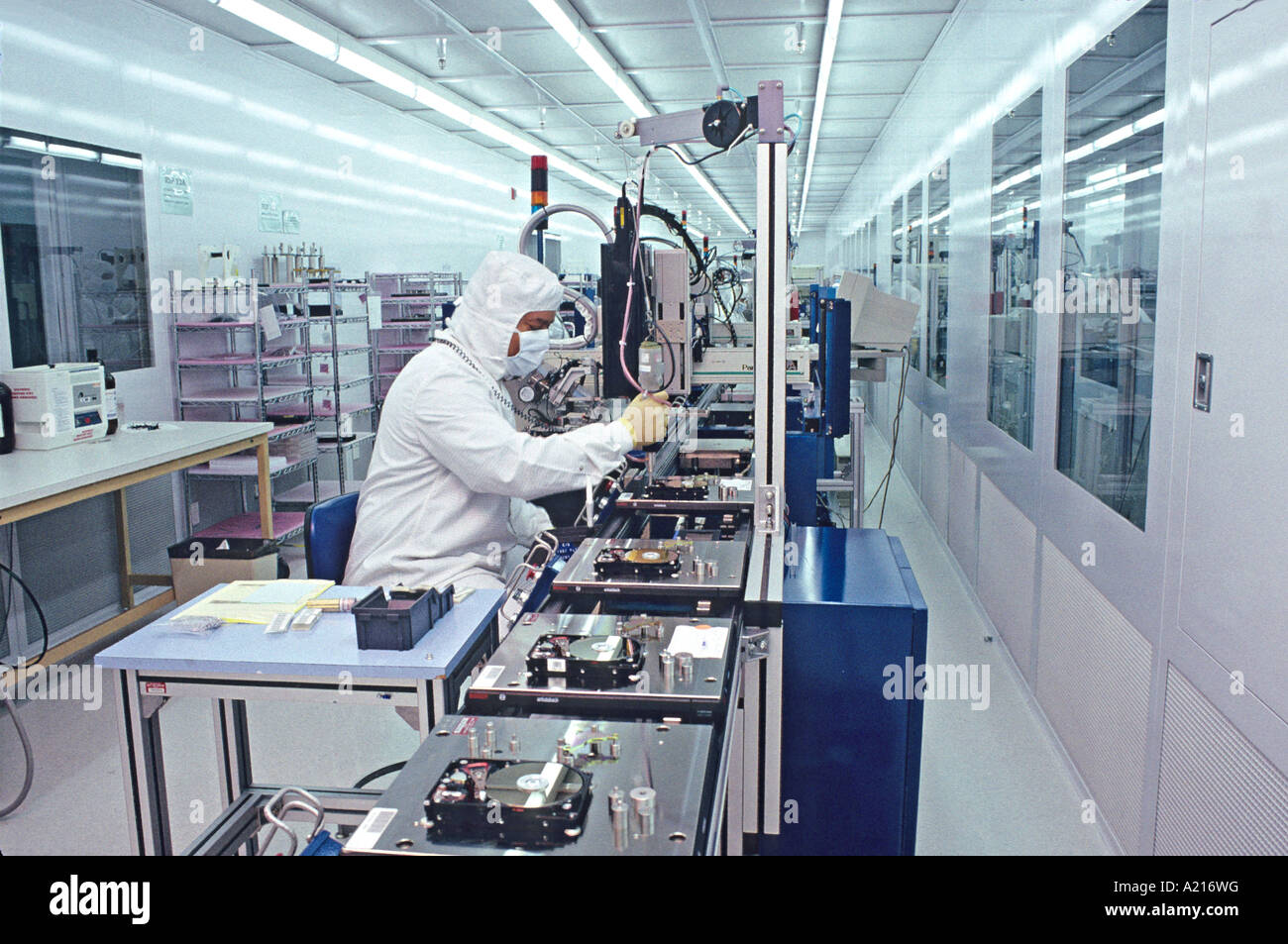
The manufacturing of HDDs can be called a “miracle of micro-engineering”:
- The magnetic head floats only 3 nanometersabove the disk surface for high-speed reading and writing (equivalent to 1/20,000 of the diameter of a human hair)
- The disk medium needs to store several TB of data per square inch, with an error no larger than the width of a DNA chain
- The manufacturing of magnetic heads for MAMR and HAMR technologies requires Angstrom-level precision manufacturing processes, which can only be achieved through fully automated manufacturing processes[1]
- There are over 100,000core patents in the global HDD field, almost completely divided by the three giants (Seagate, Western Digital, Toshiba)
- The patent layout for next-generation technologies such as Heat-Assisted Magnetic Recording (HAMR) and Microwave-Assisted Magnetic Recording (MAMR) is particularly tight, making it difficult for domestic enterprises to bypass[0]
| Key Components | Technical Requirements | Supply Pattern |
|---|---|---|
| Magnetic Head | Ruthenium alloy film purity needs to reach 99.9999% | Japan’s TDK dominates the global market |
| Glass Substrate | High-precision optical-grade glass | US-based Corning monopolizes |
| Disk Grinder | Nanoscale precision | Japan’s Disco accounts for 90% of the market share |
Tests from Huawei’s Storage Laboratory indicate that the defect rate of 20TB HDD magnetic heads made by domestic manufacturers is
China has not never attempted to develop independent hard drives:
- Great Wall Group launched China’s first independently produced 8.6GB high-speed hard drive
- Yituo Technology debuted as “China’s first hard drive” and once introduced IBM’s glass disk platter technology
- However, these attempts ultimately failed, mainly due to:
- Adopting a vicious cycle model of “introduction-lag-reintroduction”
- Inability to access the design principles and processes of core components such as magnetic heads, disk platters, and servo motors
- High product failure rates and significantly reduced market acceptance[0]
- If international technical cooperation or key material breakthroughs are obtained
- Catch up in traditional PMR technology, but only for products with capacities below 20TB
- Establish a complete supply chain system for magnetic heads and disk platters
- Achieve breakthroughs in MAMR technology
- Production capacity reaches the million-unit level, but still lags behind international advanced levels by 1-2 generations
- Continue to lag in next-generation technologies such as HAMR
- Face patent barriers and legal risks
- Continue to rely on imports for key links in the industrial chain
- Material Breakthrough: Raise ruthenium alloy film purity to the 99.9999% level
- Equipment Localization: Develop nanoscale disk grinders and precision assembly equipment
- Patent Layout: Bypass existing patent pools and establish an independent intellectual property system
- Industrial Collaboration: Promote joint research by upstream and downstream enterprises, such as the cooperation model between Toshiba and SAE Electronics[1]
- [0] Caifuhao - “HDD: Why It Has Become a Focus Again” (https://caifuhao.eastmoney.com/news/20260103112213586791240)
- [1] CSDN - “This Veteran Hard Drive Giant Is Building a ‘Home’ for Massive Data in China” (https://www.csdn.net/article/2025-12-31/156449708)
Insights are generated using AI models and historical data for informational purposes only. They do not constitute investment advice or recommendations. Past performance is not indicative of future results.
About us: Ginlix AI is the AI Investment Copilot powered by real data, bridging advanced AI with professional financial databases to provide verifiable, truth-based answers. Please use the chat box below to ask any financial question.