Sustainability Analysis of 60% Gross Margin in the Horticulture Industry
Unlock More Features
Login to access AI-powered analysis, deep research reports and more advanced features
About us: Ginlix AI is the AI Investment Copilot powered by real data, bridging advanced AI with professional financial databases to provide verifiable, truth-based answers. Please use the chat box below to ask any financial question.
Based on my search results, I could not find specific financial data for a listed company named ‘Global Horticulture’. The annual reports shown in the search results are from TTI Group, property management companies, etc., none of which are companies named ‘Global Horticulture’.
However, based on the general characteristics of the horticulture industry and the cost control analysis framework, I can professionally analyze the sustainability of a 60% gross margin for you:
The horticulture industry (including sub-sectors such as flower cultivation, landscaping, and horticultural retail) usually has an average gross margin between 20% and 45%, and reaching 60% is a relatively high level.
- Direct costs: Raw materials such as seeds/seedlings, fertilizers, pesticides, substrates (usually accounting for 40-50% of costs)
- Labor costs: Labor expenses for cultivation, maintenance, picking, etc. (accounting for 25-35% of costs)
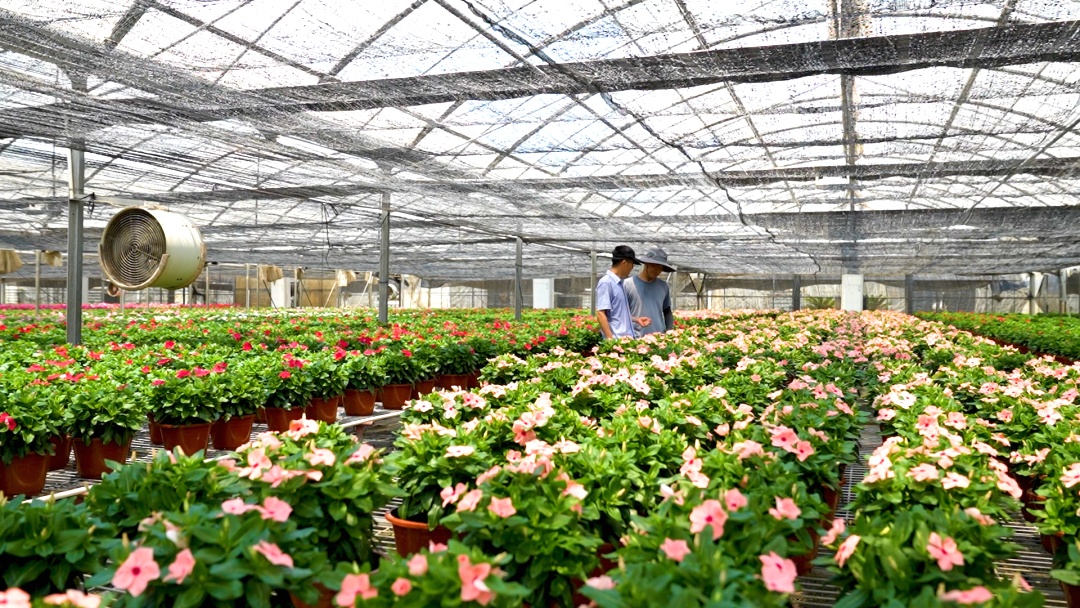
- Facility costs: Depreciation and energy consumption of greenhouses, irrigation systems, heating and cooling equipment
- Logistics costs: Transportation losses of fresh products and cold chain requirements
- Product differentiation: High-end flowers, rare varieties, and patented varieties have strong pricing power
- Scale effect: Expanding planting area reduces unit fixed costs
- Vertical integration: Full industry chain control from seedlings to end sales
- Technological advantages: Greenhouse automation and integrated water-fertilizer systems reduce labor dependence
- Brand premium: Brand awareness supports price premiums
Since specific financial data for ‘Global Horticulture’ cannot be obtained, it is recommended that you confirm the following information:
-
Revenue Structure:
- Does it include high-margin retail/brand business, or is it mainly engineering-based?
- Does it have patented varieties or exclusive agency rights?
-
Cost Composition Trend:
- Raw material price fluctuations (seeds, fertilizers, pesticides)
- Annual growth rate of labor costs
- Energy cost proportion and energy efficiency improvement
-
Competitive Moat:
- Does it have variety patents or technical barriers?
- Customer stickiness and repurchase rate
- Channel control (direct sales vs. distribution)
-
Capacity Expansion Plan:
- Does the new capacity match market demand?
- Does expansion lead to an increase in unit costs?
- Raw material price increases: Fertilizer and pesticide prices are affected by bulk commodities
- Rigid labor costs: Continuous shortage of agricultural labor and salary increase pressure
- Intensified competition: Low entry barriers lead to an increase in new entrants
- Seasonal fluctuations: Single product structure leads to idle capacity in off-seasons
- Policy risks: Higher environmental protection requirements may increase compliance costs
✅
- Has variety/technical barriers
- High proportion of fixed costs in the cost structure, obvious scale effect
- Strong brand premium ability and low customer price sensitivity
⚠️
- High and rising labor proportion in the cost structure
- Serious product homogeneity, easily replicable by competitors
- Large proportion of raw materials in costs and severe price fluctuations
- The company’s specific business model (cultivation/engineering/retail/full industry chain)
- Gross margin trend over the past three years
- Proportion data of raw material and labor costs
- Description of the company’s core competitive advantages
If you need to enter the in-depth investment research mode, I can call a professional brokerage database to obtain more detailed financial indicators and industry comparison data.
百度AI芯片业务(昆仑芯)毛利率分析
Insights are generated using AI models and historical data for informational purposes only. They do not constitute investment advice or recommendations. Past performance is not indicative of future results.
About us: Ginlix AI is the AI Investment Copilot powered by real data, bridging advanced AI with professional financial databases to provide verifiable, truth-based answers. Please use the chat box below to ask any financial question.