Impact of ByteDance's Doubao AI Glasses Adopting Qualcomm AR1 Chip on Its AR/AI Wearable Chip Market Position
Unlock More Features
Login to access AI-powered analysis, deep research reports and more advanced features
About us: Ginlix AI is the AI Investment Copilot powered by real data, bridging advanced AI with professional financial databases to provide verifiable, truth-based answers. Please use the chat box below to ask any financial question.
Related Stocks
I will provide a comprehensive analysis of the impact of ByteDance’s Doubao AI Glasses adopting Qualcomm’s AR1 chip on Qualcomm’s competitive position in the AR/AI wearable device chip market.
Qualcomm Inc. (QCOM) currently has a market capitalization of
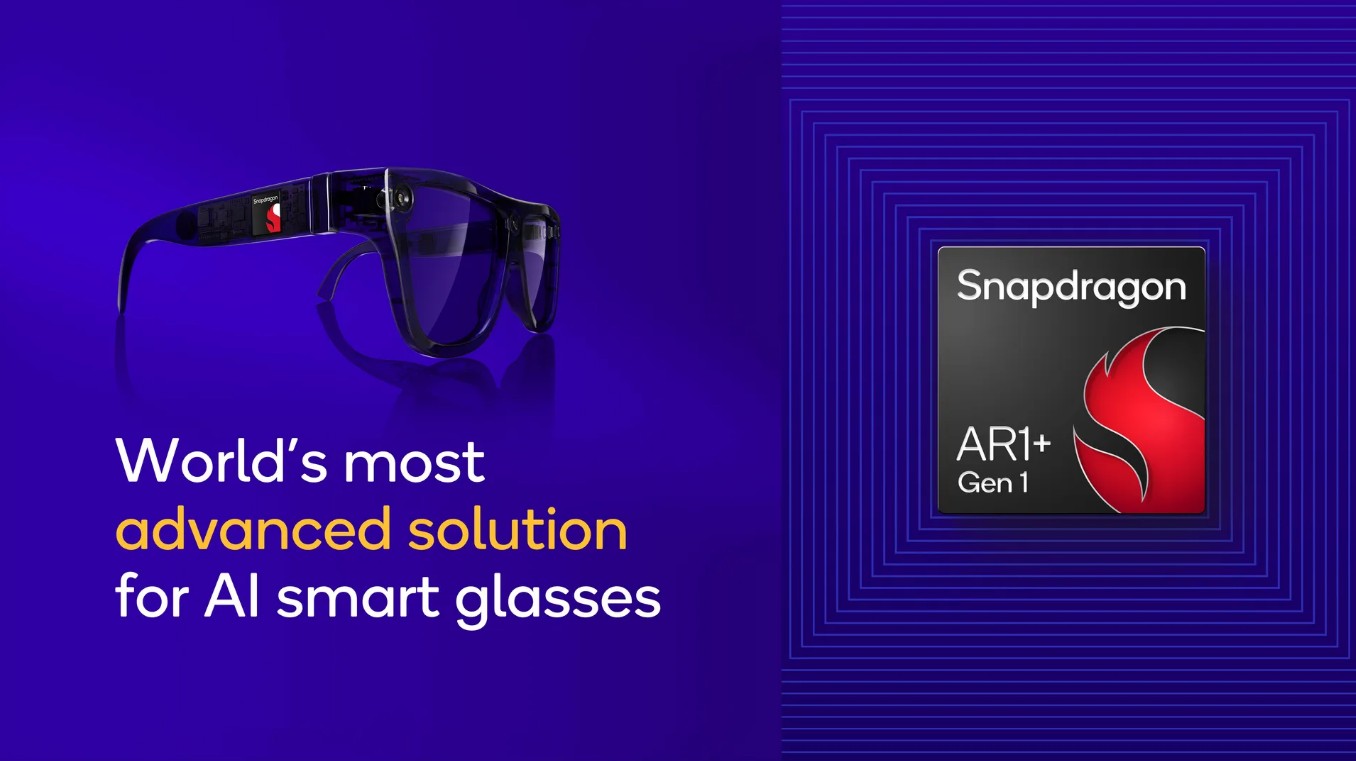
- The Snapdragon AR1 Gen 1 chiphas been adopted by Meta Ray-Ban Smart Glasses, which is the world’s first mass-produced smart glasses product equipped with this chip [3]
- Meta’s Ray-Ban Smart Glasses are equipped with a 12MP camera and 5 microphonesfor sending and receiving messages [3]
- In December 2025, Meta released the Ray-Ban Meta Gen 2, with battery life increased to 8 hours, demonstrating continuous product iteration capabilities [3]
According to IDC data,
As a leading global internet technology company, ByteDance plans to produce
This choice conveys several key signals:
- Qualcomm’s AR1 chip may have obvious advantages in performance, power consumption, and AI processing capabilities
- Qualcomm’s ecosystem maturityandtechnical support capabilitieshave been recognized by major manufacturers
- For manufacturers hoping to quickly launch reliable products, Qualcomm is a “safe choice”
Against the backdrop of intensified Sino-US tech competition, Chinese tech companies are accelerating AI chip localization [2]. However, as a global company, ByteDance needs to consider the following when choosing a chip supplier:
- Global market compatibility
- Supply chain stability
- Technology iteration speed
- Ecosystem completeness
Qualcomm has obvious advantages in these aspects compared to domestic manufacturers like BES Technology.
The adoption of ByteDance’s Doubao AI Glasses further consolidates Qualcomm’s leading position in the AR/AI wearable device chip market:
- Top customer matrix: Global leading tech companies like Meta and ByteDance have chosen Qualcomm chips
- Scale effect: As more manufacturers adopt Qualcomm’s platform, the network effect of the ecosystem will become stronger
- Bargaining power: The increase in market share will enhance Qualcomm’s bargaining power with downstream customers
ByteDance’s choice validates Qualcomm’s technology route:
- Heterogeneous computing architecture: The AI processing capability of the AR1 chip has been recognized
- Power consumption optimization: Wearable devices are extremely sensitive to power consumption, and Qualcomm’s solution has stood the test
- Integration capability: The integration solution of chips with cameras, microphones, sensors, etc., is mature and reliable
Despite geopolitical challenges, Qualcomm, through Chinese customers like ByteDance:
- Maintains influence in the Chinese market
- Lays the foundation for future cooperation
- Demonstrates technical strength to win more customers
According to the latest reports,
- As a leading company in AR smart glasses, Meta’s choice to develop next-generation products with MediaTek indicates that MediaTek’s technical strength has been recognized
- Qualcomm may face competitive pressures in cost, customization, and services
- Losing dominance in Meta’s next-generation products will affect Qualcomm’s market share
Chinese chip manufacturers like BES Technology and Rockchip are rising rapidly [2]:
- Cost advantage
- Localized services
- Policy support
Currently, AR/AI smart glasses are still in the early stage of the market:
- Limited market size: Only over 4 million units in H1 2025 [4]
- Unclear profit model: Many manufacturers are still exploring commercialization paths
- Unsettled technology route: The future may disrupt the existing technology landscape
The
- Qualcomm’s QCT (chip business) quarterly revenue reached $9.82 billion[0]
- Even at $50 per chip, 100,000 units contribute only $5 million in revenue
- Strategic significance outweighs financial significance
If ByteDance’s Doubao AI Glasses achieve market success and launch a second-generation product:
- Scale effect: The second generation may expand production volume and form large-scale orders
- Demonstration effect: Attract other Chinese manufacturers to choose Qualcomm’s platform
- Ecosystem value: Establish a benchmark case for Qualcomm in China’s AI wearable market
| Time Dimension | Assessment | Key Factors |
|---|---|---|
Short-Term (1-2 years) |
Positive |
ByteDance’s choice enhances market confidence; Meta Ray-Ban continues iteration; AR1 chip leads in technology |
Mid-Term (2-3 years) |
Neutral to Negative |
Rise of MediaTek; domestic chip substitution; intensified market competition |
Long-Term (3+ years) |
Uncertain |
Technology route may be disrupted; market structure not yet finalized |
- ✅ Obvious first-mover advantage: Validated by top customers like Meta and ByteDance
- ✅ Strong technical strength: AR1 chip performs excellently in AI processing and power consumption optimization
- ✅ Complete ecosystem: Mature software support and developer tools
- ✅ Global layout: Not affected by single-market policies
- ❌ Insufficient cost competitiveness: Higher price compared to domestic chips
- ❌ Limited customization capability: Standardized products may not meet all customer needs
- ❌ Geopolitical risks: Sino-US tech competition may affect Chinese market share
- ❌ Strong catch-up by competitors like MediaTek
For Qualcomm, the adoption of its AR1 chip by ByteDance’s Doubao AI Glasses is both an opportunity and a warning:
- Increase investment in the Chinese market: While maintaining technological leadership, provide more competitive pricing plans
- Deepen cooperation with ByteDance: Strive for cooperation on the second-generation product and establish a long-term strategic partnership
- Accelerate technological innovation: Maintain generational technological leadership in the AR/AI chip field
- Expand customer base: Reduce reliance on a single customer and attract more Chinese manufacturers
From the
- ✅ Validates Qualcomm’s technical strength and product competitiveness
- ✅ Expands Qualcomm’s influence in the Chinese market
- ✅ Lays the foundation for future cooperation
From the
- ⚠️ Strong catch-up by competitors like MediaTek, especially losing out in the competition for Meta’s next-generation products [3]
- ⚠️ Rapid rise of domestic chip manufacturers, with advantages in cost and localized services
- ⚠️ Uncertainty in the early market stage, with technology routes and business models not yet finalized
From the
[0] Jinling API Data - Qualcomm Inc. (QCOM) Financial and Market Data
[1] Glass Almanac - “7 AR Devices And Trends Set To Shake 2025” (https://glassalmanac.com/7-ar-devices-and-trends-set-to-shake-2025-heres-whats-changes/)
[2] Bloomberg - “China’s Showcase of AI Chip Prowess” (https://www.bloomberg.com/news/articles/2025-09-18/china-s-showcase-of-ai-chip-prowess-triggers-240-billion-rally)
[3] Yahoo Finance (Hong Kong) - “MediaTek Edges Out Qualcomm to Collaborate with Meta on Next-Generation AR Smart Glasses” (https://hk.finance.yahoo.com/news/聯發科擠下高通-攜手meta開發新-代ar智慧眼鏡-032150788.html)
[4] Yahoo Finance (Hong Kong) - “Lei Jun Bets Right Again: Global Smart Glasses Market Booms” (https://hk.finance.yahoo.com/news/雷軍又押對了-局-全球智慧眼鏡市場大爆發-055847533.html)
Insights are generated using AI models and historical data for informational purposes only. They do not constitute investment advice or recommendations. Past performance is not indicative of future results.
About us: Ginlix AI is the AI Investment Copilot powered by real data, bridging advanced AI with professional financial databases to provide verifiable, truth-based answers. Please use the chat box below to ask any financial question.