AMD Analyst Day 2025: AI Growth Projections Drive Market Rally with $45B Custom Chip Pipeline
Unlock More Features
Login to access AI-powered analysis, deep research reports and more advanced features
About us: Ginlix AI is the AI Investment Copilot powered by real data, bridging advanced AI with professional financial databases to provide verifiable, truth-based answers. Please use the chat box below to ask any financial question.
Related Stocks
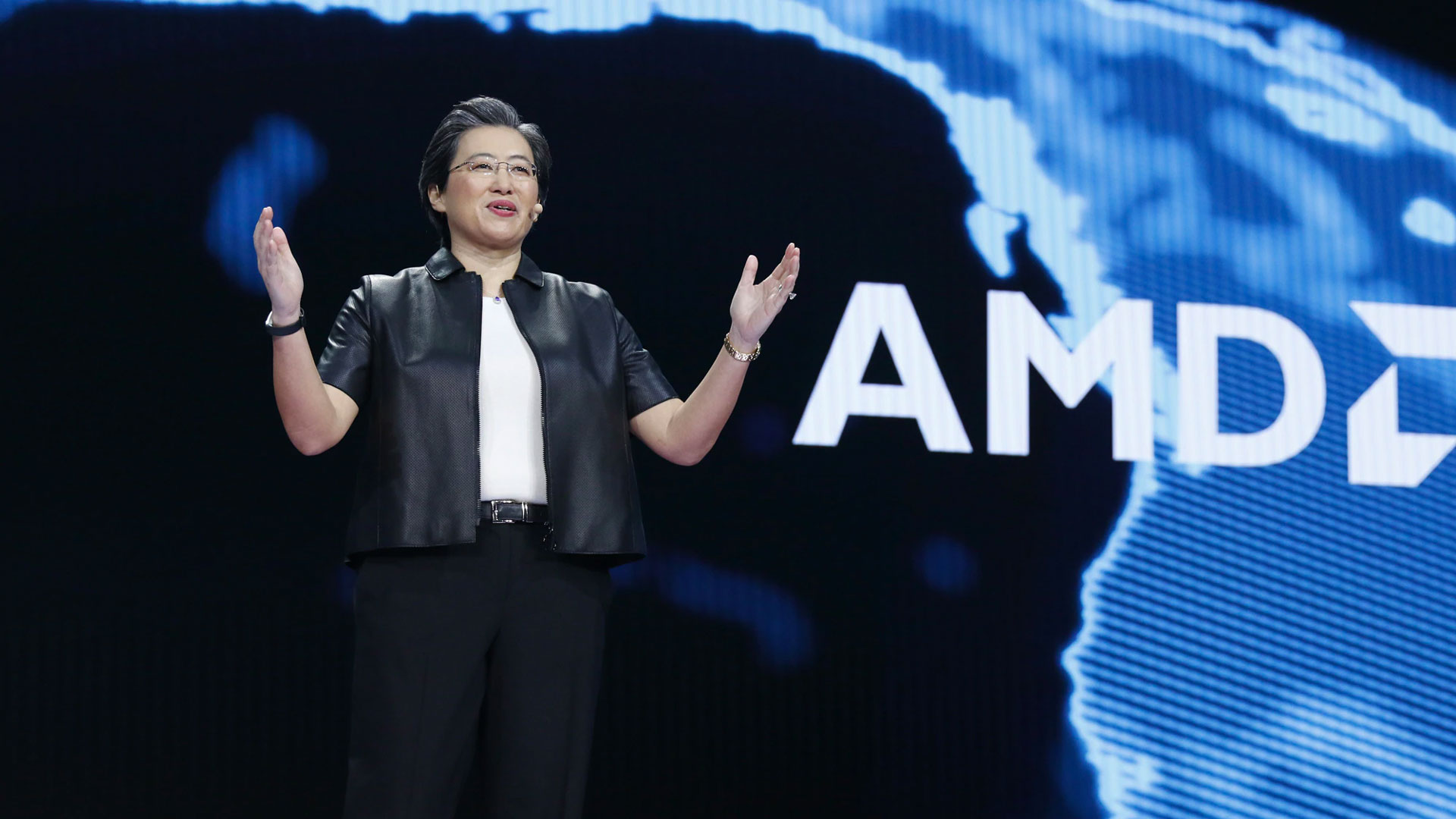
This analysis is based on AMD’s Financial Analyst Day held on November 11, 2025, where CEO Lisa Su unveiled comprehensive growth strategies centered on artificial intelligence expansion [1]. The event triggered a significant market reaction, with AMD shares surging 7.88% to $256.23, representing a $18.71 gain on November 12, 2025 [0]. This rally occurred despite broader market weakness, with the S&P 500 down 0.19%, NASDAQ declining 0.70%, and the technology sector underperforming at -1.38% [0].
AMD announced a multi-faceted growth strategy targeting:
- 35% annual revenue growthover the next 3-5 years from $34 billion base in 2025 [2]
- 80% CAGR for AI data center revenuethrough 2027-2028 [1][2]
- $45 billion in custom chip design revenuestarting in 2026 [1]
- Data center revenue growth of 60%from $16 billion in 2025 [2]
The company projects the total addressable market for AI data centers will expand to
AMD is positioning itself as the primary alternative to Nvidia in AI chips, with current AI revenue of $5 billion in fiscal 2024 [1]. The company’s competitive strategy includes:
- Product pipeline acceleration: MI450 series shipping next year, MI500 series in development [2]
- Rack-scale systems development: 72 chips working together to close Nvidia’s three-generation lead [1]
- Annual product launch cadence: Shifting from traditional development cycles [2]
Market share targets across segments include:
- AI data center: Double-digit share (currently minimal) [1]
- Server market: 50% share (up from 40% currently) [2]
- PC market: 40% share [2]
- Adaptive computing: 70% share [2]
AMD’s growth strategy is underpinned by significant strategic partnerships:
- OpenAI: 6-gigawatt supply agreement starting 2026, potentially including a 10% equity stake for OpenAI [1][2]
- Oracle: 50,000 chips supply agreement [2]
- Meta and other hyperscalers: Long-term supply arrangements [1]
These partnerships provide revenue visibility and technological collaboration opportunities, though the financing sustainability of such large-scale commitments, particularly from OpenAI, requires monitoring [2].
AMD’s financial projections show strong margin expansion potential:
- Gross margins: Expected between 55-58% over 3-5 years [2]
- Operating margins: Projected to exceed 35% during the same period [2]
- Current valuation: P/E ratio of 134.86x [0], indicating high expectations are already priced in
The stock’s year-to-date performance of 112.38% and 78.37% gain over the past year [0] reflects market optimism about AI growth prospects, though current valuation levels suggest limited margin for disappointment.
AMD’s outperformance is particularly noteworthy given the technology sector’s underperformance (-1.38%) on the same day [0]. This divergence suggests investor enthusiasm is specifically targeted at AMD’s AI growth narrative rather than broad technology sector optimism. The trading volume of 74.58M shares significantly exceeded the average volume of 58.21M [0], indicating strong institutional and retail participation.
-
Execution Risk: The projected 80% CAGR in AI data center revenue represents an extremely aggressive growth target requiring flawless execution across manufacturing, supply chain, and technology development [0][2].
-
Supply Chain Constraints: AMD has previously acknowledged supply constraints [3]. Scaling production to meet projected growth requires verification of manufacturing capacity and supply chain resilience.
-
Competitive Response: Nvidia’s dominant market position and substantial resources for R&D and pricing could impede AMD’s market share gains [1][4].
-
Economic Cycle Sensitivity: The AI investment boom may be vulnerable to economic downturns or shifts in corporate spending priorities [0].
-
Valuation Risk: With a P/E ratio of 134.86x [0], AMD’s stock leaves little room for disappointment relative to growth expectations.
-
Market Share Expansion: AMD’s target of double-digit AI data center share represents significant upside from current minimal levels [1].
-
Partnership Leverage: Strategic deals with OpenAI, Oracle, and other hyperscalers provide revenue visibility and technological collaboration opportunities [1][2].
-
Product Innovation: Annual product launch cadence and rack-scale systems development could accelerate competitive positioning [2].
-
Market Growth: Participation in the projected $1 trillion AI data center market by 2030 offers substantial growth potential [1].
AMD’s Analyst Day presented a comprehensive growth strategy centered on AI expansion, with $45 billion in custom chip design revenue starting 2026 and ambitious market share targets across multiple segments [1][2]. The company projects 35% annual revenue growth over 3-5 years, driven primarily by 80% CAGR in AI data center revenue [1][2].
Strategic partnerships with OpenAI (6-gigawatt supply deal) and Oracle (50,000 chips) provide foundation for growth targets [1][2]. Financial projections show strong margin expansion potential with gross margins expected between 55-58% and operating margins exceeding 35% [2].
The market reaction was strongly positive, with AMD shares gaining 7.88% to $256.23 on November 12, 2025, outperforming broader market declines [0]. However, the high current valuation (P/E 134.86x) [0] and aggressive growth targets suggest careful monitoring of execution capabilities and competitive dynamics will be essential.
Key monitoring factors should include quarterly AI revenue growth versus 80% CAGR target, gross margin progression toward 55-58% range, major deal announcements and financial terms, product launch timelines, Nvidia’s competitive responses, and OpenAI partnership progress [0][1][2].
Insights are generated using AI models and historical data for informational purposes only. They do not constitute investment advice or recommendations. Past performance is not indicative of future results.
About us: Ginlix AI is the AI Investment Copilot powered by real data, bridging advanced AI with professional financial databases to provide verifiable, truth-based answers. Please use the chat box below to ask any financial question.